


You might only buy a handful of washing machines in your life. A quality top-load model should last close to 15 years, so it's not a buying decision to make lightly. Following these laundry tips and avoiding these mistakes can help you in your quest for clean clothes that emerge undamaged, but none of it matters if you're shoving clothes in a failing or faulty machine.
Our Picks

The Electrolux 700 Series ELFW7738A claims our top spot for several reasons. Chiefly, it's the single most efficient washing machine on the market according to Energy Star data. For comparison, it's nearly 25% more electricity-efficient than the next most-efficient washer in this lineup, the LG WM6998H.
Pros
- Unmatched energy efficiency
- User-friendly interface with an accurate timer feature
- Excellent stain removal
- Highly effective spin cycle means clothes dry faster
- Exceptional warranty
Cons
- Retail price is on the expensive side
- Front-loaders may not be suitable for individuals with back problems

If the number of online reviews is any indicator, Maytag is the most popular washing machine brand on the market. This is despite offering fewer than half as many models as LG and Samsung. Even its sibling brand, Whirlpool, has almost twice as many models. We're pleased to report that the Maytag MHW5630 lives up to the hype by achieving one of two perfect scores in our tests -- the other was the LG WT8200C. Our tester had no issues with the unit, and it completely removed stains -- even without pretreatment.
Pros
- Outstanding cleaning performance
- Bulk detergent dispenser
- Exceptional motor and drum warranty
Cons
- No reversible door
- Lower energy efficiency compared to Electrolux
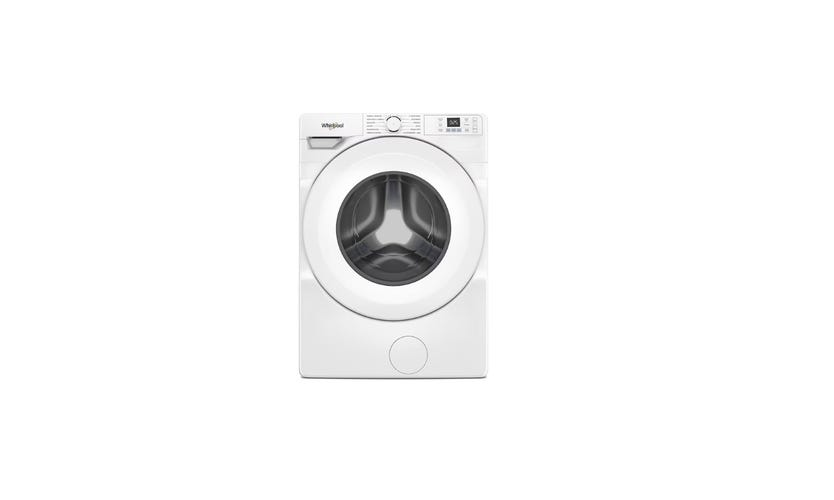
The Whirlpool WFW4720RW is the most affordable washing machine we tested for this review, costing just $600 at of the time of writing. While its plastic build and display immediately give it a budget feel, the cleaning performance was very good. It removed every test stain, and its spin cycle impressed our tester more than that of their previous machine.
Pros
- Very good cleaning performance
- Great drum capacity
- Strong wash cycle selection
Cons
- Short warranty
- Meets only the minimum Energy Star requirement
- Some cheap-feeling plastic parts
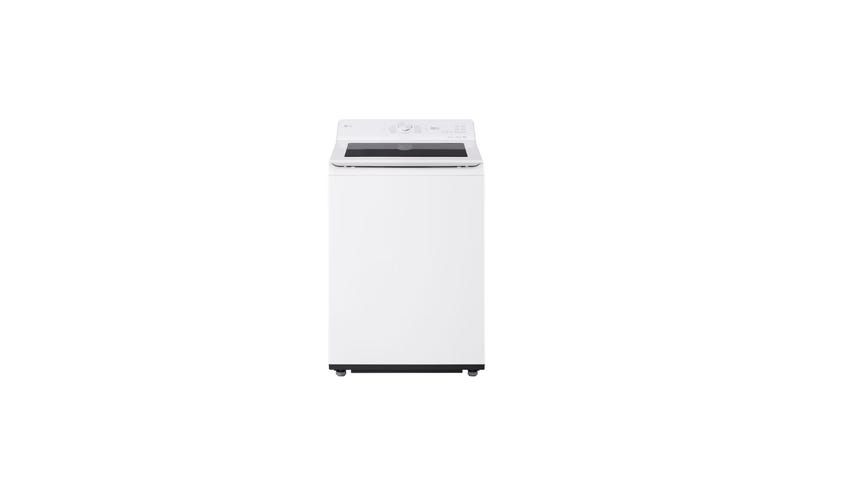
The LG WT8200C is one of only two units we tested (the other being Maytag) with no negative feedback from the tester, who reported that the clothes were "notably cleaner than our last washing machine." Although our stain-cleaning tests weren't as spotless as we hoped, the WT8200C is more than capable if you pretreat stains.
Pros
- Excellent cleaning performance at a reasonable price
- Huge 5.0 cubic ft. capacity
- Energy Star rating
Cons
- Less water-efficient than front-loaders
- Requires overhead space to open the lid
- Some residue remained in our stain removal tests
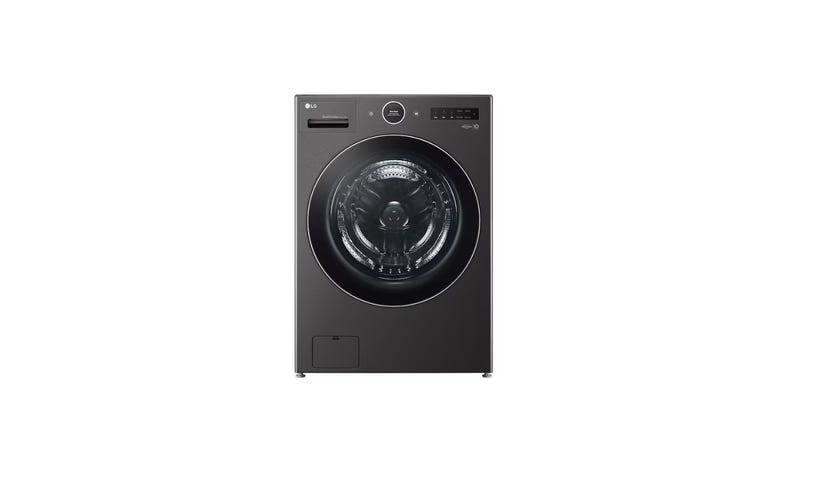
In many ways, the LG WM6998H is unique among the washers on this list. First, it's the only model we tested that was already in use by a CNET team member, David Watsky, who has had it for over a year. This extremely reliable first-hand experience helps with the second unique aspect: it's a combo unit that functions as both a washer and a dryer. Combo machines are relatively new in the history of washers, so their technology is not yet perfect, and many online users report frustrations with their performance.
Pros
- Combines a washer and dryer into one unit
- Excellent cleaning performance
- Energy-efficient washing and drying
- The best digital controls of any we tested
- App integration allows you to control cycles remotely (helpful since large loads often require two dry cycles)
Cons
- Long dry cycles
- Doesn't dry completely when overloaded
- Pricier than many washer-dryer sets

The Bosch 500 Series is the only washing machine in our featured lineup that we were unable to test due to this unit's requirement of a 208/240V, 15-amp circuit. However, it makes our list for two important reasons: energy efficiency and size. With regard to energy efficiency, the WGB24600UC is the only machine, other than our top pick, the Electrolux 700 Series, to qualify for the Energy Star Most Efficient rating, as it is especially notable for its minimal water usage.
Pros
- 1,600 RPM motor speed is the highest
- Good for tight spaces
- Roughly 40% smaller than Electrolux, Maytag, LG and Whirlpool
Cons
- Requires 208/240V, 15-amp circuit
- Online ratings and reviews were scarce
Laundry robots are still a ways off, practically speaking, although we've seen some compelling advances in the past few years. For now, a reliable washer and dryer -- or combo machine -- is your best bet for an easy laundry day. We spent 5 months hands-on testing the latest washing machine models and analyzing more than 250 products from 16 well-known brands. Our final recommendations feature 6 carefully selected models from established brands, including Electrolux, Maytag, Whirlpool, LG, and Bosch.

We tested several of the latest washing machines from top brands.
All of our top picks offer excellent value for the money, often coming in close to or below the $850 median price for washing machines. We focus primarily on energy-efficient front-loading washers, which will save you more money in the long term compared to their top-load counterparts.
What's the best washing machine overall?
Our in-depth research and testing all indicate that the Electrolux 700 Series ELFW7738A is the best washing machine for most households. It combines a generous drum capacity with industry-leading energy efficiency. For more context, let's jump into how it balances price and performance.


Pros
- Unmatched energy efficiency
- User-friendly interface with an accurate timer feature
- Excellent stain removal
- Highly effective spin cycle means clothes dry faster
- Exceptional warranty
Cons
- Retail price is on the expensive side
- Front-loaders may not be suitable for individuals with back problems
The Electrolux 700 Series ELFW7738A claims our top spot for several reasons. Chiefly, it's the single most efficient washing machine on the market according to Energy Star data. For comparison, it's nearly 25% more electricity-efficient than the next most-efficient washer in this lineup, the LG WM6998H.
Our in-house testing with the 700 Series also confirms why Electrolux has the highest median rating in online customer reviews of washing machines. The user-friendly design is so easy to work with, and our tester absolutely loved the accurate cycle countdown timer. It produced excellent results in stain-removal tests, completely obliterating most stains we threw at it.
While a faint trace of red wine remained in one test -- as it did with the other machines we tested -- the tester was confident that pretreatment would do the trick. (We didn't pretreat stains as most people do.) The spin cycle also made our tester do a double-take: "My first time pulling finished clothes from it, I actually thought I never hit the start button and the clothes were still dirty. That's how dry they felt."
Electrolux also has the best warranty in this comparison: 10-year coverage on the motor and lifetime coverage on the drum. While Maytag, LG and GE offer comparable motor coverage, none match the drum warranty. (Samsung Bespoke WD53DBA900HZ technically has a better motor warranty at 20 years, but an unimpressive drum warranty.)
Most of the ELFW7738A's drawbacks are minor nitpicks that come down to personal preference and budget. Despite its relatively affordable price compared to the median front-load washing machine, the $1,000 retail price is above average for the category. LG, Samsung, Whirlpool and Maytag all offer more competitive models for folks on a budget, but higher utility bills offset the initial savings over time. Likewise, our tester noted that front-load washers may not be as accessible for people with back problems.
Still, if you're comfortable with a slightly higher purchase price and a front-load form factor, the Electrolux 700 Series ELFW7738A is easily the most compelling washer on our list.
Testing highlight from Katie Collins:
"I'm a mom of two messy boys and a chocolate Labrador. I average one wash per day. I appreciated Electrolux's superior cleaning ability, especially its effectiveness in removing tough stains like ketchup, red wine and red marker, without requiring pretreatment. The accurate timer feature and the highly efficient spin cycle are my favorite qualities, as they leave clothes less damp and reduce drying time."


Pros
- Outstanding cleaning performance
- Bulk detergent dispenser
- Exceptional motor and drum warranty
Cons
- No reversible door
- Lower energy efficiency compared to Electrolux
If the number of online reviews is any indicator, Maytag is the most popular washing machine brand on the market. This is despite offering fewer than half as many models as LG and Samsung. Even its sibling brand, Whirlpool, has almost twice as many models. We're pleased to report that the Maytag MHW5630 lives up to the hype by achieving one of two perfect scores in our tests -- the other was the LG WT8200C. Our tester had no issues with the unit, and it completely removed stains -- even without pretreatment.
One of the biggest highlights is that this relatively affordable front-load washer comes with a bulk detergent dispenser, a feature typically found on much pricier washers, like the LG WM6998HBA. You can pre-load the bulk dispenser with enough detergent for multiple loads of laundry, and the machine automatically dispenses the correct dose for each load. This feature is really handy for active households.
Maytag also offers one of the best warranties in the industry -- only Electrolux's 10-year motor and drum coverage surpasses Maytag's. For comparison, premium brands like Miele and Bosch typically require a pricey extended warranty to get similar coverage.
Our only major complaint about the Maytag MHW5630 is that it doesn't have a reversible door. Instead, the door only opens to the left, so you might need to dance around it in tight laundry rooms. This problem isn't unique to Maytag, as most front-load washers in our comparison lack the feature -- only the Electrolux ELFW7738A and GE GFW550SSNWW have reversible doors.
Regarding energy efficiency, the Maytag MHW5630 meets only the minimum standards to earn an Energy Star rating. It uses roughly 73% more electricity and 23% more water than Electrolux. At least it compares more favorably to the Whirlpool WFW4720RW and the top-load LG WT8200C in this regard.
While you can find budget machines for $600 or less, Maytag MHW5630's $700 price is an excellent compromise for anyone seeking outstanding cleaning performance and a strong warranty.
Testing highlight from John Drew:
"This machine has removed stains that our previous model was unable to."


Pros
- Very good cleaning performance
- Great drum capacity
- Strong wash cycle selection
Cons
- Short warranty
- Meets only the minimum Energy Star requirement
- Some cheap-feeling plastic parts
The Whirlpool WFW4720RW is the most affordable washing machine we tested for this review, costing just $600 at of the time of writing. While its plastic build and display immediately give it a budget feel, the cleaning performance was very good. It removed every test stain, and its spin cycle impressed our tester more than that of their previous machine.
At 4.5 cubic feet -- the same as Electrolux and Maytag -- this unit falls right in the sweet spot for most homes. The simple user interface is also incredibly easy to understand, with a strong selection of 12 wash cycles. That said, the straightforward design of the Whirlpool WFW4720RW doesn't really stand out from more expensive washers.
Like Maytag, the Whirlpool WFW4720RW qualifies only for the bare minimum to earn an Energy Star badge. Still, even the least-efficient Energy Star-certified machines absolutely outperform noncompliant rivals. To explain the gap, let's examine the two less expensive units on our list -- Insignia NS-WMT41WA5 ($450) and Samsung WA45T3200AW ($499) -- neither of which has an Energy Star rating.
While both top-loaders have better customer ratings than this front-load Whirlpool unit, the Samsung WA45T3200AW uses an estimated 8,552 gallons of water per year — more than double that of the Whirlpool WFW4720RW — which equates to roughly $5.50 more in average monthly water costs. In fact, Whirlpool's electricity and water savings will easily make up the initial price difference in just 1.5 years. (We lack a water usage figure for Insignia, but the break-even point is likely similar.)
Our biggest criticism is the short standard warranty, which covers only a single year for the motor and drum. Whirlpool offers extended warranties for one year ($51), three years ($130), and five years ($190). However, you can easily upgrade to a Maytag warranty for only $100 more, including a free 10-year warranty.
Complaints aside, the Whirlpool WFW4720RW is a functional machine for a great price. At least you won't need to skimp on cleaning performance, and the added efficiency over cheaper competition will make a long-term difference for anyone on a tight budget.
Testing highlight from David Watsky:
"Although it doesn't have a ton of features, this machine has proven to be a reliable workhorse. It's quiet, fast and I've noticed that clothes emerge from wash cycles far dryer than with previous machines I've used."


Pros
- Excellent cleaning performance at a reasonable price
- Huge 5.0 cubic ft. capacity
- Energy Star rating
Cons
- Less water-efficient than front-loaders
- Requires overhead space to open the lid
- Some residue remained in our stain removal tests
The LG WT8200C is one of only two units we tested (the other being Maytag) with no negative feedback from the tester, who reported that the clothes were "notably cleaner than our last washing machine." Although our stain-cleaning tests weren't as spotless as we hoped, the WT8200C is more than capable if you pretreat stains.
It also boasts a large tub with 5.0 cubic feet, making it an excellent option for larger households. While it's one of LG's less efficient models, the Energy Star rating is significantly better than that of the Samsung WA45T3200AW, our other top-loading washer candidate.
It might seem odd that only a single top-loading washing machine made our top picks, but higher water usage works against them. For example, the LG WT8200C uses roughly 83% more water than our top pick from Electrolux. This amounts to roughly $3.65 more in monthly water costs compared to Electrolux. Additionally, the larger volume of water requires more time for each cycle to fill and drain. Top-loading washers also require larger laundry rooms than front-loading units because you can't stack the dryer on top.
Drawbacks aside, top-loaders are more convenient since they are easy to load, and you don't need to bend over as much as with a front-loader. Of course, the biggest benefit of top-loading washing machines is that they are relatively affordable, with the $650 LG WT8200C costing roughly the same as our budget pick from Whirlpool.
Overall, the LG WT8200C is an excellent choice for individuals who prefer a top-loading configuration, as the impeller is gentler on clothes than a traditional agitator. You can find a cheaper top-load LG washer -- this model's smart-home controls add a little to the price — but LG really stands out in this category.
Testing highlight from Elizabeth Messina:
"Quieter than our previous washer. There is a little alarm that is perfect, as I can hear it from upstairs when the load is completed."


Pros
- Combines a washer and dryer into one unit
- Excellent cleaning performance
- Energy-efficient washing and drying
- The best digital controls of any we tested
- App integration allows you to control cycles remotely (helpful since large loads often require two dry cycles)
Cons
- Long dry cycles
- Doesn't dry completely when overloaded
- Pricier than many washer-dryer sets
In many ways, the LG WM6998H is unique among the washers on this list. First, it's the only model we tested that was already in use by a CNET team member, David Watsky, who has had it for over a year. This extremely reliable first-hand experience helps with the second unique aspect: it's a combo unit that functions as both a washer and a dryer. Combo machines are relatively new in the history of washers, so their technology is not yet perfect, and many online users report frustrations with their performance.
Fortunately, Watsky's long-term use of the LG WM6998H has been very promising. He loves the controls and the ability to receive notifications on his phone. It aced our stain removal tests, and the spin cycle produces surprisingly dry clothes before the dryer kicks in.
He says the machine is fantastic for his small household, though the combined washer/dryer functionality means waiting until both the wash and dry cycles complete for every load. Unlike separate units, you can't start a load of wash while the dryer runs. However, the combined functionality also brings a major advantage to homes with limited space. Because it's a ventless dryer, you don't need a dryer vent -- you can install it anywhere with suitable water and electrical hookups.
While the washer function of the WM6998H is extremely efficient compared to other models on this list, remember that the dryer function adds another 380 kWh per year. That said, the heat pump technology is generally about twice as efficient as the LG DLE8200 electric dryer. This efficiency comes at the expense of drying speed, and our tester reports that it dries well as long as the machine is not overloaded. He also notes that you should clean the lint filter often, at least once every few loads.
As for the price, you can purchase this unit for around $2,000, which is relatively steep compared to the other washers on this list. (In many cases, it's more expensive than buying separate washers and dryers.) That said, the price of convenience and installation flexibility make the LG WM6998H a worthwhile investment for niche uses and early adopters.
Testing highlight from David Watsky:
"The dryer feature has been great for me. I was fully expecting to hate this part as I'd heard such bad things about combo machines, but I've been wholly impressed. The user interface is also the best of any washing machine I've used."

Pros
- 1,600 RPM motor speed is the highest
- Good for tight spaces
- Roughly 40% smaller than Electrolux, Maytag, LG and Whirlpool
Cons
- Requires 208/240V, 15-amp circuit
- Online ratings and reviews were scarce
The Bosch 500 Series is the only washing machine in our featured lineup that we were unable to test due to this unit's requirement of a 208/240V, 15-amp circuit. However, it makes our list for two important reasons: energy efficiency and size. With regard to energy efficiency, the WGB24600UC is the only machine, other than our top pick, the Electrolux 700 Series, to qualify for the Energy Star Most Efficient rating, as it is especially notable for its minimal water usage.
Of course, the water usage is a direct byproduct of the Bosch 500 Series' status as a compact washing machine -- it's roughly 40% smaller than Electrolux, Maytag, LG and Whirlpool. It's particularly suitable for locations where space is at a premium, such as a studio apartment or a tiny home. Although this means the drum capacity is also smaller, these locations aren't likely to host overly large households.
Since we were unable to test the Bosch WGB24600UC, we don't have stain-removal or spin-cycle results to share. Still, the 1,600 RPM motor speed is easily the highest among our testing cohort, tied with the Miele WWD160, so we suspect it excels at extracting water at the end of a wash cycle.
Unfortunately, this is little more than a theory, as online reviews for Bosch washing machines are scarce. (Which is surprising, considering Bosch was one of the most-reviewed brands on our list of the best dishwashers -- we can chalk that up to Bosch still being new to washing machines in the U.S.)
Also working against Bosch are a short, one-year warranty (the worst on this list) and a relatively high purchase price of around $1,500. However, the biggest barrier for most people is likely to be the 220-volt power requirement. Unlike most washing machines, this unit cannot be connected to standard 120-volt electrical outlets. Instead, it requires the same hookup as a typical dryer, so you'll likely need two outlets (one for your dryer) to use this Bosch effectively in your laundry room. Notably, the other compact washer we evaluated, the Miele WWD160, uses a standard outlet -- but it's far less energy-efficient.
Provided you can solve the power requirements, the Bosch 500 Series WGB24600UC washing machine is an excellent option for cozy laundry nooks and small households.
Other washing machines we tested and evaluated
Washers we tested:
- GE GFW550SSNWW is the only washing machine we tested that didn't make our top picks. At $778, the GE GFW550SSNWW is a bit pricier than Maytag, but it has a larger 4.8 cubic-foot drum capacity. While the cleaning performance was great, our tester said the smart features detracted from the machine by locking certain features -- such as a delayed start -- behind an app wall. It also struggled to rinse and spin dry on some smaller loads, requiring additional rinse cycles to remove soapy residue. Still, they loved the UltraFresh Vent feature, which helps prevent mold growth, and online customer reviews are overwhelmingly favorable.
Washers we evaluated, but didn't test:
- The Insignia NS-WMT41WA5 is a popular top-loader made by Best Buy, selling for a rock-bottom $450, the lowest price on this list. Unfortunately, this model lacks an Energy Star rating, which will result in higher long-term utility costs than our budget pick, the Whirlpool WFW4720RW. It also has a smaller 4.1 cubic-foot tub capacity compared to other competitors, making it less suitable for larger homes. Still, this model boasts a stellar online reputation for delivering exceptional cleaning performance on a budget. While we generally recommend spending a bit more money to reap the long-term savings of better energy efficiency, the Insignia NS-WMT41WA5 is a decent choice for those on the tightest budgets.
- The Miele WWD160WCS is the main competitor to our compact washing machine pick: the Bosch 500 Series WGB24600UC. Both models cost roughly the same, but Bosch is $50 cheaper than the $1,600 Miele. Miele also has a slightly smaller drum capacity and lower overall energy efficiency. Still, its 120-volt electrical hookup is more compatible with American homes than Bosch's 220-volt connection. It also features a bulk detergent dispenser. Crucially, Miele isn't typically available for sale online, so you'll need to find a local dealer.
- Samsung WA45T3200AW is another popular top-loader that we considered for our budget pick. Like Insignia, this $500 machine boasts extremely favorable user reviews, though it benefits from a much better warranty. The parallels with Insignia continue, as its lack of an Energy Star rating ultimately holds it back. The final nail in the coffin is that the Samsung WA45T3200AW uses 29% more electricity than the Insignia. It's challenging to recommend such an inefficient machine that will ultimately lead to a long-term drain on already tight budgets.
- Samsung Bespoke WD53DBA900HZ lands on the opposite end of the pricing spectrum from the WA45T3200AW, as it's an all-in-one washer-dryer combo, similar to the LG WM6998H. It even costs about the same at $1,998. Based on our research, this Samsung model has better user reviews than the LG unit. Samsung's larger 5.3-cubic-foot drum slightly lags behind in terms of total energy and water usage. However, its drying cycle is generally more efficient. Our research suggests that this could be an excellent alternative to LG's washer-dryer combo, a finding we hope to verify in future testing.
Washing machines compared
| Brand | Electrolux | Maytag | Whirlpool | LG | Bosch | LG (combo) | GE |
|---|---|---|---|---|---|---|---|
| Model number(s) | ELFW7738AW - White ELFW7738AA - Alpine | MHW5630HW - White MHW5630MBK - Black | WFW4720RW - White | WT8200CW - White WT8200CL - Black | WGB24600UC - White | WM6998HBA - Black WM6998HVA - Graphite | GFW550SSNWW - White |
| Type | Washer | Washer | Washer | Washer | Washer | Washer/Dryer Combo | Washer |
| Load configuration | Front | Front | Front | Top | Front | Front | Front |
| Capacity | 4.5 cubic ft. | 4.5 cubic ft. | 4.5 cubic ft. | 5.0 cubic ft. | 2.4 cubic ft. | 5.0 cubic ft. | 4.8 cubic ft. |
| Notes | Tested | Tested | Tested | Tested | Not Tested | Tested | Tested |
| Retail price | $993.00 | $698.00 | $598.00 | $648.00 | $1,549.00 | $1,998.00 | $778.00 |
(Data as of June 2025)
*Some model numbers have multiple variants, so Energy Star uses a placeholder
†Depends on the model
How we test and evaluate washing machines

It has taken over five months to plan and conduct these tests, and we're excited to share our findings.
Our washing machine tests are a mix of online customer-review data and limited hands-on testing. Because we're unable to test every washer in our top rankings, the brands' reputations and overall reliability take center stage. In this way, the scoring doesn't place too much favoritism on tested products, especially when untested products have compelling features and rock-solid reputations.
Testing methodology

Conducting large appliance testing relies heavily on logistics. Manufacturers directly provided most of the washing machines we tested -- a process that took roughly four months. The lone exception is the all-in-one LG WM6998HBA, which is owned by a member of the CNET staff. With all of the test washing machines in place, we dedicated at least a month to testing.
We followed a simple rubric to track our experiences with each product in five categories:
- Installation
- Size and capacity
- User controls
- Noise
- Cleaning performance (stain removal, fabric care, spin cycle, notable features)
Installation

Most of our testers had professional installers visit to remove the old washing machines and install the test units. There were no issues with Electrolux, LG, Maytag or Whirlpool. In some cases, such as with the Electrolux 700 Series, the installers took the time to walk the tester through the machine's features.
However, Bridget Carey, our GE tester, ran into issues. Here's what happened in her words: "A warning to anyone getting their washer installed on a second floor. Professional installers, such as the team at GE who installed my washer, will refuse to install your washer if the drip pan is damaged or not properly sealed to the floor drain pipe, which catches excess water in case of a machine malfunction."
In this case, she was able to replace the drip pan with a spare she had on hand. Still, it's worth noting that you should inspect your drip pan before your new machine arrives to avoid having to postpone installation.
Size and capacity

A little extra bin capacity can make a big difference for a family of five or six.
Our testers all reported that each washer fit in the laundry room and had more than enough capacity to keep up with their families' washing needs. That said, our Electrolux tester noted that the swinging front door created an obstacle because it opened the wrong way. Fortunately, Electrolux's door is reversible for easier access.
While no one else had issues, our GE tester emphasized the importance of measuring the space to ensure there's sufficient clearance for the door. You can usually find door clearance in the user manual, which is more helpful for this task than the normal dimensions on most product pages.
User controls

LG machines have some of our favorite dials and user controls.
All of the tested washing machines use a combination of touchpad buttons and a dial for user controls, often showing the status on a small display. We found no major issues with the controls, and most testers reported that they were easy to figure out.
In fact, every tester found something to love about the interface:
- Electrolux ELFW7738AW: "For any cycle, it provides a countdown, so you know when to expect it to end. My former washer had something similar, but it was never correct, or it showed me how long until the current cycle (e.g., wash, spin) was to end—not the total cycle."
- GE GFW550SSNWW: "I enjoy a good clicky knob when I'm setting my laundry, which it brings for selecting your main cycle, be it delicates or bulky bedding. Fine-tuning other settings, like indicating how soiled it is or changing the spin, gives you a satisfying beep and shows up in an illuminated word grid, so there's no mystery for time and intensity of the wash cycle."
- LG WM6998HBA: "I absolutely love the interface. It feels incredibly slick, from the sharp pixels to the satisfying dings when you move from one cycle to another."
- LG WT8200CW: "I find it quicker to choose cycles and more obvious how to set them than with previous models. The display is clear and easy to use."
- Maytag MHW5630HW: "The interface is straightforward and doesn't cause any problems. Has been easy to use and operate. The appearance is elegant."
- Whirlpool WFW4720RW: "Nothing frustrated or confused me in any way."
One possible point of conflict arose because the GE tester was unable to find a clear setting for small loads. Upon investigation, the user manual suggests using the Quick Wash setting for such situations.
Noise

Nobody wants a loud washing machine. Luckily, washing machines have never been quieter and our testing reinforced this.
Noise is an important consideration for washing machines, so we asked each participant to listen for general loudness, unusual noises, and the effectiveness of chimes that signal the end of a cycle. We didn't use sound meters on the general loudness front, so our anecdotal observations are strictly subjective.
That said, every washer was either quieter than average or roughly what a tester has experienced with other machines. As you might expect, the all-in-one LG WM6998HBA was a bit louder when in drying mode, with some minor shaking. Otherwise, none of the testers experienced issues with excessive noise and vibration.
We also noted the effectiveness of each machine's end-of-cycle chime, which testers found pleasant but not obnoxious in each case. Once again, the all-in-one LG WM6998HBA's default chime volume is a little quiet—at least the volume is adjustable.
Cleaning performance

We made sure each machine could handle basic stain removal including ketchup and red wine.
Stain removal: Unlike other testing categories, which relied on general observations, our stain removal test used the same starting conditions for each machine:
- Detergent: A single Tide 3-in-1 Laundry Pod
- Cycle: Standard hot water wash cycle
- Fabric swatches: Two small swatches of white 100% cotton fabric, one with a quarter-sized stain of ketchup and another with a stain of red wine
Each stain sat for 60 minutes before scraping excess ketchup off. After a quick reference photo, we immediately washed the swatches and let them dry completely before taking another picture of the result. When comparing the results, all of the washing machines passed with flying colors.
While some swatches—Electrolux and GE—retained a trace of the stains, bear in mind that we didn't use any pretreatment cycles or specialized stain-removal products. We're confident that most people's stain removal methods would produce excellent results. Outside our structured stain removal tests, these two units succeeded at removing tricky stains like red marker from a child's sheets (Electrolux) and puppy urine (GE).
Fabric care: None of the machines produced noticeable wear on the fabric.
Spin cycle: Testers for Electrolux, LG, Maytag and Whirlpool universally raved about how their clothes were much drier after the spin cycle compared to previous machines.

While our tester loved GE's fresh vent system, the spin cycle left a soapy residue on certain loads.
In GE's case, the quick cycle didn't rinse the clothing well enough, leaving a soapy residue. Our solution was selecting the "Extra Rinse" option, which adds another 10 minutes. It also failed to fully drain water after small loads (other load sizes were fine), leading to an extra spin cycle.
Notable features: We left special features to the discretion of each tester, but here are some highlights:
- Electrolux ELFW7738AW: "I especially like the 15-minute quick wash cycle choice. In the past, most washers would label something as 'quick wash,' but I would never really know exactly how long it would take. Now I do, and it washes great. The quick wash option is great for a quick refresh of clothing or for just a few items."
- GE GFW550SSNWW: "If you close your washer door after a wash cycle, the machine will beep to remind you to open the door again and let it vent. I've found that feature handy for ensuring everyone in the house remembers to keep the door open to air it out. (And if it's less prone to mold, it puts me more at ease with owning a front-loading machine.)"
- LG WM6998HBA: "I've connected to the smart app. I don't use it often, but occasionally, when I know there is a big load in that I assume won't be fully dry after one cycle, I'll remote trigger a second dry-only cycle from upstairs."
- Maytag MHW5630HW: "Our machine has an automatic dispenser, which seems to work quite well so far. We've had our machine for just over a month and use it on a weekly basis. Both our children are very active, and it seems as if we are washing clothes constantly!"
Evaluating washing machines online

We did a deep dive into user reviews in addition to our real-world testing.
Similar to our recent comparison of the best dishwashers, this review is based on over 15,000 data points. This huge sample size gives me a high-level view of how major brands compare on price, features and customer satisfaction. We thoroughly reviewed this information to identify notable models and features, ultimately narrowing it down to the 11 models included in our final evaluation. Here's an overview of what we collected:
- 7,972 Energy Star data consisting of washer features and performance metrics for 343 qualifying models across 44 brands (as of June 2025)
- 7,514 online product page data consisting of customer star ratings and specifications, which we collected from 508 pages across 5 retailers. These pages represent 267 models from 16 brands (as of June 2025)
Please note that this data is from June 2025 -- taking about a week to compile and analyze. Prices and reviews have shifted since the data phase, but we're unable to update the dataset without starting from scratch.
Unlike our dishwasher comparison, we did not collect data from manufacturer pages -- except for the 11 models in our final lineup. These finalists represent nine brands and should provide a solid baseline for your next washer. This way, you can choose a different model from your preferred brand that meets your needs and budget. We chose a mix of top-loaders and front-loaders, with some combined washer/dryer units.
Evaluating Energy Star data for washing machines
Energy efficiency compared
| Electrolux | Maytag | Whirlpool | LG | Bosch | LG (combo) | GE | |
|---|---|---|---|---|---|---|---|
| Annual Energy Use | 74 kWh/yr. | 128 kWh/yr. | 140 kWh/yr. | 120 kWh/yr. | 118 kWh/yr. | 99 kWh/yr. | 158 kWh/yr. |
| Average Yearly Water Use | 3,452 gallons/yr | 4,267 gallons/yr | 4,248 gallons/yr | 6,330 gallons/yr | 2,426 gallons/yr | 4,235 gallons/yr | 4,239 gallons/yr |
| Energy Star | Yes (most efficient) | Yes | Yes | Yes | Yes (most efficient) | Yes | Yes |
For energy efficiency, we exclusively rely on data from Energy Star, which remains the gold standard. This is also the easiest dataset to use and collect, because you can quickly download it from EnergyStar.gov. Each of our top 6 picks—and 9 of 11 products overall—qualifies for an Energy Star Rating.
Notably, the electricity and water standards are looser for top-loading washers and compact washers than front-load washing machines. Energy Star last updated its Clothes Washers Key Product Criteria in April 2021, and none of the current slate of certified washers was released before late 2014.
Electricity usage

The Electrolux ELFW7738AW is the most energy-efficient washing machine we tested.
Washing machines that meet the Energy Star Most Efficient 2025 Criteria (PDF) received special attention. This includes our top pick, Electrolux ELFW7738AW, as well as our compact washer winner, Bosch 500 Series WGB24600UC. Samsung and LG technically offer many more Energy Star Most Efficient models, but none of these made our final list. Still, they're worth looking into if you're a fan of either brand.
We list electricity usage for our top picks in terms of kilowatt-hours per year (kWh/yr) because it's easier for people to understand than the system Energy Star uses: Integrated Modified Energy Factor (IMEF). This system is better for comparing machines with different capacities, which affects electricity and water usage. That said, products with a higher IMEF rating are generally the most efficient with electricity.
Front-loaders must score a minimum of IMEF 2.76 to qualify for a standard Energy Star rating -- top-loaders and compact washers must be at least IMEF 2.07 and IMEF 2.06, respectively. This makes the Bosch 500 Series' IMEF 2.72 rating impressive. Some LG top-loaders also meet the IMEF 2.76 standard.
However, those pale in comparison to the Electrolux ELFW7738AW. It's the most efficient washing machine on the market (IMEF 3.2), a major factor in its claim to our top spot. While LG offers two models with the same rating, both feature a larger drum capacity, meaning they use more energy and water on a full load than Electrolux.
Water usage

The Electrolux was also the most water-efficient model of the many we evaluated.
To qualify for an Energy Star rating, washing machines must also demonstrate water efficiency, as represented by the Integrated Water Factor (IWF). Unlike the IMEF, a lower number is better. Once again, the Electrolux ELFW7738AW dominates the market at IWF 2.6 -- for comparison, the base Energy Star level is IWF 3.2 for front loaders (IWF 3.0 for Most Efficient status).
Notably, top- and front-loaders have the same IWF requirements for Most Efficient in terms of water usage. There's some leeway for top-loaders for the minimum level (IWF 4.3), but several LG models come in at IWF 3.2.
Unlike our dishwasher evaluations, water usage significantly impacts washing machine rankings, as these appliances use substantially more water than dishwashers. This is a key factor in our decision to stack our top picks exclusively with Energy Star-certified machines. Additionally, it serves as a useful reference for estimating potential utility costs associated with your new washer.
Washing machine buying guide: Things to consider
Cost

Choosing a top-load washer should come down to your personal preference and budget, but a front-load unit will save more money in the long run.
It's difficult to draw an exact line between budget, standard and premium washing machines because front- and top-load units typically have different costs. Generally, budget washers are expected to cost around $650 or less, while premium machines typically cost over $1,200. The middle ground between these is the realm of most washing machines.
However, the real elephant in the room regarding cost is whether to opt for a top-load or front-loading washing machine. On average, top-loaders are less expensive to purchase ($860 median price) compared to front-loaders ($1,200 median price), but they are also more expensive to operate due to higher electricity and water usage.
That said, the electricity bill difference between the ultra-efficient Electrolux ELFW7738AW front-loading washer (PDF) and the less-efficient LG WT8200CW top-loader (PDF) is only about $7 per year. But that's not the whole story. To fully realize the potential of front-loading machines, we must also consider the additional costs of water and sewer services (approximately $44 per year).
Given the $350 price difference, it would take only 8.3 years for the Electrolux to break even with the lower purchase price (and higher utility costs) of the LG unit.
Even though we're comparing only two machines in this example, the pricing and Energy Star data we collected for this review also support this conclusion. In fact, the average break-even point is about 10 years. This is a reasonable timeline and is actually close to a typical motor warranty. (In an ideal world, machines outlast their warranties.)
Essentially, any front-loading washing machine with a service life longer than 10 years has a distinct price advantage. When you combine that with the average front-load user score (4.5) versus top-load (4.3), front-loading machines are the better financial investment.
Size and capacity

If space is an issue, a compact washing machine brand like Bosch or Miele may be a suitable alternative. The same is true for combo washer-dryers from companies like LG and Samsung.
Our top picks have a capacity of 4.5 to 5.0 cubic feet, which is fairly reasonable for most households based on our research. Troy Legg, Virtual Appliance Expert for American Home Shield, suggests getting the largest machine you can afford. He says that "most people tend to overload their washing machines, and having this type of washer in your home allows more room for clothes to wash properly."
Legg makes a great point. You should never pack things in so tightly that the clothes can't move around during the washing cycle. Instead, manufacturers all recommend loading clothes loosely -- the door or lid should always be able to close without resistance -- until the tub/drum is full. If you still encounter issues, consider stopping once the machine reaches 75–80% capacity. This is especially true for bulky items like comforters, towels and sheets.
However, unless you frequently wash bulky items, it may be better to go with a slightly smaller machine. You can easily take bulky items to a laundromat with commercial washing machines to make up the difference.
Cycles and options

One of the most popular cycles among testers is Quick Wash (also known as Express or Fast Wash), which typically takes around 15 or 20 minutes to complete.
Legg says that you should always think about the cycles you need when choosing a machine. "Most people use heavy-duty, normal, permanent-press, and delicate cycles." Fortunately, these cycles are common to all of the units we tested, but specialty cycles -- like sanitizing and self-cleaning -- are worth considering for some households.
"The next big invention for washers is AI technology," according to Legg. Some modern washers can "analyze the fabric, soil of the clothes, and the stains, and automatically adjust water temperature, detergent amount, and cycle time for optimal cleaning." Both LG units we tested feature AI Wash modes, but we didn't specifically evaluate them for this review due to their relative newness.
Legg also advises selecting a machine that suits your specific needs. "Don't buy a machine that has more features than you use. The more features it has, the more issues you can have with the unit."
Bulk detergent dispensers

Of the machines we tested, the Maytag MHW5630HW and LG WM6998HBA both include bulk dispensers -- you can also find them on select models from Bosch, Whirlpool, Samsung, Miele and GE.
Bulk laundry detergent dispensers are among the most innovative features of washing machines in recent memory. Morgan LaLonde, Whirlpool Laundry Senior Brand Manager, explains it best: "Rather than pouring in detergent before every wash, many washers today offer bulk dispensing, so you can pour in an entire bottle of detergent and it automatically dispenses the right amount for multiple loads." In Whirlpool's case, that's roughly 20 to 40 loads.
Our testers report that the feature is very handy, but filling and cleaning the dispensers can be a hassle. Fortunately, you only need to fill and clean them occasionally.
Removable agitator
LaLonde notes that some newer top-loading machines have a removable agitator. "Top load washers with this feature let you easily remove the agitator when you need to wash a bulky load, then add it back in when you're ready, so you can customize your laundry load to fit your family's unique needs."
We didn't test any machines with a removable agitator, but it's something we want to try in a future update.
Refresh mode
A useful feature for front-loading washing machines is the refresh setting, which periodically rotates clothes to prevent odors until you can transfer the load to the dryer. Among the products on our list, you can find a refresh setting on Electrolux, Maytag, Whirlpool and GE. A variation on this mode is a simple beep that reminds you to keep the door open, allowing your front-load washing machine to dry properly between uses. It's great for preventing mold growth.
Pairing with the right dryer

Almost every washing machine on our list comes with a matching dryer featuring the same style and user interface.
Front-loading washers have the added benefit of allowing you to stack the dryer on top, saving floor space -- or if your home lacks room for a side-by-side layout. Depending on the brand, the paired dryer may support electric, gas or heat-pump heating tech.
Electric dryers typically cost the most to run, followed by gas dryers and heat-pump dryers. Heat-pump dryers from brands like Miele and Bosch also have the added benefit of not requiring a dryer vent duct -- although they still require good air circulation to function properly. You'll typically pay extra for gas or heat-pump dryers compared to electrical models.
Alternatively, you might consider a washer-dryer combo, such as the LG WM6998HBA or Samsung WD53DBA900HZ. These units merge both appliances into a single unit with heat-pump dryer tech. Samsung offers both ventless and vented versions, whereas LG's models are ventless. Keep in mind that all-in-one models like these are more expensive than most sets of separate washers and dryers. Still, combo units can make a difference in small homes where two appliances aren't feasible.
Smart home features

The LG combo machine can be controlled via a mobile app and features smart AI wash cycles that automatically determine the laundry volume.
Many brands fill their mobile apps with downloadable presets for specialty cycles and tips for stain removal, so you'll have a one-stop shop to take your laundry game to the next level. However, smart washing machines typically require a Wi-Fi connection to utilize their full features, and the added technology means smart washers will always cost more than similar traditional models.
For example, our GE tester noted that the "Delay Wash" setting requires a mobile app to set up, which leaves the feature inaccessible to users who don't want the smart home aspect.

GE's model has a delay wash cycle that our tester appreciated.
In theory, your smart washer should still function without Wi-Fi if the company that provides its smart home servers ever shuts down. Still, all smart home appliances come with some risk of becoming large paperweights when support ends.
However, testing six washing machine models in the homes of CNET staff gives us a reliable baseline and reference point for establishing our rankings, even among untested washers.
Although I was unable to test a washing machine in my home due to logistical reasons, I collected the data, selected the test candidates, consulted on the methodology, and compiled everything into this review. David Watsky, CNET's Managing Editor for Home and Kitchen, was instrumental in securing test units. We also surveyed multiple experts on washing machines while constructing this methodology.


