


Summer is here, which means it's grilling season. A pellet grill is a sensible choice if you're looking to upgrade your grilling setup, letting you bring in the rich flavor of charcoal while offering the convenience of gas. It also covers all the basics, including the ability to smoke, roast and even bake with accurate temperature control. To find the best one for your needs, I tested the top grill models on the market, focusing on high heat for searing, low-and-slow smoking accuracy, Wi-Fi monitoring and best value overall.
Our Picks
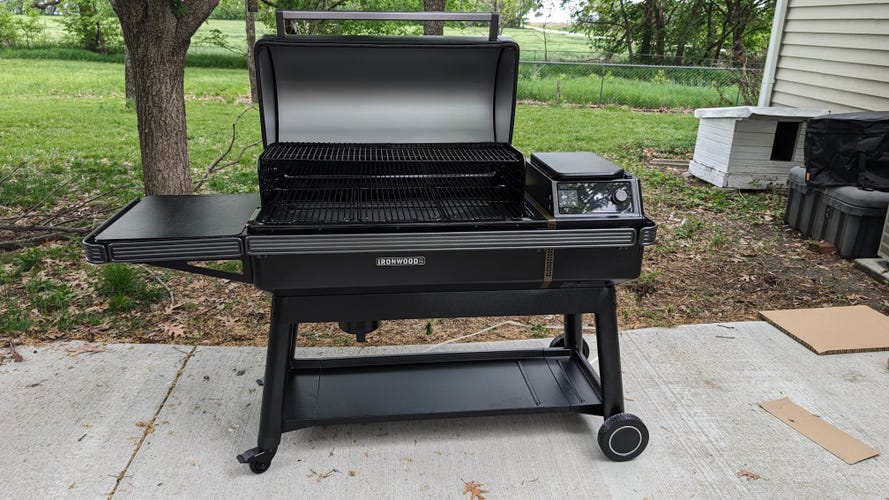
Traeger is often credited as the brand that kicked off the pellet grill trend, and for good reason. Whether we're talking about searing at high heat or smoking low and slow, the company knows its stuff. The Traeger Ironwood XL is a beast of a cooker. While providing delicious smoke, it exerts tight control over its cooking temperature. When testing, I used a temperature data logger using four probes, and the temperature range across the cooking area was from 10 to 20 degrees. However, that didn't seem to affect the taste.
Pros
- Even smoke achieved by the lid seal
- Light on lid and pellet hopper
- Mobile app for wireless adjustments
Cons
- Most expensive
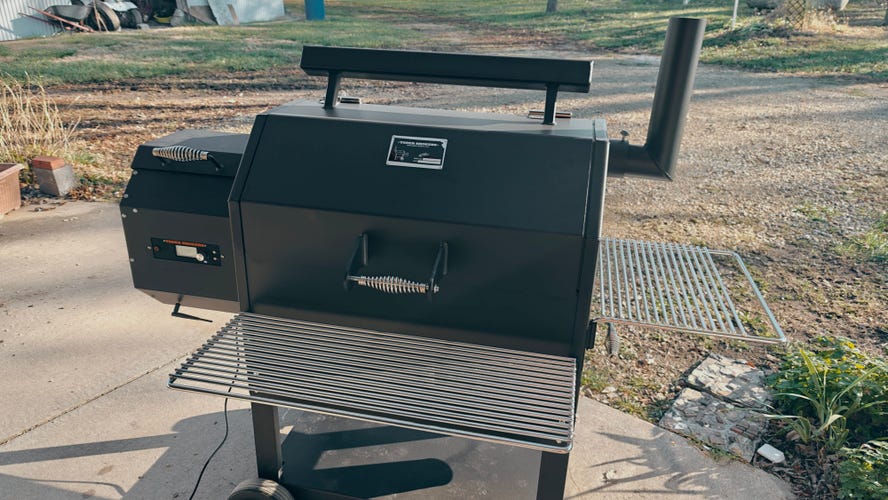
If you haven’t heard of Yoder Smokers, that’s because they aren’t sold at typical big box stores or even many local barbecue retailers. However, for folks looking for a pellet smoker that can sear, grill, bake, smoke and last a lifetime, a Yoder Smokers YS640s is the way to go.
Pros
- Direct flame access
- Excellent heat retention
- Built extremely well
Cons
- Very heavy
- Pricey
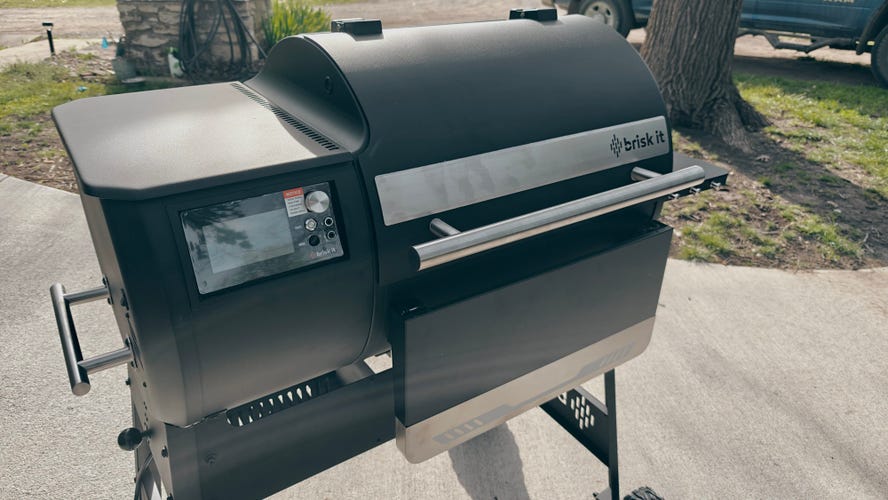
Brisk It is a newer brand in the pellet grill space, and its first foray into outdoor cooking is a pretty great one.
Pros
- AI features that help plan meals
Cons
- Smaller cooking space than other options, but was still plenty for me.
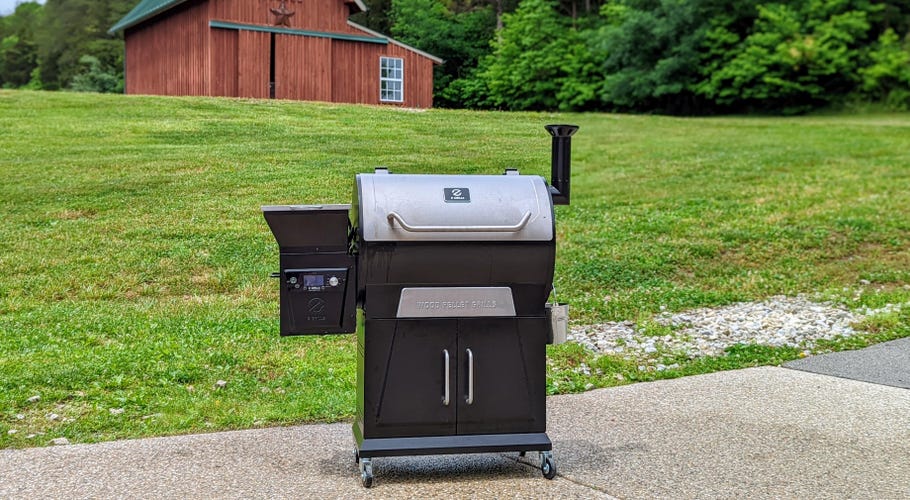
You don't have to lay out a huge amount of cash to net a quality pellet grill, thanks to the Z Grills 700D4E. Despite its relatively low price, this backyard cooker still did a great job during my testing.
Pros
- Comes with grilling accessories
- Most affordable
Cons
- Lowest maximum temp
YARD AND OUTDOORS DEALS OF THE WEEK
- $660 (save $71)
- $170 (save $60)

Pellet grills offer easily adjustable temperature ranges, from smoking to searing, with smoky goodness for all.
Best pellet grills of 2026


Traeger has found tasteful and unique was of ensuring you know you're using one of its grills when cooking.
Pros
- Even smoke achieved by the lid seal
- Light on lid and pellet hopper
- Mobile app for wireless adjustments
Cons
- Most expensive
Traeger is often credited as the brand that kicked off the pellet grill trend, and for good reason. Whether we're talking about searing at high heat or smoking low and slow, the company knows its stuff. The Traeger Ironwood XL is a beast of a cooker. While providing delicious smoke, it exerts tight control over its cooking temperature. When testing, I used a temperature data logger using four probes, and the temperature range across the cooking area was from 10 to 20 degrees. However, that didn't seem to affect the taste.
Why I like it: The Ironwood XL has a large downdraft exhaust on the back of the lid that runs almost the entire length. This and the excellent seal around the lid help to create an even smoke across the cooking grates. When opened, the lid offers a helpful light, perfect for those late-night cooks. The pellet hopper also has a light and monitors pellet levels. The grill burns through pellets relatively slowly.
The Traeger Ironwood XL's 924 square inches of cooking space handled everything from center-cut pork loin chops to a full brisket. The grill is Traeger "WiFire"-enabled, so when connected to the app, you can adjust temps, monitor the included cooking probes and see pellet levels.
Who is it good for: From the dial for adjusting grill temps to the easy-to-use and responsive touchscreen, the Ironwood XL is a fantastic all-around pellet grill that's best for people who want a grill that can do it all.
Who shouldn't buy it: People looking for the most affordable option, as it's the most expensive.


Recteq's Flagship XL boasts a massive 60-pound pellet hopper so you can forget about running out of fuel and focus on the flavor.
Pros
- Largest cooking area and pellet hopper
- Mobile app to control heat and monitor cooking
Cons
- Missing seal around the lid
There was a fair amount of variance from the four temp probes used on the data logger across the 1,437-square-inch surface. However, once the Flagship XL got to rolling smoke and cooking, it did a much better job of evening out. I attribute much of this to the heavy cast-iron heat shield over the fire pot, and the large stainless steel smoke deflector.
Why I like it:
Though Recteq may not have the same level of recognition as Traeger, the brand is primo among BBQ and smoker aficionados. From the unboxing to the assembly of this grill, it was clear that the brand takes great pride in its build quality. All the metal is heavy duty and sized to perfection, and even the iconic bullhorn lid handles are hefty.
To go along with the large cooking area, the Recteq Flagship XL boasts a massive pellet hopper that easily holds 40 pounds of pellets. During a marathon 24-hour cooking spree, I added about 15 pounds of pellets to ease my mind while the brisket cooked overnight.
Recteq includes two meat probes with the Flagship XL, which, when plugged in, can be monitored through the Recteq app. From there, you can also adjust heat and browse a large catalog of recipes for cooking on the grill.
Who is it good for: This grill is perfect for people who want a large cooking space and have the patio real estate to spare.
Who shouldn't buy it: If you have limited patio space this grill might not fit. Also, during testing, we found not enough sealing around the lid to help hold in more of the smoke.


The YS640s is a pellet smoker, grill, and oven all in one that is extremely well built.
Pros
- Direct flame access
- Excellent heat retention
- Built extremely well
Cons
- Very heavy
- Pricey
If you haven’t heard of Yoder Smokers, that’s because they aren’t sold at typical big box stores or even many local barbecue retailers. However, for folks looking for a pellet smoker that can sear, grill, bake, smoke and last a lifetime, a Yoder Smokers YS640s is the way to go.
Why I like it: Yoder's smokers are built in Yoder, Kansas, with heavy-gauge steel. The steel used for the YS640s is more than twice as thick as that used in the Traeger Ironwood XL. This leads to better heat retention during long cooking periods and a sturdier overall cooker.
The Yoder Smokers YS640s stands out in other ways, too. For example, this is the only pellet smoker that works like a traditional offset smoker by putting the burn pot at the left end of the grill. The YS640s also has a removable door in the heat deflector, which gives you direct access to the burn pot for a perfect sear over direct flames.
From cooking the perfect steak to a brisket that smoked for 14 hours, I’ve made delicious meat on this smoker's 1,070 square inches of cooking area. Not only that, I’ve also baked the perfect pizza with the tanklike pizza oven accessory. Though the price isn’t for everyone, the Yoder Smokers YS640s can cook anything you need and will stand the test of time.
Who is it good for: Those looking for a premium, long-lasting and versatile pellet smoker.
Who shouldn't buy it: If you’re on a limited budget or who need a lightweight grill.


The Origin 580 has a respectable 22-pound pellet hopper allowing you to cook without frequent refills.
Pros
- AI features that help plan meals
Cons
- Smaller cooking space than other options, but was still plenty for me.
Brisk It is a newer brand in the pellet grill space, and its first foray into outdoor cooking is a pretty great one.
Why I like it: The Brisk It Origin 580 offers 580 square inches of cooking area and a temperature range from 165 degrees to 500 degrees Fahrenheit. The grill is well built and produces good smoke from the pellets in the 22-pound hopper.
Like the Traeger Ironwood XL and Recteq Flagship XL, the Origin 580 did have some variances in temps across the cooking area. That said, the Brisk It consistently produced tasty meats. Whether it was pork chops, beer can chicken, pork butt or brisket, all the food turned out delicious.
While the Brisk It cooker offers many of the same useful features found with many other pellet grills, it does an excellent job of utilizing the app and intelligence it can provide. The Brisk It app is very easy to use and has an AI feature called Vera that can help you plan a meal: You simply tell it what you have on hand and it'll assemble a recipe.
Who is it good for: This is an ideal pick for people who want a smaller but still very effective pellet grill.
Who shouldn't buy it: Those who need a larger cooking space than 580 square inches may want to consider other options.

Pros
- Comes with grilling accessories
- Most affordable
Cons
- Lowest maximum temp
You don't have to lay out a huge amount of cash to net a quality pellet grill, thanks to the Z Grills 700D4E. Despite its relatively low price, this backyard cooker still did a great job during my testing.
Why I like it: The grill handled low-and-slow cooks well, staying within about 10 degrees of my target temperature (225 degrees F) for hours on end. The pork ribs I cooked this way were tender and packed plenty of smoke flavor. Chicken roasted on the Z Grills 700D4E wasn't bad either. Though the skin was nowhere near as crisp as I would've liked it to be, the meat was still tasty and not overdone.
Z Grills does bundle some nice extras with the grill, however. These include a pair of heat-resistant gloves, plus two meat temperature probes to help get you started.
Who is this good for: Folks on a budget and people new to pellet grills.
Who shouldn't buy it: If you want a good sear on your burgers, look for a grill that reaches temperatures above 450 degrees F. With a max of 450 degrees F, this grill falls short -- the patties were juicy and cooked through but lacked any real crust.
What we updated: May 2025
- We removed the Weber SmokeFire EPX6 Stealth Edition (2022) from our list since it's out of stock.
- We removed the Cuisinart Woodcreek 4 in 1 Pellet Grill from our list since it's discontinued.
Pellet grills compared
| Pellet Grill | Price | Cooking Area (sq in) | Special Features | Max Temperature |
|---|---|---|---|---|
| Traeger Ironwood XL | $1,800 | 924 | WiFire-enabled app, Downdraft exhaust | 500 degrees F |
| Recteq Flagship XL 1400 | $1,360 | 1,437 | Massive pellet hopper (40 lbs) | 650 degrees F |
| Yoder Smokers YS640s | $2,699 | 1,070 | Direct flame access for searing, Tank-like pizza oven accessory (sold separately) | 600 degrees F |
| Brisk It Origin 580 | $700 | 580 | AI Vera feature in app | 500 degrees F |
| Z Grills 700D4E | $777 | 697 | Heat-resistant gloves, meat probes included | 450 degrees F |
| Traeger Timberline 850 | $1,700 | 869 | Consistent cooking performance, efficient pellet use, Wi-Fi, hundreds of recipes in Traeger's app | 500 degrees F |
| Weber SmokeFire EX6 (2021) | $1,300 | 1,008 | Second-generation SmokeFire, decent pellet grill option | 600 degrees F |
Other pellet grills we tested
Traeger Timberline 850: A stalwart in the Traeger lineup, thanks to its consistent cooking performance, efficient use of pellets and excellent smoke, the Timberline 850 delivers time after time. The grill also does a good job of maintaining an even temperature from low-and-slow to high-temp searing. Plus, Traeger equipped it with Wi-Fi, so you can send any of the hundreds of recipes in Traeger's repository directly to your grill for easy cooking. It's not in the prime-time list above because it's an older model that's been surpassed by others in the Traeger lineup, but it's still a great option.
The $1,000-plus second-generation SmokeFire EX6 from 2021 is a decent pellet grill option. However, I recommend our top picks over it. You can read my full review of theEX6 from 2021 here.
Factors to consider when choosing a pellet grill

The Flagship XL uses a single smoke stack to draw smoke throughout the 1,437-square-inch cooking area.
Budget
As you might expect, given the wide range of features available for pellet grills -- from Wi-Fi to AI -- you'll find an equally wide range of prices. It's important to consider the kind of cooking you want to do and the features you find most necessary before you start the buying process. This will help you decide on your ideal budget. By purchasing a grill with a smaller cook space, under 350 square inches, you may save money, but you're also going to struggle to cook a lot of food at once, and you won't have room for larger cuts of meat. So consider your needs and wants to determine your budget as you begin your pellet grill buying research.
Portability
Do you plan to set up your grill and give it a permanent home on your patio, or do you want one you can easily relocate? For an easy-to-move pellet grill, you probably don't want something like our top pick, the Traeger Ironwood XL. Instead, something more along the lines of our midrange pick, the Brisk It Origin 580, is the better pick; it's smaller and easier to move.
Accessories
When checking out pellet grills, it's a good idea to look at what accessories come with the grill and are available for purchase, too. Traeger has loads of different accessories in its grill lineup. For the Ironwood series, because it uses Traeger's Pop-and-Lock system, you can easily add shelves, hooks, cup holders and more. And it offers cooking add-ons like a griddle, a fish and veggie tray and more. Recteq is similar in its accessory offerings, but a smaller brand like Brisk It has fewer add-ons. You may want to keep these things in mind when shopping for a pellet grill.
How we tested pellet grills

While most modern pellet grills have digital temperature readouts and do a pretty good job at maintaining temps, that isn't always the case.
To determine which pellet grills were best, I wanted to see how these products performed under a variety of cooking scenarios, so I conducted six separate tests with a variety of meats. Based on different meats, methods and heat settings, these tests showed how efficiently and evenly a grill does (or doesn't) cook.

Smoking pork ribs low and slow is a perfect test for pellet grills.
Test 1: Ribs
Before testing the grills one by one, I wired each one with a sensitive thermocouple thermometer at grate level. This sensor was also attached to a laptop running data-logging software.

Nicely smoked ribs should be juicy, tender and deliciously smokey.
Then, I ignited the grill and set the temperature to 225 degrees F and started recording, and I removed the outer membrane on a rack of pork back ribs and seasoned the ribs with an all-purpose rub I use for ribs and chicken. Once the grill's thermometer reported that it hit the desired temp, I placed the ribs on the grates for at least three hours with the lid closed the entire time.
After testing all the grills this way, I tasted the ribs for a quality check, as I did with each meat.

Beer can chicken is a great way to add flavor and moisture to your chicken as it cooks over your pellet grill.
Test 2: Chicken
To test a midrange cook time at medium heat settings, I grilled a whole chicken at 400 degrees F. After trimming and seasoning the bird, I inserted one temperature probe into each chicken breast, for a total of two probes per chicken. To keep results as fair as possible, all the chickens were as close as could be to 5.5 pounds.
To mix it up, I also tested out beer can chicken to gauge cooking the fowl another way. Standing the chicken upright while cooking presented another level of precision for the grills. With the same methods used to track temperatures throughout the cook, the chickens turned out juicy and delicious over the smoky 350-degree heat.
Test 3: Burgers
I measured out 5.3 ounces of 80/20 ground beef and pressed it into uniform patties. Those patties then went into a grill basket, and I inserted a temperature probe into the center of each patty at a 45-degree angle.

Cooking burgers at high heat helped us see how a pellet grill sears meat.
With the grill preheated for 10 minutes at its highest temperature setting, the basket then went onto the grill. After six minutes of cooking, I flipped the basket and monitored the internal temperature. Once the last burger in the basket reached 145 degrees F, which is my personal preference for the doneness of burgers, the batch was finished. In this test, I was looking for the best outside char on the burgers.
Burger testing helped point out any hot spots across the grill's cooking surface.
Test 4: Pork chops

Buying a whole pork loin and cutting your own chops is a great way to not only save money but also get even pork chops for cooking.
For the chops, I bought a whole pork loin and cut approximately 1-inch thick chops from it. Doing this is not only more economical, it also ensures the chops are equal in thickness, for a more even cook. After some seasoning, the center cut pork chops went onto the grills.
Temperatures were monitored throughout the cook over a 350-degree grill using the same methods as with the hamburgers. The chops cooked evenly and relatively quickly, as there were no bones to contend with.
Test 5: Boston pork butt

A Boston pork butt is ideal for pellet grills, as it absorbs plenty of smoke and yields delicious, pull-apart meat.
For a longer cook test, I used approximately 6 pounds of Boston pork butts, or pork shoulder, with a mixture of a sweet and savory dry rub with yellow and Dijon mustard as binders. With the pellet grills set to 225 degrees F, each piece of meat got two meat probes to monitor temps.
After cooking to 165 degrees F internally, I wrapped the meat in butcher's paper and put it back into the grill until it reached 195 degrees F. Then it was time to let the meat rest for an hour or so. Once that was done, I placed the meat into a tray and shredded it by pulling it apart. I used this test to determine which grills produced the most juicy, smoky and tender pork for sandwiches, mac and cheese and other dishes.
Test 6: Brisket

Beef brisket can be tricky to cook because it requires a long time at low temperatures to properly break down the fat and meat fibers.
The final test was an even longer cook, with beef brisket over a 13-hour period. The meat got trimmed and received a treatment of coarse kosher salt, yellow mustard and a smoky beef rub. Then I stuck in three meat probes to keep track of the temps across the large piece of meat. After that, I put the brisket in the middle of the grill at 225 degrees.
After about six hours and an internal temp of 165 degrees, I wrapped the brisket in butcher paper and placed it back into the grill. Once it hit 195 degrees, I wrapped aluminum foil around it to help maintain moisture and finished the cook at 225 degrees.
The grills produced juicy meat, with a beautiful smoke ring, that sliced up nicely. Being able to maintain even, consistent heat for something like brisket, which requires a long time to cook, is vital for properly breaking down the fat and protein fibers for delicious food.

