Key Takeaways
- You can calculate the current value of Series EE and I bonds at TreasuryDirect.gov.
- If you cash in your bond within the first five years, you’ll miss out on interest earnings.
- Cashing in paper bonds is slightly more complex than cashing in electronic bonds.
When you’re thinking about ways to grow your money safely, you aren’t limited solely to the products available at banks and credit unions. Series EE and I bonds -- sold by the federal government -- are also great ways to earn interest without worrying about the potential loss of your investment.
If you bought a savings bond years ago or a parent or grandparent bought one for you, you might be wondering how much it’s worth today. Here's how to find out.
How do you check the value of a savings bond online?
To determine the current value of your savings bond, visit TreasuryDirect.gov. The process is a bit different depending on whether your bond is a physical piece of paper or one purchased online.
Checking the value of your paper bond
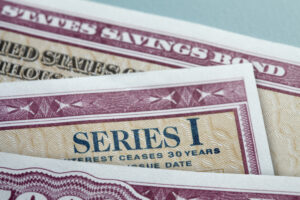
If you have a paper bond sitting in a desk drawer, you have somewhat of a rarity. The government stopped issuing paper EE bonds in 2012, although you can still buy up to $5,000 in paper I bonds with your tax refund.
You can find out what that piece of paper is worth by visiting Treasury Direct’s website and entering the following information into the savings bond calculator:
- Type of bond
- Denomination (face value)
- Bond serial number
- Issue date
Additionally, if you’re worried about the security of your paper bonds, you can convert paper bonds to electronic bonds via your TreasuryDirect account. You don’t have to pay any fees to convert your bonds, but you must pay the postage to send your paper bonds by mail so they can be converted.
Checking the value of your electronic bond
All Series EE bonds are now issued electronically. The vast majority of I bonds are also issued electronically, with the exception of tax refunds used to buy paper I bonds.
You can check the value of your electronic bonds by logging into your TreasuryDirect account. Your bond’s value will be displayed under the “current holdings” tab.
How to maximize the value of your bond
EE and I bonds can earn interest for up to a maximum of 30 years. You can cash in either after 12 months. If you cash in your bond within the first five years, you’ll miss out on the last three months of interest. The longer you keep an EE or I bond, the more interest accrues.
How to cash in your savings bond
If you’re ready to cash in your savings bond, the process is different for electronic and paper bonds. If you want to redeem part of your electronic bond, you can cash out $25 or more. (You have to leave at least $25 in the account if you don’t want to redeem the entire bond.)
Follow these steps to cash your electronic bond:
- Log into your TreasuryDirect account.
- Go to "Manage Direct" and follow the link for cashing securities.
- Be ready to include the account information of a checking or savings account where you want to deposit the money.
You can’t cash part of a paper savings bond, you have to redeem the full value. Follow these steps to cash your paper bonds:
- Cash your paper bonds at a bank or credit union where you have an account. Not all banks cash savings bonds and some limit how much you can cash at one time. So call your bank and ask if they cash paper bonds before you head over.
- If your bank doesn’t cash in bonds, you’ll need to complete FS Form 22.
- If the value of the bonds is greater than $1,000, you will need to get your signature certified with a public notary. These are relatively easy to find, UPS locations often have public notary officers on certain days of the week.
- Send the form (and your certified signature, if necessary) to: Treasury Retail Securities Services, PO Box 214, Minneapolis, MN 55480-0214
What happens if I cash in my savings bond early?
There are many reasons why you might want to cash in a bond before its maturity date. You might need the cash for an upcoming purchase, or you might want to move the money to a higher-risk investment with the potential for a higher reward.
You can redeem your savings bond a year after the date it’s issued, but you’ll miss out on the last three months of interest if you cash it in within the first five years. For example, if you bought a bond on Nov. 1, 2020, and cashed it in on Nov. 1, 2023, you’d receive the interest earned up to Aug. 1, 2023.
EE bonds have a fixed interest rate for at least the first 20 years, so you’re guaranteed to double the value of your bond if you leave it alone for two decades, according to TreasuryDirect. After 20 years, your EE bond’s interest rate may change for the following 10 years. You can’t hold a savings bond for more than 30 years.
The bottom line
Savings bonds issued by the US Treasury have undergone many changes over the years, and there are nuances to consider with each type of bond. Whether you have paper bonds or electronic bonds, checking the value is pretty straightforward using the TreasuryDirect website.