Are you feeling burned out by student loan news lately? I know I am. It seems that every week, there's a new, conflicting development: A plan is announced. Its legality is challenged. Then it ping-pongs through the courts, leaving us wondering what we should realistically expect.
This week was no exception. On Thursday, a federal court in Georgia temporarily blocked the Biden-Harris administration's latest attempt at widespread student loan forgiveness. Dubbed Plan B, this debt cancellation proposal had been expected to receive legal pushback — just not this soon.
Student loan specialist and CNET Money expert review board member Mark Kantrowitz explained why seven Republican-led states filed a lawsuit against the debt relief plan this week. After evidence showed that the Department of Education intended to start forgiving student loan balances as soon as the rules were finalized (instead of waiting the required 60 days), the courts took preemptive action.
However, according to Kantrowitz, this is a temporary restraining order, not a permanent injunction.
Meanwhile, the administration's affordable student loan repayment plan called SAVE, or Saving on a Valuable Education, which was set to take effect this fall, has also been blocked by legal challenges. Unlike Plan B, SAVE is an income-driven repayment plan that also offers debt relief benefits. Those enrolled in SAVE have had their payments on pause while its future is wrapped in court battles.
"With the coming election, it's hard to predict what the future holds for student loan borrowers, repayment options and forgiveness," Elaine Rubin, a student loan policy expert and director of corporate communications at Edvisors, a college financial planning website, told CNET last month.
What's actually going on with federal student debt relief? How likely is it that we'll see debt cancellation or lower payments in the future? I've been tracking developments over the past few months, and here's what experts tell me.
Student loan forgiveness is still at risk
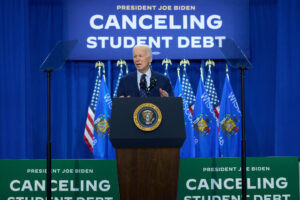
Last year, the Biden-Harris administration's first attempt at widespread forgiveness was shot down by the Supreme Court. Then, in April, the administration announced Plan B, a second plan for broader debt relief that would offer relief to more than 27 million student loan borrowers. In August, the Department of Education emailed borrowers, notifying them of their eligibility for Plan B and giving them the chance to opt out of the debt relief plan.
Many borrowers, still reeling from multiple legal challenges surrounding the SAVE repayment plan, were left even more confused. After the emails were sent, Kantrowitz and Rubin both told CNET they expected immediate pushback on Plan B and that borrowers shouldn't set their hopes too high.
At this stage, Kantrowitz believes the SAVE plan is more likely to survive legal challenges than the Plan B forgiveness plan. But although the case in favor of SAVE is strong, it doesn't mean it will be an easy win. The plan could be reinstated, but it also could be blocked, either partially or entirely.
"The SAVE Plan is still at risk, and the fight over the plan will continue," said Rubin.
Who would be eligible for the Plan B forgiveness plan?
If enacted, it would grant forgiveness to borrowers who meet one of the following criteria:
- Have a loan balance that’s grown significantly due to interest charges
- Hold undergraduate federal student loans and entered repayment more than 20 years ago (25 years for those with graduate loans)
- Would have been eligible for forgiveness under an existing income-driven repayment plan but have not yet applied
- Have experienced significant financial hardship or attended a school that lost its federal funding
What student loan borrowers can do now
Rubin and Kantrowtiz said it's best for most borrowers to wait to see how these cases play out in the courts. But depending on your specific student loan situation, there are steps you can take now.
You can switch to another income-driven repayment plan to receive forgiveness sooner. Just keep in mind that the Department of Education has taken down the online application to switch plans. You’ll need to fill out a PDF application, then upload it or mail it to your loan servicer. Kantrowitz added that there’s a 90-day wait time for applications, so the process will take at least three months to complete.
If you’re enrolled in SAVE, you may be eligible for forgiveness sooner under another income-driven repayment plan. If you’d like to switch, you can fill out this PDF application, then upload it or mail it to your loan servicer. Expect at least 90 days for your application to process.
However, since payments are on hold for SAVE borrowers, waiting won’t cause you any harm other than delaying your forgiveness. If SAVE is shot down, you’ll likely be moved to another income-driven repayment plan or prompted to choose a different one.
There’s no benefit to switching plans right now unless you’re close to receiving forgiveness. You can plan ahead and explore your other payment options now by checking out the loan simulation calculators on StudentAid.gov. They can help you figure out how much your new monthly payments are likely to be under different IDRs.