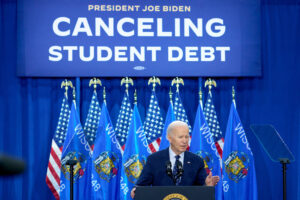
The Biden administration filed an emergency request with the Supreme Court on Tuesday, asking the highest court to reject the 8th US Circuit Court of Appeals' decision to block its Saving on a Valuable Education debt relief plan.
"The Eighth Circuit's injunction has severely harmed millions of borrowers and the Department by blocking long-planned changes and creating widespread confusion and uncertainty," read the request, written by Solicitor General Elizabeth Prelogar.
This isn't the first appeals court decision on the student loan repayment plan. On July 31, the 10th US Circuit Court of Appeals issued a temporary ruling allowing the Department of Education to proceed with making monthly payment cuts. This decision directly contradicts part of the 8th Circuit Court's rulings.
If the Supreme Court takes up the case, its verdict would clarify the future of the income-driven repayment plan. But Mark Kantrowitz, a financial aid expert and CNET expert review board member, told CNET that the Supreme Court is unlikely to respond until final decisions are issued by the lower courts.
Elaine Rubin, a student loan and policy expert, CNET expert review board member and director of corporate communications for Edvisors, agrees. "Even with the latest appeal to the Supreme Court, borrowers enrolled in the plan will stay in a holding pattern."
While this issue is tied up in the courts, you won't have to make monhtly student loan payments if you're enrolled in SAVE. But the payment pause also won't count toward your total forgiveness payment count either.
If you signed up for SAVE and are feeling lost about what's happening, here's what you need to know.
SAVE remains on hold
The Biden administration can't offer new forgiveness through SAVE right now. It also can't proceed with slashing payments for borrowers from 10% to 5% of their discretionary income -- a benefit that was supposed to go into effect on July 1. How the Supreme Court responds to the administration's emergency request will help clarify what happens next with SAVE.
It's unclear how long the court process will take, but Kantrowitz said it could take months or even a year to resolve the cases.
What's likely to happen to the repayment plan is also uncertain, but Kantrowitz said SAVE has a strong case. "The debt relief through SAVE should survive the legal challenges. SAVE is based on existing specific regulatory authority already provided by Congress to the US Department of Education."
Payments will remain paused for SAVE borrowers
The Department of Education placed student loans for SAVE borrowers in a temporary forbearance at the beginning of July. If you're enrolled in SAVE, expect your monthly payments to remain on hold until we receive a final court ruling.
If SAVE is struck down, your monthly payments may stay paused until the Department of Education can provide next steps or transition you to a different income-driven repayment plan.
This doesn't affect loans already forgiven under SAVE
If you were enrolled in SAVE and already received student loan forgiveness, the new hiccups won't put you back on the hook. The outcome of SAVE will impact only borrowers currently enrolled in the income-driven repayment plan who still have loan balances.
Review other options, but wait for a final verdict
Unless you're close to receiving forgiveness, there's not much SAVE borrowers should do right now. Kantrowitz said that for most of the 8 million borrowers in SAVE, waiting is the best strategy right now.
One thing you can do is explore other income-driven repayment plans so you know your options if SAVE is struck down. Your payments may be slightly higher than they were with SAVE, but you'll still be eligible for forgiveness after making on-time payments for 20 to 25 years.
However, switching to another IDR isn't easy right now, said Rubin. Since the Department of Education has pulled online applications, you'll need to submit a paper application, she added.
There are some exceptions. If you've been paying your loans for more than 20 to 25 years and can qualify for debt cancellation under Pay As You Earn or another income-driven repayment plan, you might consider switching to receive debt relief faster. If you're eligible for forgiveness under the Public Service Loan Forgiveness program and have made 120 qualifying payments or more, switching to another IDR could also help you receive forgiveness sooner.
What does this mean for other student loan forgiveness options?
The Biden administration recently released the full details on another debt relief plan that would bring the total number of borrowers eligible for student loan relief up to 30 million. The administration's "Plan B" proposal is its second attempt at widespread student loan forgiveness after its first plan was shot down by the Supreme Court in 2023. Experts expect this new debt relief plan will face legal hurdles.
"Generally, the SAVE plan is more likely to survive legal challenges than Plan B," Kantrowitz said. But if SAVE is shot down, he added that it won't have any bearing on the administration's newest debt relief plan.