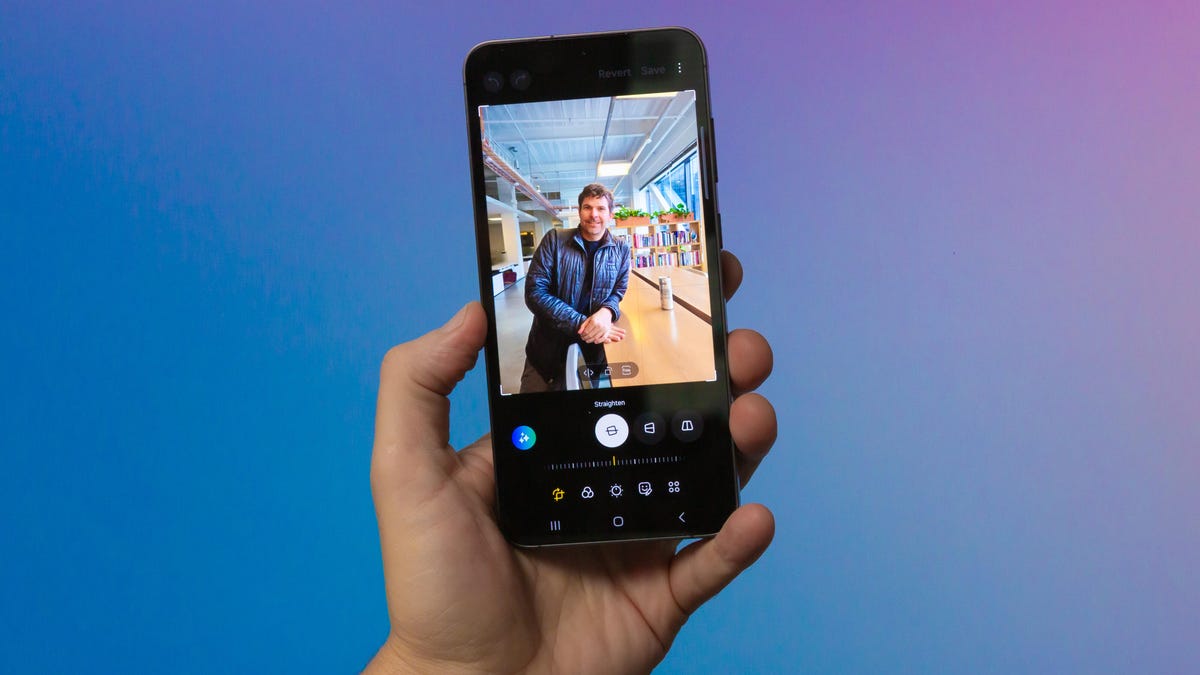
Like its little brother, the X-M1, the X-E1 delivers excellent photo quality.
Lori Grunin
I've been reviewing hardware and software, devising testing methodology and handed out buying advice for what seems like forever; I'm currently absorbed by computers and gaming hardware, but previously spent many years concentrating on cameras. I've also volunteered with a cat rescue for over 15 years doing adoptions, designing marketing materials, managing volunteers and, of course, photographing cats.
Unsurprisingly, the Fujifilm X-E1's noise profile and image processing look very much like the X-M1's. In this case, it's really clean up through and including ISO 1600 in good light, with just a hair of detail degradation starting to appear at ISO 1600.
2 of 13Lori Grunin/CNET
Noise and JPEG processing, high ISO sensitivities
ISO 3200 still looks pretty good, although there's a jump in noise between ISO 1600 and ISO 3200. ISO 6400 is still usable in good light, but you can see how much detail is lost in the text under the currency and on it.
3 of 13Lori Grunin/CNET
ISO 200 JPEG
The camera and 18-55mm kit lens resolve detail very well.
(1/105 sec, f5.6, ISO 200, AWB, multi metering, 18-55mm lens at 48.4mm)
4 of 13Lori Grunin/CNET
ISO 400 JPEG
Detail resolution and noise at ISO 400 look as good as ISO 200.
(1/20 sec, f5, ISO 400, AWB, spot metering, 18-55mm lens at 18mm)
5 of 13Lori Grunin/CNET
ISO 800 JPEG
I was a little disappointed with the fuzziness of the edges (on the wood, at least) at ISO 800 in this and other ISO 800 shots, but overall they're still quite usable.
(1/60 sec, f3.6, ISO 800, AWB, multi metering, 18-55mm lens at 35.8mm)
6 of 13Lori Grunin/CNET
ISO 1600 JPEG
This is pretty clean for ISO 1600.
(1/60 sec, f4, ISO 1600, AWB, spot metering, 18-55mm lens at 55mm)
7 of 13Lori Grunin/CNET
ISO 1600, raw vs. JPEG
Shooting raw at higher ISO sensitivities can buy you just a little more sharpness, but only if you're willing to accept some grain. Compared with typical Bayer-array sensors, the X-Trans sensor's images require less traditional color noise reduction, but are less sensitive to luminance noise reduction. (Crop from preview image.)
8 of 13Lori Grunin/CNET
ISO 3200 JPEG
Though a little soft, this shot looks clean compared with most other cameras'.
(1/30 sec, f4.5, ISO 3200, AWB, multi metering, 18-55mm lens at 25.4mm)
9 of 13Lori Grunin/CNET
ISO 6400 JPEG
You can see the obvious noise reduction at ISO 6400, and 13x19 prints look soft, but acceptable.
(1/125 sec, f4, ISO 6400, AWB, multi metering, 18-55mm lens at 55mm)
10 of 13Lori Grunin/CNET
ISO 6400, hot pixels
The X-E1's JPEGs seemed a little more prone to hot pixels -- look at the white dots along his arm -- than the X-M1 at high ISO sensitivities. (Same image as previous.)
11 of 13Lori Grunin/CNET
Color
The camera's default color setting produces pleasing colors that aren't overdone.
12 of 13Lori Grunin/CNET
Film simulations
Fujifilm's default Provia setting boosts contrast and saturation, but not egregiously. The Pro Negative Standard profile is the closest thing I could find to neutral that wasn't overly soft (like Astia).
(1/400 sec, f4, ISO 200, multi metering, AWB, 18-55mm lens at 50.5mm)
13 of 13Lori Grunin/CNET
Bokeh, 18-55mm lens
The 18-55mm f2.8-4 lens is a step above the usual kit lenses, faster and a little sharper, with nice soft out-of-focus highlights.
(1/680 sec, f2.8, ISO 200, AWB, multi metering, 18-55mm lens at 18mm)