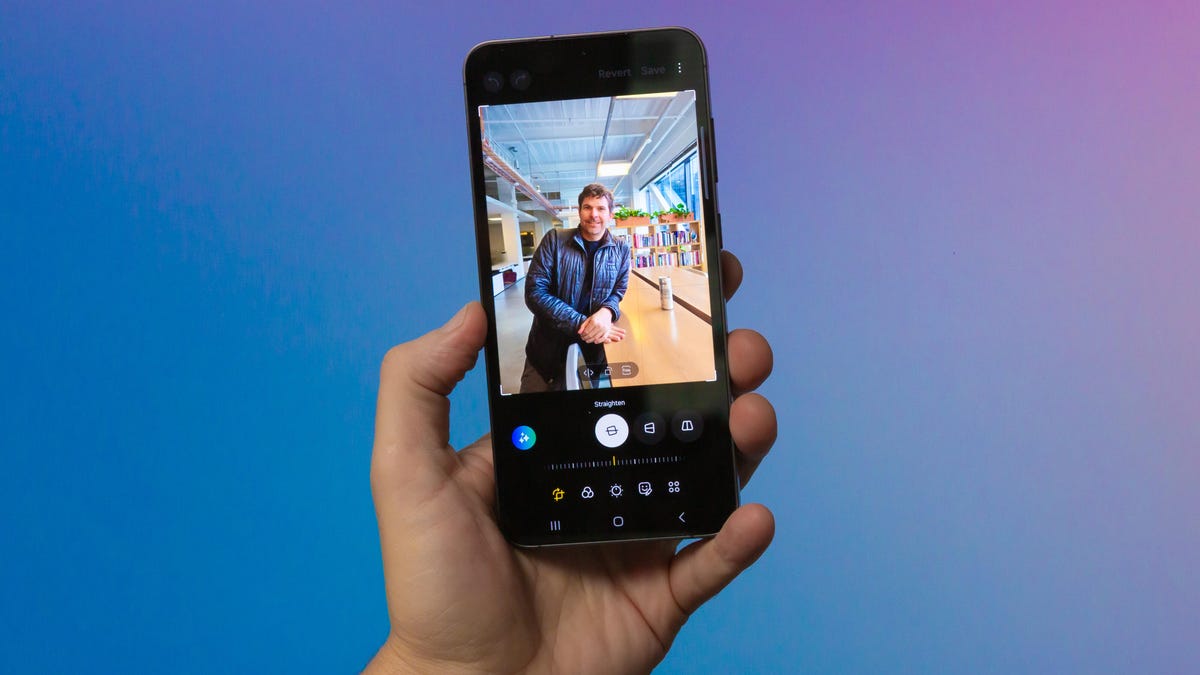
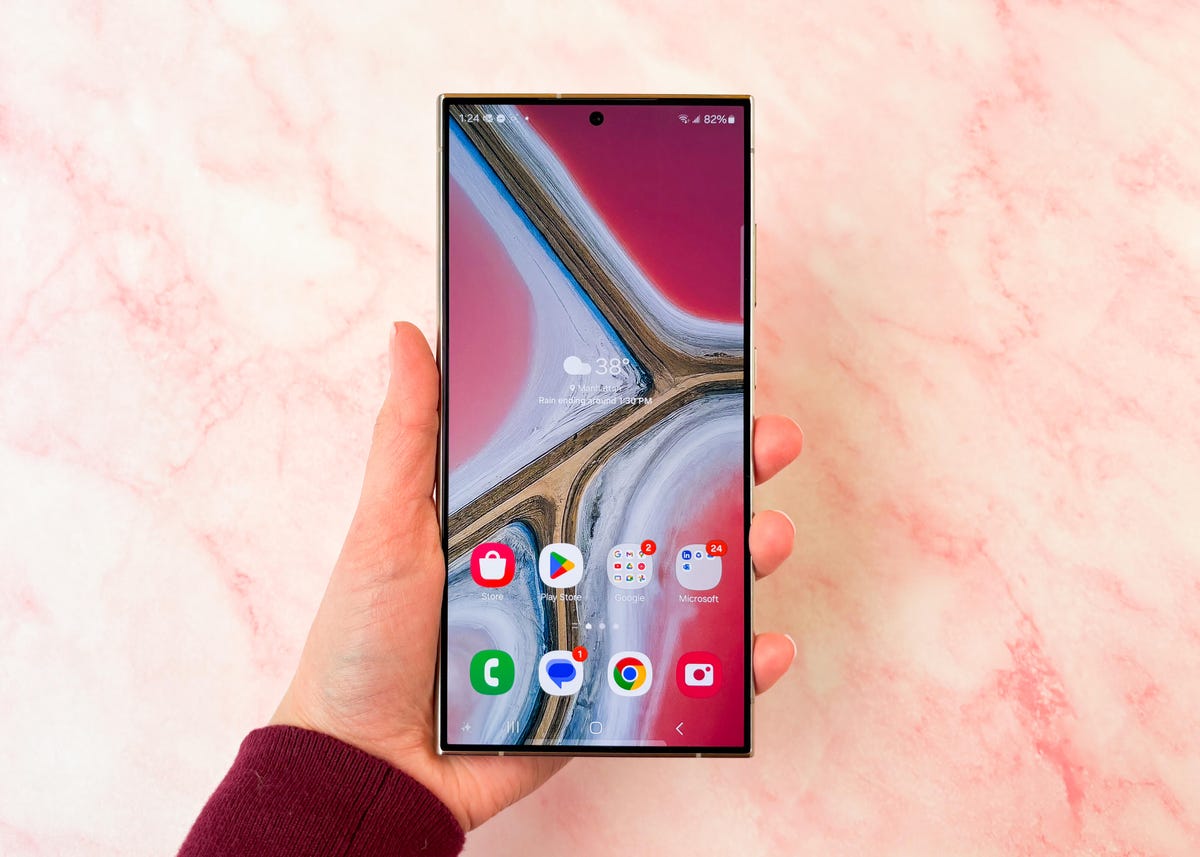
Samsung's newest Android phone has Ice Cream Sandwich, new features, and a sleek design. See it for yourself in CNET's hands-on photo gallery.
Aloysius Low
Aloysius Low is a Senior Editor at CNET covering mobile and Asia. Based in Singapore, he loves playing Dota 2 when he can spare the time and is also the owner-minion of two adorable cats.
Meet the latest creation from Samsung and Google--the Galaxy Nexus. It's not a bad name, though the original leaked name of the Nexus Prime does is more exciting.
2 of 26Aloysius Low/CNET Asia
Super AMOLED HD display
Inside is a powerful 1.2GHz Texas Instruments OMAP4460 dual-core processor. The handset also sports a large 4.65-inch Super AMOLED HD display, which dwarfs both the Nexus S and iPhone 4S. The screen has a resolution of 1,280 x 720 pixels, which is comparable to current notebooks. The display looks great on the eyes, and colors simply pop out.
3 of 26Aloysius Low/CNET Asia
Contoured screen
Like the Nexus S (right), the Galaxy Nexus features a contoured screen, and the curved angle is a pretty sight in a sea of squarish and flat handsets.
4 of 26Aloysius Low/CNET Asia
Thin
The smartphone is 8.9mm (0.35 inches) at its thinnest point, while the Galaxy S II is slightly thinner at 8.7mm (0.34 inches). Do note however, that the edges are slightly thicker when compared to the iPhone 4 and 4S which retain a constant 9.3mm (0.36 inches) depth throughout its body.
5 of 26Aloysius Low/CNET Asia
Size
Strangely, the Galaxy S II (foreground) feels like it's almost the same size (it's actually smaller). This is probably due to the thinner bezel of the Galaxy Nexus to accommodate the bigger display.
6 of 26Aloysius Low/CNET Asia
No physical menu buttons
Unlike the old Android smartphones of yore, the Galaxy Nexus has no physical menu buttons. Instead it's all virtual, similar to Honeycomb tablets.
7 of 26Aloysius Low/CNET Asia
Storage
The Galaxy Nexus (right) comes packing 1GB of RAM and either 16 or 32GB of storage. The Nexus S is on the left.
8 of 26Aloysius Low/CNET Asia
Buttons
You still need buttons to power on/off your handset and to control your audio volume. Perhaps in the future this will also be implemented on the software side.
9 of 26Aloysius Low/CNET Asia
Hyperskin
The rear of the smartphone shows off its creators' branding, and you'll find both Google and Samsung logos on the "hyperskin" battery cover. Under the hood is a 1,750mAh battery.
10 of 26Aloysius Low/CNET Asia
Camera
Like the Nexus S, the Galaxy Nexus features a 5-megapixel camera. However, compared to the very slow shutter of the Nexus S, the newer smartphone has a very quick shutter, allowing you to snap your pictures much quicker. You can also quickly share the pictures taken via a sharing menu.
11 of 26Aloysius Low/CNET Asia
Video
On the front you'll find a 1.3-megapixel camera for video calls.
12 of 26Aloysius Low/CNET Asia
NFC
The Galaxy Nexus comes with NFC and makes full use of the Google's latest operating system, Android 4.0 for a new feature called Android Beam. This feature lets you share Web pages, YouTube videos and apps via a simple tap.
13 of 26Aloysius Low/CNET Asia
Facial recognition
Also new to Android 4.0 is the smartphone's ability to recognize faces. Dubbed Face Unlock, this feature will know what you look like and unlock your phone.
14 of 26Aloysius Low/CNET Asia
Lock screen
Speaking of unlocks, Android 4.0 comes with a new lock screen.
15 of 26Aloysius Low/CNET Asia
Home screen
The Home screen also looks different and cleaner than before. The search bar gets a much sleeker minimalist look.
16 of 26Aloysius Low/CNET Asia
Interface
The Phone app has also been redesigned, allowing for a much cleaner interface. You also can swipe to switch pages (like Microsoft's Metro UI).
17 of 26Aloysius Low/CNET Asia
Photos
Ice Cream Sandwich also lets you edit your photos, and there are a whole bunch of filters to jazz up your shots.
18 of 26Aloysius Low/CNET Asia
Google+
Google+ feels more integrated into the operating system and the new People's app will let you update your status without having to open up the Google+ app. You also can add any social network into the People app for updates.
19 of 26Aloysius Low/CNET Asia
Calendar
The Calendar app sports a cleaner interface, and you can now pinch to zoom in and out for an overview of your appointments.
20 of 26Aloysius Low/CNET Asia
Gmail
The redesigned Gmail app takes advantage of the new Roboto font for a clean and gorgeous looking interface.
21 of 26Aloysius Low/CNET Asia
Sort apps
You can now sort apps into folders. You can also take screenshots using by pressing the volume down and power button.
22 of 26Aloysius Low/CNET Asia
Browse apps
You can also browse a list of frequently used apps, and close them by flicking them towards the sides.
23 of 26Aloysius Low/CNET Asia
Flick
The same flick gesture is also used for closing the tabs in your browser.
24 of 26Aloysius Low/CNET Asia
Monitoring data
The new Data Usage app lets you monitor how much data you've been using. You also can set limits and check how much bandwidth individual apps are using.
25 of 26Aloysius Low/CNET Asia
Android 4.0.1
Interestingly, the Galaxy Nexus is running on Android 4.0.1. A minor thing, though, and we're guessing this could be due to some last minute bug fixes.
26 of 26Aloysius Low/CNET Asia
Benchmark score
We've also managed to get our hands on a Quadrant benchmark score, and while the score seems pretty low, we're guessing it may be due to the benchmark not coded properly for Android 4.0. In our hands, the phone was definitely quick and very responsive.