


The Canon Digital IXUS 860 IS is the latest in the stylish IXUS range of all-conquering compacts. Priced at around £250, the 860 IS might seem costly for an 8-megapixel camera, but in fact Canon seems to have sidestepped the megapixel race and instead packed this model with plenty of features.
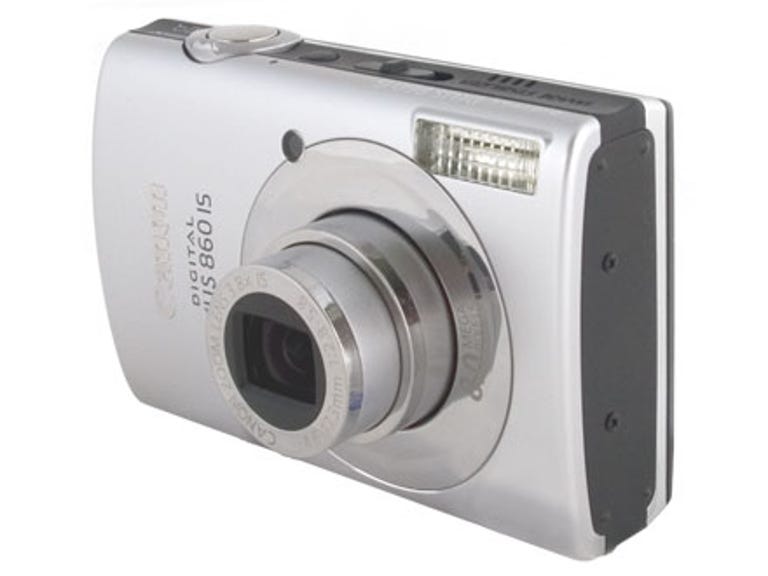
Canon Digital IXUS 860 IS
The Good
The Bad
The Bottom Line
Design
The 860 IS continues the IXUS tradition of elegant two-tone silver and black styling, with a rippling silver lens ring and a tactile black stripe around the circumference of the camera. The screen is massive -- 76mm (3 inches) across with clear and bright 230,000-pixel resolution.

The 860 IS feels solid and weighty in its metal body. The battery card slot is sturdy but the USB cover is less so. It's not as thin as other models in the IXUS range, but a flush-folding lens ensures the 860 IS is pocket friendly.
Features
The 860 IS packs in a wealth of features, but as with most of the IXUS range, manual control is limited. We're impressed by optical image stabilisation in any compact, and especially by the three modes offered here. These include a mode that only cancels vertical movement, so you can pan horizontally after a fast-moving subject without confusing the system that moves the sensor.
Canon's new Digic III processor handles the thinking, including noise reduction and face detection, which sets autofocus and exposure for up to nine faces in a frame. You get 10 scene modes, which might not seem like much compared to some manufacturers' 30-plus, but all the major bases -- like night and portrait -- are covered.
Navigation and operation is extremely user-friendly. The menus arecolourful and accessible, with large clear type making the most of thelarge screen. The value of the giant screen is somewhat muted inshooting mode by the scattering of overlarge icons cluttering up thedisplay real estate, although these can be turned off. The dedicatedsharing button for printing or transferring files can beassigned to a favourite setting for quick access to common settings.
The lack of manual control is balanced out by efficient automaticexposure and white balance. Autofocus rarely struggles, even in thedark when aided by a powerful focus assist lamp. Colours are accuratelyreproduced and noise is well handled.
Red-eye correction is available, but disappointingly involvesdrawing boxes on pictures in playback mode. Red-eye can be a problemwith the flash so close to the lens, but on the plus side flashexposure compensation allows you to control the intensity of the flash.This cuts down on bleached-white subjects and allows you to compromisebetween well-lit detail and cosy lighting conditions in lower-lightsituations.

Performance
The 860 IS captured a first image less than a second afterbeing turned on. The blistering performance continued with virtually noappreciable shutter lag and a maximum of 2.5 seconds between pictures,with the flash on. In continuous mode it managed just over one frameper second.
Battery life is good even with the image stabilisation systemworking continuously with our testing getting through more than 220shots before the battery died.
Image quality
As with many compacts, the 860 IS hasa range of ISO speeds up to 1,600 for shooting in lower lightconditions, and as on many compacts the maximum setting is too noisy touse. But aside from this the other ISO speeds are refreshingly free ofspeckly noise. The 860 IS keeps noise reduction unobtrusive with littlesoftening of detail, and the dark texture of shadow is well renderedeven up to ISO 800.
Conclusion
While we're generally unimpressed by a lack of aperture andshutter priority, the Canon Digital IXUS 860 IS just about gets away with it,thanks to competent automatic functions and a wealth of features. Some,like image stabilisation and flash intensity adjustment, are endlesslyuseful, while others are inconsequential but fun.
The Fujifilm FinePix F40fdmatches the Canon's 8 megapixels and raises the bar on low-lightperformance for substantially less money, but lacks mechanical imagestabilisation or a big screen. Meanwhile, the Casio Exilim Zoom EX-Z1200 serves up 12 megapixels, with mechanical image stabilisation, for a similar price.
Whilethere are certainly cameras out there with higher megapixel counts, the860 IS' combination of features, big screen and wide angle lens servingup excellent photographs shows that there's far more to digitalphotography than megapixels.
Edited by Jason Jenkins
Additional editing by Shannon Doubleday