


With the format war now over and Blu-ray victorious, Hitachi should be on to a winner as the first to bring a Blu-ray camcorder to market. Available for around £569, the DZ-BD70E camcorder, which records video footage on to Blu-ray discs, is a high definition shooter that records 'Full HD', 1,920x1,080-pixel video.
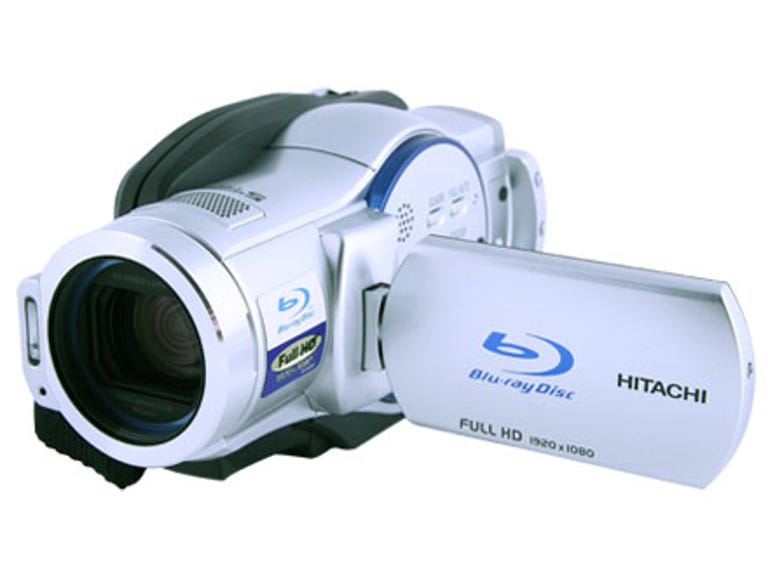
Hitachi DZ-BD70E
The Good
The Bad
The Bottom Line
Design
The BD70E is decked out in silver and grey, with nifty flecks of blue. One of the downsides of disc-based camcorders is the bulk of the frame, because of the physical dimensions of the disc. It's chunkier than tiny hard drive-based camcorders, but it's nicely balanced and not too heavy. Controls are well spaced and the zoom rocker is pleasingly responsive.
The fold-out 16:9 screen measures 69mm (2.7 inches), which is a perfectly respectable size but feels small next to the bulbous midsection. You can choose to use a retractable electronic viewfinder instead, but like many EVFs, motion blur can be hard on the eyes.
The essential HDMI and USB connections are included, although they take some finding. The box also contains a remote control and 8cm Blu-ray disc to get you started, which is handy as recordable BD-R and rewritable BD-RE discs aren't cheap. An unpowered accessory cold shoe is also available for attaching extra kit.
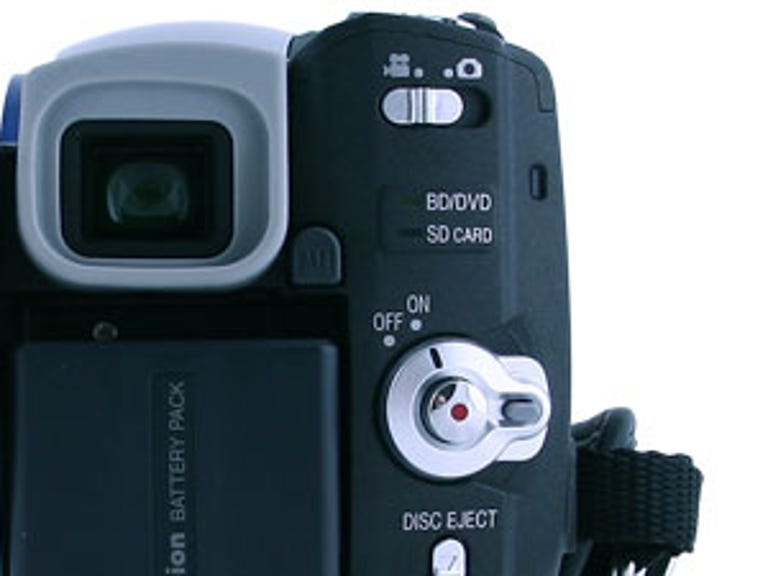
The disc compartment is powered, so when the camcorder is off you can't retrieve your disc: annoying if the battery dies.
Features
The BD70E packs a creditable 5.3 megapixels on a CMOS sensor. This means that decent stills are possible, but sadly not while the camera is recording video. You also get a 10x zoom.

The interactive guide function is an excellent idea. It leads you through options clearing up the tricky question for new users of which cable is required to connect to their televisions. Cleverly, this includes illustrations, such as different socket types. Unfortunately, the only other options addressed are what kind of disc you need, and how to set the mode switch. Illustrated guides to all the shooting functions would have made this feature truly impressive.
A 7.5GB disk will hold 1 hour of Full HD footage, or two hours of lower resolution HD. The 7.5GB Maxell single-sided rewritable Blu-ray mini-disc provided costs between £35-40 if bought separately. Discs don't have the fastest reactions: even the shortest 5-second piece of footage took 20-30 seconds to write. A 'disc access' message remains onscreen and new footage could not be recorded, or functions accessed, in this time.
Performance
When the camera is switched on, the screen powers on in 6 seconds, withthe disc access message onscreen for a further 6 seconds before thecamcorder is ready to shoot. A quick start mode keeps the camera onstandby for a limited time, with power-up and recording virtuallyinstant.

HD footage is crisp and sharp, with occasional compressionartefacts. Motion blur is present when panning. The autofocus copeswell with zooming and moving the camera, but only if moving fairlyslowly: quick zooms see the focus drop out and the struggle to regainfocus is hit and miss.
Autoexposure is surprisingly easily confused. Highlights tendto be blown out, especially when moving from dark areas tohighly-contrasted light areas. For example, if moving from a streetscene to the sky, detail is lost in the sky.
In indoor conditions, there is a lot of noise with theattendant loss of detail, but the autoexposure holds up better thanexpected when adjusting for light sources.
Conclusion
As the manufacturers of the only Blu-ray camcorder on the market,Hitachi holds a unique position. With the format war only just comingto an end, consumers haven't fully committed to Blu-ray yet. As such,it's unlikely many people are desperate to own a Blu-ray camcorder,cool as it is.
The DZ-BD70E certainly beats DVD-basedcamcorders' storage capacity, but we wonder if physical media is a blind alley in the age of giant harddrives like the 100GB Sony HDR-SR7. It's a decent and stylish, ifslightly chunky, shooter. It's just not the best option for anyonewanting the convenience of disc recording with the quality of HD.
Edited by Jason Jenkins
Additional editing by Shannon Doubleday