


HP joins the small but growing number of PC makers entering what I call the tabletop PC space. That's shorthand for a big-screen all-in-one desktop PC that includes a battery for short-haul portability, plus an ability to lie flat on a surface, creating an optional face-up view. These are essentially megatablets with either built-in kickstands or desktop docks, and represent one of the only truly unique and interesting things going on in desktop computer design right now (at least until Apple's Mac Pro hits).
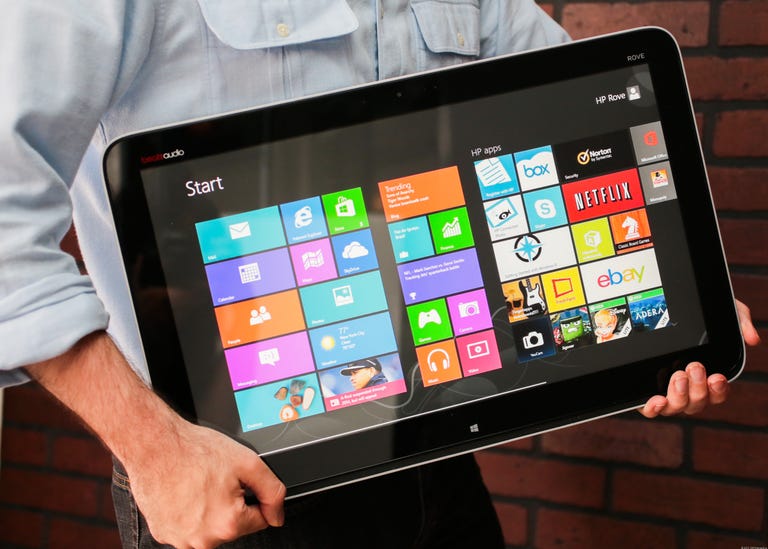
HP Envy Rove 20
The Good
The Bad
The Bottom Line
The $899 HP Envy Rove aims to bring a big 20-inch tablet/desktop to the masses at a very mainstream price. It does this by keeping the CPU on the low end, with a new fourth-generation Intel Core i3, and restricting the 20-inch display to a middling 1,600x900-pixel native resolution (some competing systems have full 1,920x1,080-pixel screens).
Sony's very similarVaio Tap 20offers essentially the same deal (including the 1,600x900-pixel screen), although the Core i3 offered is a last-gen chip, and upgrading to match the HP Rove's 1TB HDD brings that system up to $949.
Other entries in this field are either larger or smaller, with the Dell XPS 18 dropping two inches from its screen size, and the Lenovo Horizon 27 bumping it up to, you guessed it, 27 inches. The Lenovo Horizon, while a favorite, is a much different animal just based on its size (and $1,500-plus price), but Dell's version presents an interesting choice.
A comparable model is $100 more, $999, and has a last-gen Core i3 CPU and only 500GB of HDD storage, and, of course the screen in smaller (although it's a full 1080p screen). The interesting part is that while the HP Rove and the Sony Tap 20 both weigh around 12 pounds, the XPS 18 manages to be an essentially similar machine at only a bit above five pounds. If you put them side by side (as we did), it's a pretty stunning difference, making one an essentially desk-locked system you can lug from room to room occasionally, and the other a reasonably portable lap-size tablet that can also stand upright when needed.
But if weight isn't your main concern, the HP Rove does has some serious advantages. The built-in kickstand is rock-solid and adjusts to different angles easily, while the Dell XPS 18 relies on a couple of wimpy plastic fold-out fins (or you can buy a $99 metal docking stand). The Rove also features HP's standard Beats Audio subsystem, more USB ports, and a clever on-demand screen rotation button that keeps Windows 8 from flipping the image around every time you jostle the screen.
I think this is a very interesting and growing field, with plenty of practical family and entertainment possibilities. The lie-flat tabletop PC is an entirely different animal, with features of a personal computer, a piece of consumer electronics equipment, and even living-room furniture. Not everyone needs a tabletop PC on their coffee table, and I'd be inclined to lean toward the smaller, lighter Dell or the massive 27-inch Lenovo, but HP's new Rove 20 also gets a nod for providing the best price, most hard-drive space, and the latest Intel processors.