


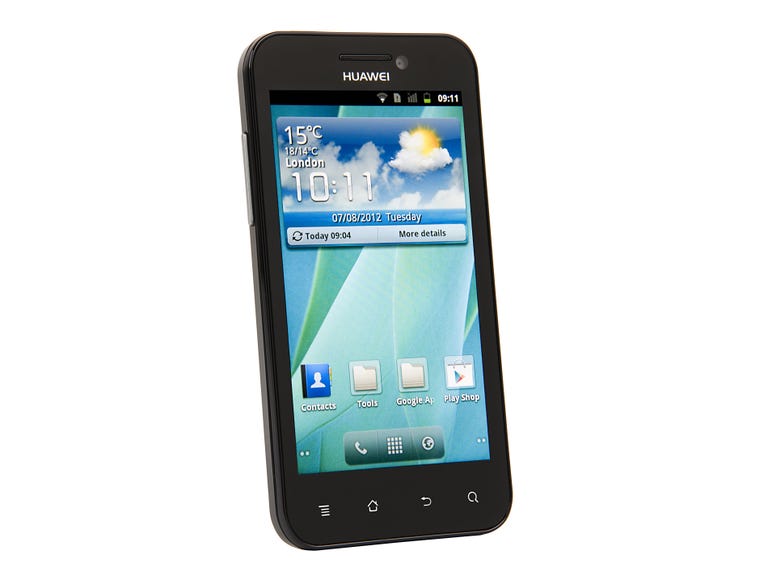
The Huawei Honor doesn't have the honour of being in Huawei's likeable Ascend series of mobile devices. But it does boast a pretty big battery that can apparently keep going for days, provided you're not poking and prodding it excessively.
Huawei Honor
The Good
The Bad
The Bottom Line
This fairly standard-looking made-in-China slab also delivers a 4-inch screen and Android Gingerbread, powered by a single-core 1.4GHz engine.
The Honor will set you back £250 SIM-free from Expansys. It isn't being offered by any UK operators on pay as you go or pay-monthly contracts.
Should I buy the Huawei Honor?
If you need a phone with decent stamina, the Honor could be worth a look. Its battery isn't as beefy as that of the Motorola Razr Maxx, but it'll last long enough to watch a few full-length feature films back to back.
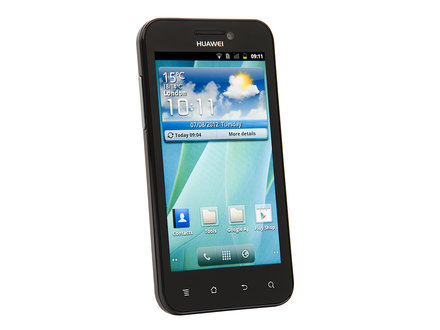
The Huawei Honor has no shame about running on outdated Android 2.3 Gingerbread software.
If you commute a lot, or you're on the road for work and rely on your phone being juiced up, long battery life may be worth the trade-off for what is otherwise a pretty average Android phone. There are plenty of areas where it struggles to deliver a decent experience though -- web browsing, for instance, is particularly laggy.
If you don't need an especially beefy battery, there are far slicker, more capable and stylish 'droids out there for much the same price.
Battery
Huawei has blessed the Honor with an especially roomy tank. Inside is a 1,900mAh battery, which the company says is good for up to 9 hours of chinwagging on the telephone, or up to 27 days left on standby. Handy if you're the sort of person who leaves your phone in a drawer for about a month then suddenly really needs to make an urgent call.

Under this boring plasticky hood, Huawei has tucked an especially large 1,900mAh battery.
Huawei has also said the Honor's cell is good for three days when you're actually using the thing. Impressive.
As is often the case with large capacity devices, the Honor is quite slow to charge. Once it had fully powered up, I put its battery through a series of Wi-Fi streaming tests to see how it fared.
After an hour streaming video over Wi-Fi with the screen brightness pumped to the max, the Honor's full charge was depleted by just over 10 per cent. And after 6.5 hours of streaming, 70 per cent of the tank was dry. So in similar conditions, the phone should manage 8+ hours of continuous video playback before needing a charge -- enough time to watch several films on a long haul flight. Not bad at all.
If you're playing processor-intensive 3D games, you might chomp through the Honor's capacious cell quicker, but even very heavy users should be able to eke a day's use (circa 6 hours) out of a full charge before seeking a socket.
Power and performance
The Honor has a 1.4GHz chip powering its engines. More and more mobiles are getting multi-core chips these days, so while this processor doesn't sound like a weakling, its performance can still stutter on certain tasks.
For example, as soon as you've got something working the chip in the background -- say, an update -- you'll notice foreground performance slowing considerably.
Under standard conditions (when the chip isn't being taxed by updates or downloads), swiping around the phone's menus is reasonably quick, although there is noticeable inertia on the app menu. Web browsing is especially laggy, while panning slowly around web pages results in a scrolling movement that's more jittery than smooth.

The Honor's 1.4GHz chip sounds beefy but it's actually a web browsing weakling, resulting in stuttery scrolling.
Surfing rich full-fat desktop websites works the Honor's engine very hard and you're left waiting seconds for the phone to catch up with your fingertips. Switching to mobile-optimised sites improves response times but it's a shame to have to browse a bite-sized version of the web with a phone that packs a 4-inch display.
Probing the phone's web performance, I ran the SunSpider JavaScript benchmark. The phone scored 3,259.3ms -- underlining that browsing is not its forte (lower is better in this test as it's a measure of time taken).
I also ran Vellamo's browser benchmark. Here, the phone served up a score of 921, putting it just above mid-table.
In CPU and graphics benchmark tests, the Honor put in a reasonable mid-range performance. In GL Benchmark's Standard Egypt test of 3D graphics, it ran the test at a middling 30 frames per second. While, in Quadrant's test, the phone scored a middle-of-the-road 1,935 -- better, at least, than the HTC Desire HD's score. In Antutu's test, the Honor managed 3,810.
I found Huawei's blower handled most apps fine. It's never blisteringly quick but for basic stuff like Angry Birds, Facebook and Twitter, it's got your back. Even graphically rich games like Blood & Glory are playable, but expect some stutter on faster-paced 3D racers.
The phone has a rear speaker that goes pretty loud but has a tendency to distort at the top of its range.
Call quality is good, with voices sounding clear to my ear, although on one call the sound seemed to cut in and out a little. I didn't experience any dropped calls during testing though.

The Honor isn't an Android powerhouse but you'll be able to eyeball YouTube and poke your Facebook mates.
Android Gingerbread and apps
The Honor runs Google's Android operating system, which is a powerful and capable mobile OS that gives you access to hundreds of thousands of apps that can be downloaded from Google's Play store (and elsewhere).
It's only running Android 2.3 Gingerbread -- rather than the newer version, 4.0 Ice Cream Sandwich (the most recent version is 4.1 Jelly Bean). This is a shame as Gingerbread is getting quite old now so it would have been nice to see Huawei stick ICS on the Honor.
Still, if you're not fussed about having the latest software on board, you may not mind. You can still load the phone with your favourite apps -- from popular classics like Angry Birds, Facebook and Spotify, to the BBC's handy iPlayer app.
Atop Android is Huawei's own software. This isn't the slickest OS topper around but it doesn't detract too much from Gingerbread. There's even a neat lock screen, which lets you swipe one of four ways to either simply unlock the phone or dive straight into the camera function, your SMSes or your call log. Sadly, unlock options on this version of Huawei's software can't be customised.
Elsewhere, you get five home screens to swipe around and fill with apps and widgets. You can choose between animations that slide from one home screen to another as you swipe, or pivot with a 3D cube effect, or flip entirely as if spun round.
Pinching in brings up the home screen overview mode, where you can set which of the five screens is the primary home screen -- that is, the one the home button defaults to when tapped.

Huawei's Android skin isn't terrible but nor is it super-slick.
There's a choice of home screen launcher bar, depending on the theme you're using. The 'Android standard' theme has a small fiddly grey bar with three options that can't be customised. But the 'Beyond the sky' theme lets you switch to a much larger coloured launcher bar containing four icons -- three of them customisable with apps of your choosing.
The apps view doesn't give you any options to order your apps. There's only an edit mode where you can delete apps you've downloaded.
There are quite a few apps pre-loaded on the phone. Some Huawei additions include a music player app and a social app that gathers Facebook and Twitter updates into one stream. There's also a traffic manager app that lets you set a monthly data limit and shows how much data you're gobbling over 3G and Wi-Fi.
Huawei's main software keyboard layout is cluttered and sadly there's no Swype-style option pre-loaded on the phone. But there is a neat feature where you swipe down over an individual letter, rather than tapping on it, to get to the secondary character. So, for example, the letter 'e' also doubles as the character '3'. This means you don't have to switch between a Qwerty and a numerical layout just to type an SMS containing a few numbers.

Design-wise, there's not much to distinguish the Honor from all the other generic Android slabs.
Design and build
The Honor isn't going to win any design awards. It's a thickish (10.9mm), relatively weighty (135g) slab of black plastic, with rounded corners and a textured back. To say I've seen more than a handful of similarly-hewn phones is an understatement.
Huawei's take isn't especially ugly, but nor is there anything worthy of flag waving about it. If smart phone designs could be purchased from a wholesale catalogue, this would be called something like 'generic black slab'.
The front is dominated by a 4-inch touchscreen. Beneath are four touch-keys: menu, home, back and search. At the top you get a front-facing camera for video calls and an LED light that changes colour from red through amber to green when you're charging the phone.
The back of the device is clad in textured plastic. It's branded with both Huawei's and Google's logos. Near the top is the phone's 8-megapixel lens, plus a single LED flash. There's also a rear speaker.
There's very little else adorning the slab. You get a volume rocker on the left edge, a power key on the top, along with a 3.5mm headphone jack. And there's a micro-USB port on the bottom edge for charging and moving media back and forth.
The backplate can be removed to get at the battery and SIM slot. There's also a microSD card slot for expanding the 4GB of on-board storage.
Build quality feels very rigid -- but applying a touch of pressure results in the Honor producing a plasticky creak or two.

The Honor gives you a full 4 inches of toughened glass to poke and prod.
Screen
The Honor has a generously-sized 4-inch display -- ample room for ogling your photos and watching YouTube videos. With a screen this big you can also watch longer content without feeling too hemmed in.
Resolution is 430x854 pixels, which equates to a middling 239 pixels per inch. Colours are more muted than super-bright -- as this isn't an AMOLED or Super LCD type of display -- but the screen still looks pleasant enough.
One annoying facet is a matrix of dots shimmers into and out of view as you tilt the screen -- detracting from what you're looking at. It's most noticeable on lighter backgrounds such as when web browsing.
The touchscreen isn't hyper-responsive. That's likely to be down to Huawei's use of Gorilla Glass to toughen the phone up and protect it against "everyday knocks". You shouldn't expect to be able to throw the handset onto concrete but the pane should be more durable than the average smart phone.
Like many mobiles, the Honor's screen is a dismal performer outdoors in bright sunshine. In these conditions the pane becomes iridescent and shimmery, making it tough to see what's going on.
Camera
The Honor has an 8-megapixel lens on its rump, which sounds like an impressive amount of megapixels for a mid-range blower. Don't be taken in by that headline figure though. The quality of the lens, image processing chip and camera software are all important to the business of turning out great photos -- and sadly the Honor's photographic abilities don't live up to the impressive megapixel count.

The Honor has an 8-megapixel lens, which is more fussy than a feline approaching a new brand of cat food.
Firstly, the shutter is laggy -- taking about half a second to snap a shot. It's not hugely slow but if you're trying to capture a fleeting moment, it'll be over before you've snapped it.
The biggest problem I encountered with the lens is getting it to focus where I want. There's no dedicated camera button so you're stuck with using the on-screen buttons to focus and take shots. The Honor's focus window is also fixed in the middle of the frame -- so unless you want a really boring shot with the subject right in the centre, you have to hold down the shutter and move the frame to where you want it before releasing.
It's a more cumbersome process than just tapping the portion of the shot you want in focus then snapping -- and also means it's easy to end up with a blurry image because you're moving the phone to frame shots.
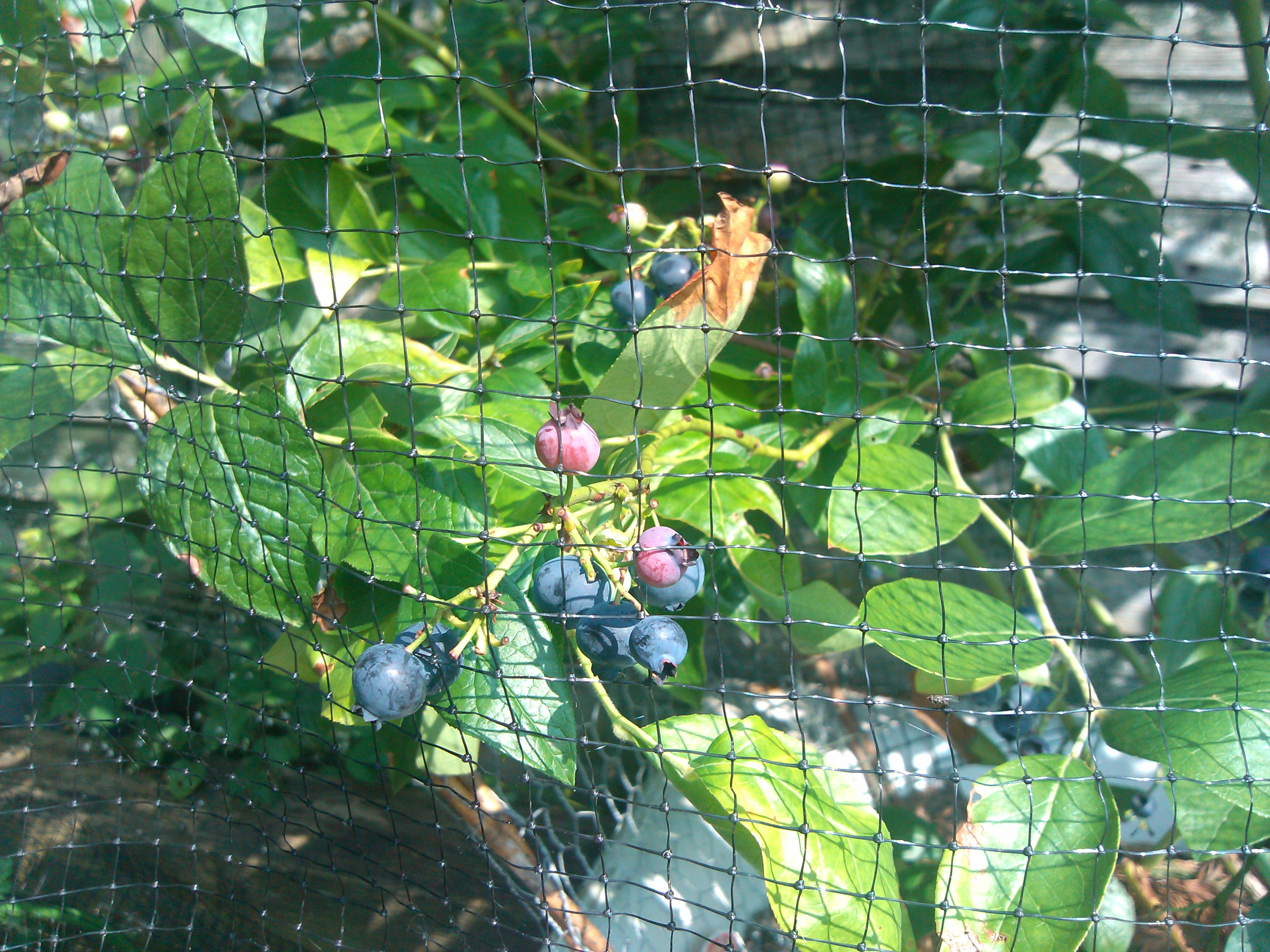
Here, the Honor's lens struggles with light and shade, with lots of noise marring the shadow and lighter leaves bleached out (click image to enlarge).
Another problem is the lens' tendency to over-expose. It struggles to cope outdoors in bright sunshine -- with portions of photos ending up entirely bleached out. In variable light conditions, lighter areas can also appear with blue and hazy halos. If you're shooting in dingier conditions, shots are typically stippled with noise.
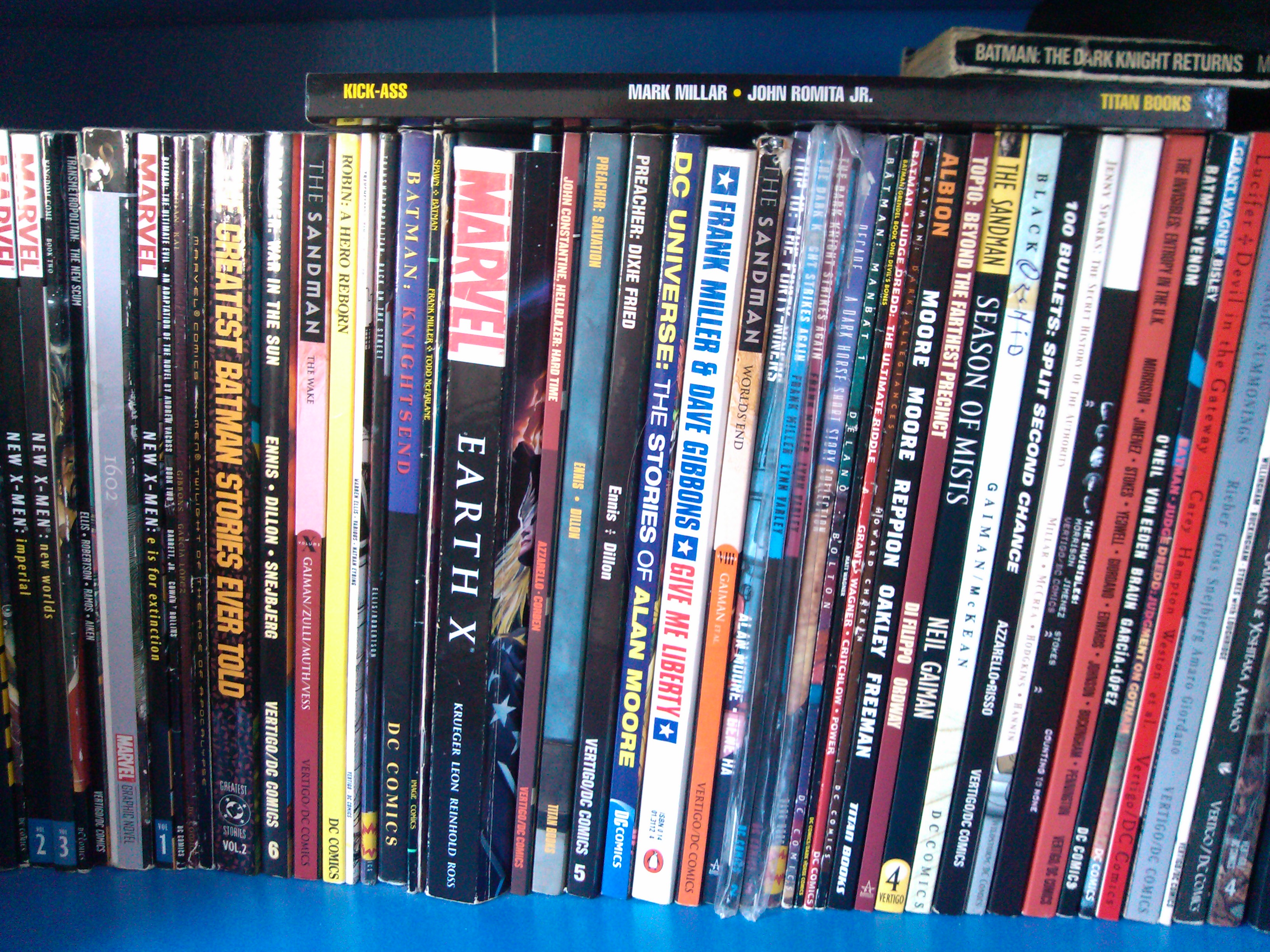
It's not even that dingy in this room but the bookshelf is stippled with noise (click image to enlarge).
When you get the focus bang-on and lighting conditions are just right, it's possible to get some decent-looking photos from the Honor, but it's too finicky to make it a really trusty pocket lens.
You also get a 0.3-megapixel front-facing camera for Skype video calls. And there's an HDR mode for pro snappers to play with.
The phone can shoot 720p HD video. Results are reasonable but footage suffers from the same haloing and hazing as with photos. Detail also drops off sharply the more movement there is in the frame.
Conclusion
The Huawei Honor punches above its weight in the battery department but elsewhere it's less impressive. Web browsing is sluggish, the camera is finicky and the handset is heavy and plasticky. Huawei also serves up Gingerbread, rather than one of the newer iterations of Android, so this slab isn't going to excite hardcore gadget nuts.
If you're less fanatical about Android and you're in the market for a mid-range smart phone with decent stamina, it might tick your boxes though.
Alternatives you could consider include the Galaxy S Advance, the HTC One V and the Sony Xperia P. Sony's dual-core Xperia S is also up for grabs from around £230 SIM-free.