


Though 3D is a big buzzword in the television world, it's been slower to take off in desktop and laptop TVs. That's in some ways surprising, as a tested, functional 3D infrastructure has existed for PCs for a couple of years now, in the form of Nvidia's 3D Vision technology. We've seen only a handful of laptops with 3D hardware and glasses, some with Nvidia's technology and a couple with a competing system called TriDef.
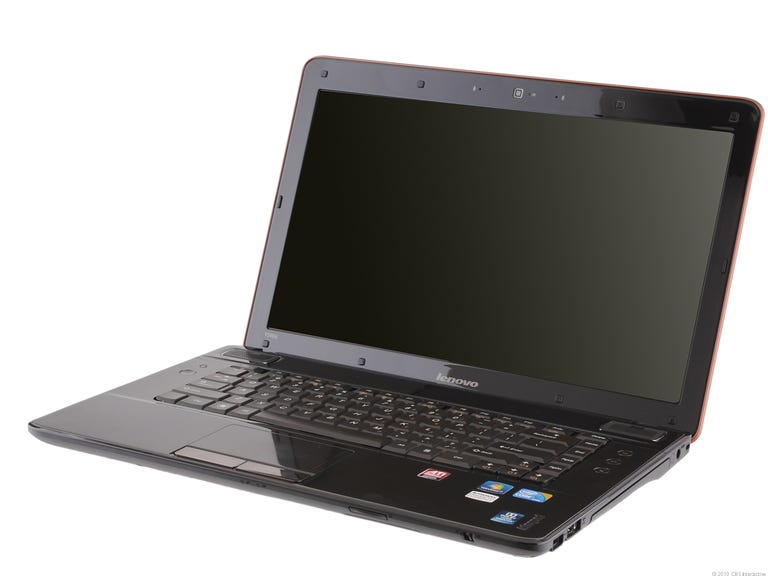
Lenovo IdeaPad Y560d
The Good
The Bad
The Bottom Line
The Lenovo IdeaPad Y560d falls into the latter category, using the same TriDef 3D technology as the Acer Aspire 5738DG-6165 we looked at last year. Both of these laptops use passive polarized glasses instead of the battery-powered active shutter glasses used by both Nvidia 3D Vision laptops and many other forms of consumer 3D devices.
At $1,399, it's reasonably priced for the components, as the Intel Core i7 CPU and ATI Radeon 5730 graphics are nice upscale parts. But HP's non-3D 14-inch Envy starts at only $999 and a closer config is $1,249. Toshiba's 3D laptop, the Satellite A665-3DV is $1,599, with similar specs plus Nvidia's better 3D Vision hardware and a Blu-ray drive.
That's the main problem here: the TriDef 3D system is functional, but not impressive. It requires you to tilt the laptop screen to just the right angle, and then run games through a third-party wrapper app, which kills the performance (we saw frame rates drop by more than half in 3D mode). Visually, in the sample videos and game tests we tried, the system sometimes offered a decent 3D experience, but more often than not we ended up squinting, closing one eye, or looking away.
Without the 3D, the Y560 is a perfectly capable high-end laptop with a very nice design, but anyone interested in that would do better to save a few bucks and check out the many non-3D versions of Lenovo's otherwise excellent IdeaPad laptops.