
Since giving Logitech's Squeezebox Duet music streamer an epic rating of 9.3, we've been eager to see what was next for the Squeezebox world. It turns out it's the Squeezebox Boom -- an audio streamer based on the Duet, with the bonus of built-in speakers and the same feature-packed innards.
The Good
The Bad
The Bottom Line
It's quite possibly the most exciting streamer we've played with this year, and it's on sale now for £200.
Design
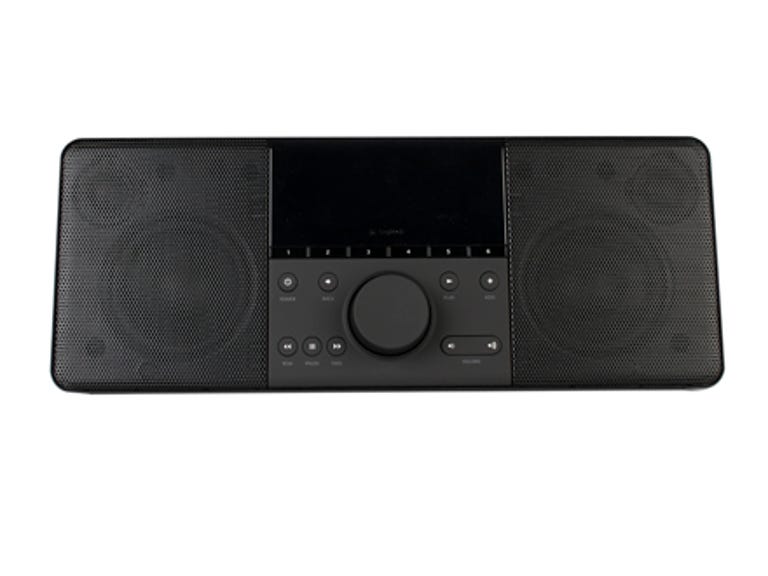
Inside the superb packaging is the weighty and beautifully built Squeezebox Boom. It's encased in a glossy black plastic and resin, with soft-touch controls, top-mounted alarm clock buttons and a terrific dot-matrix display.
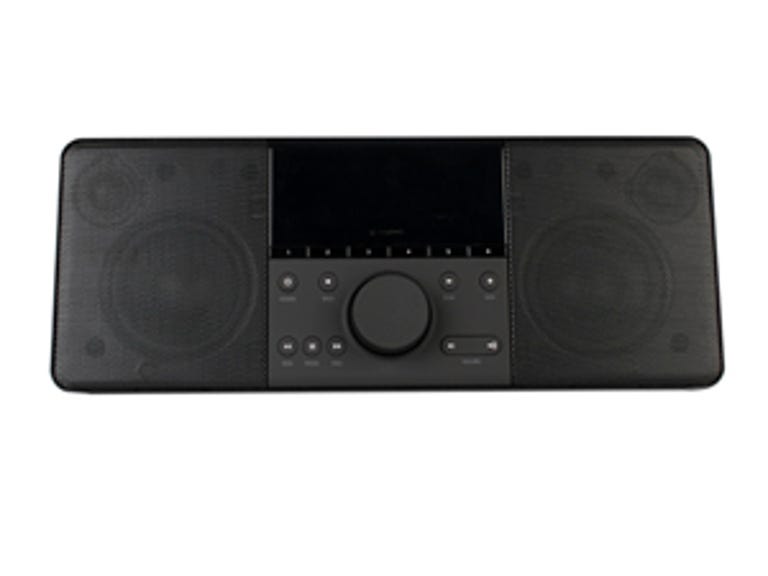
This is a two-way audio system, with silk-dome tweeters and woven-cloth woofers sitting on either side of the central control panel, behind non-removable metal grilles. A bunch of buttons sit between the speakers, but most navigation is done with a large central wheel, which can also be pressed to select menu items.
Connectivity wise, twin Wi-Fi antennae are hidden inside the system, and an Ethernet port sits around the back, along with a 3.5mm line-in socket, combined 3.5mm subwoofer/headphone output and the all-important power input. Our only niggle is that having the headphone socket tucked so far away requires you pick up and spin around the Boom to jack in your cans. This socket should really be on the front.

Features
Regardless of whether you even own a PC, Mac or Linux machine to hook the Boom up to over your home network, you'll still be able to enjoy the system's functionality. It will work with compatible NAS devices, it integrates with your Last.fm account for customised radio streaming and 'scrobbling', pulls podcasts from the Internet and works with an array of other online services and Internet radio providers. You can even listen to the Internet Archive's vast collection of live music recordings, on-demand, free of charge, without so much as a registration with the Archive.org Web site.
But the fun starts when you install the free SqueezeCenter software on your computer. It manages all the media your Boom can pull from your PC, and simply runs in your Web browser. It's extremely simple to use. The software monitors any folders in which you store music and can monitor and make accessible your iTunes library and playlists. It only reads your music files, though, so it won't add play counts or ratings to your library.

You can add the RSS feeds of your favourite podcasts to the SqueezeCenter by pasting their URLs into the appropriate box. All of your shows and their episodes are instantly browsable through the Boom. It's really that simple. Within minutes we had our own Crave Podcast streaming in MP3, and Leo Laporte's TWiT in AAC.
Like the Squeezebox Duet before it, the Boom supports the most comprehensive list of audio formats we've ever seen in a networked streamer. MP3, FLAC, WAV, AIFF, WMA (unprotected only) and OGG are supported natively by the hardware, and AAC, Apple Lossless, WMA Lossless, APE, MPC and WavPack are automatically transcoded on-the-fly by SqueezeCenter when accessed. Protected iTunes Store downloads will not play, and neither will WMA files from Napster -- check out the updated Sonos system if this is a critical requirement. But DRM-free downloads from iTunes Plus play fine. Common playlist files, such as M3U, are also supported via SqueezeCenter.
Performance
Logitech could easily have made such a comprehensive and customisableecosystem of hardware and software extremely confusing. But it hasn't.Both the Boom's interface and the SqueezeCenter software are cleanlypresented and simple to operate. As far as networked streaming systemsgo, they don't come any more accessible than this.
And it sounds great, too. We were surprised how capable the 30WBoom was as a standalone music system. Its speakers produce a loud,powerful sound, with decent character and detail. There's no doubt thataudiophiles with a decent hi-fi in their living room would be farbetter buying the speaker-less Squeezebox Duet, but for kitchens,bedrooms and smaller living rooms of non-audiophiles, it's well-suited.

Floor-shaking bass from something this size is never going tohappen, but a hit of 50 Cent and Pendulum proved there's enough 'boom'to satisfy most bedrooms. Ingrid Michaelson's beautiful, passionatevoice flowed nicely from the Boom's four speaker drivers. It's not thewarmest sound in speaker history, or a sound with the most extendedtreble, but for such a capable and affordable system, we're nothing butpleased with its audio performance.
Podcasts, too, were simple to access once added intoSqueezeCenter. And there was only a slight delay when trying to playfiles the Boom had to have converted on our PC before being played,such as Apple Lossless. It encodes progressively, so your songs startplaying within a couple of seconds, even though the rest of the song isstill being transcoded.

We had the Boom working over Wi-Fi, and hidden, encrypted andunencrypted networks are supported. Bear in mind that if your networkrequires Web-based authentication (this is common within offices),you'll need the Boom's MAC address adding to your network's safe listin order for it to access Wi-Fi. You can always use Ethernet though, asmentioned earlier, and both 10Mbps and 100Mbps lines are compatible. IPaddresses and network configurations are automatically handled for you.
Conclusion
Simply put, this is the finest networked audio streamer we've ever seen. It does for music what the Popcorn Hour A-110does for video. It's easy to use, beautifully designed, and packed withfeatures to an almost ludicrous extent. It might well be our favouritedigital audio product of 2008.
If you want all this functionality without speakers, so it canbe hooked up to your home hi-fi system, check out the equallyspectacular Logitech Squeezebox Duet. It's the same SqueezeCentersoftware and is essentially just the Boom hardware, minus the speakersand size.
Edited by Nick Hide