


Like MacGyver, plasma TV technology is a true survivor. Just when you think it'sdone for, back it comes with another trick up its sleeve. Recently, plasma has impressed with its ability to produce 3D images that don't suffer half as badly from crosstalk as LCD sets. But 3D plasmas have so far beenpretty pricey. The 42-inch, 1080p Panasonic Viera TX-P42GT20 aims to change that. It's available for around £1,050.
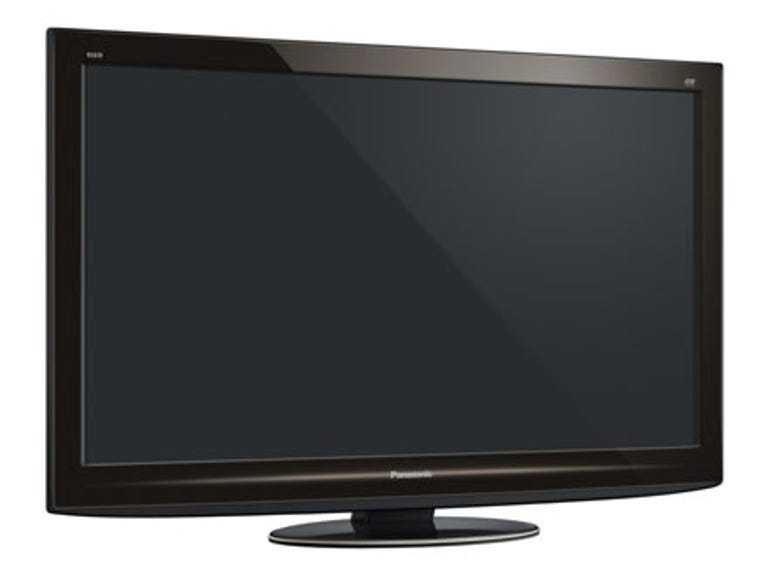
Panasonic Viera GT20 (TX-P42GT20)
The Good
The Bad
The Bottom Line
None more dull
Panasonic isn't exactly renowned for its design flair, and the GT20 isdull even by the company's usual standards. The whole of the front is finished inglossy black, with little else to catch the eye. The best that can be said of the design is thatit's pretty inconspicuous.
Although its appearance leaves something to be desired, the set isn't lacking when itcomes to connections. There are four HDMI 1.4 ports for connecting up yourhigh-definition gear, along with a set of component inputs, two Scart sockets, a VGA connector and composite inputs.
Like many of Panasonic's mid- and high-end sets, the GT20 has bothFreeview HD and freesat HD tuners, giving you access to the broadest range offree HD channels.There's also an Ethernet port on the rear of the TV for use with online services suchas iPlayer (which is, strangely, only available if you're using the freesat HD tuner) and theAcetrax movies-on-demand service. The TV also has two USB ports that can be used fordigital media playback or recording TV shows to an external hard drive.
Set-up's a cinch
Setting up the GT20 is very straightforward. Unlike 3D models from Philips, Panasonic hasfollowed the herd and built the infrared transmitter that controls the 3D glasses into the set, so you don't have to faff about with any additional gear. Tuning both freesatand Freeview channels doesn't take very long either.

But, although the TV's menu system is easyto navigate, the presentation is very drab, especially compared to the menuson TVs from the likes of LG and Sony. Also, the set's electronic programme guides aren't all that hot. For example, they don't retain a thumbnail video of the current channel while the EPG is displayedand, rather annoyingly, the Freeview EPG shows Web-style adverts, which compromisesthe amount of screen space that can be used. Thankfully, these adverts don't appear on thefreesat EPG.
Inky blacks
Despite its lower price tag, the GT20 thankfully includes much of the same technology asPanasonic's higher-end VT20 models. The only really significant missing feature is the Infinite BlackPro filter that helps to improve black levels. Instead, the GT20 uses the non-Pro version of this filter. While the difference is noticeable compared to sets with the Pro version,the GT20 still produces deep and inky blacks that put plasma TVs from rival manufacturersin their place.
In fact, this TV's overall 2D picture quality is very impressive. As with mostplasma displays, colours are warmer and more natural-looking than on many LCDscreens, even if they're not as bright. The TV's deeper black levels and razor-sharp HD performance lend Blu-ray movies a superbly cinematic look too, especially with the True Cinema presetsturned on. The presets on this TV are universally excellent, so you shouldn't have todo all that much tweaking to perfect them.
Standard-definition broadcasts fromthe freesat or Freeview tuners also look surprisingly perky, with minimal artefacts, especiallywhen watching from a normal viewing distance.
3D treats
But the main selling point of the GT20 is its 3D capability. Initially, Panasonic offeredthis set with a bundled pair of 3D specs, but it now seems that these aren't included,although you may find some dealers still offering this bundle. Panasonic supplied us with apair of its new and improved 3D specs that now have enclosed sides to block out ambientlight.
Fire up a 3D Blu-ray and the TV automatically switches into 3D mode. If you're usinga Sky+HD box or PlayStation 3, you'll have to manually make the switch. Either way, the results areextremely impressive.
Unlike most of the 3D LCD TVs we've seen, the GT20 is virtually free of 3D cross-talk problems, whereby images appear with a slight shadow behind them.As a result, 3D images look rock-solid, impressively sharp and detailed, and, perhaps mostimportantly, offer a great sense of depth. The lack of cross-talk really helps 3D images to look more natural, which in turn helps the effect to be even more engaging. The 3D in Alicein Wonderland, when Alice first arrives in the dream world, looked especially impressive on thisdisplay.
It's also worth noting that the GT20 has one feature not found on VT models: 2D-to-3Dconversion. The conversion works better than that on Samsung's UE46C8000, and the resultslook slightly more natural. But the resulting image doesn't have anywhere near the sameimpact as true 3D material and, although it's a gimmick worth trying once or twice, you'reunlikely to use it much in the long term.
The GT20 lacks the subwoofer found in the VT models and, as a result, the audiofrom the set is noticeably less bass-heavy. But it holds its own against most LCDscreens of this size. As ever, though, it'd be best to twin the TV with a surround-sound set-up forreal sonic thrills.
Conclusion
The price difference between the Panasonic Viera TX-P42GT20 and the 42-inch VT20 model is currently around £350. The VT20 certainly has better black levels and, for purists, the premium is probablyworth it. But, if you can't quite stretch to the extra £350, we don't think you'll bedisappointed with the GT20. It offers impressively cinematic 2D images and some of the best 3D pictures around.
Edited by Charles Kloet