
You get what you pay for, especially when it comes to electronics. People looking for a bargain should probably stop reading now. Priced at around £4,300, the 60-inch Pioneer Kuro PDP-LX6090 could only be described as 'cheap' by Sir Alan Sugar.
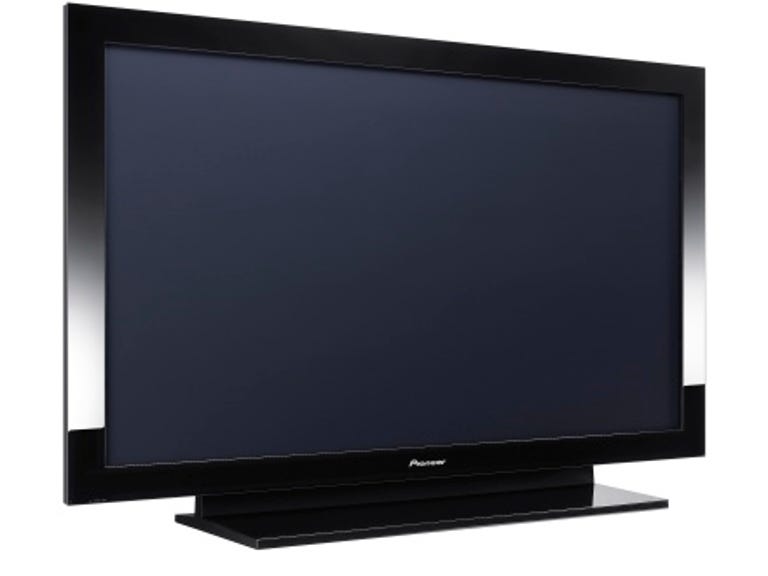
Pioneer Kuro PDP-LX6090
The Good
The Bad
The Bottom Line
Luckily, there are plenty of reasons to buy this TV. After all, Pioneer is the king of black and the LX6090 is part of Pioneer's 9th generation of plasma panels, which boast even better darks. Does this TV do enough to justify its price tag?
Design
As big as this TV is, it doesn't look bulkier than Pioneer's smaller models. We're actually pretty surprised at how light the TV is. Sure, you won't be able to lift it on your own, but it's not heavy enough to sink a battleship either. This is a sign that plasma TVs have come a long way in a short period of time.

Despite its massive screen size, this isn't a deep TV, measuring just 93mm. As the average British home isn't set up for such big screens, you can push it further against a wall, giving you precious millimetres of viewing distance.
As we've noted with previous Pioneer products, the remote control is nothing short of a work of art. Fashioned out of what feels like a lump of solid metal, it's truly impressive. We're also big fans of the key layout, which sets aside buttons for switching inputs. That's a very smart idea and one we'd like to see on more remotes.
On the back of the set, you'll find three HDMI inputs and three Scarts. There are also component, composite and VGA connections lurking about. You'll also find optical digital and subwoofer outputs, as well as the ubiquitous RCA audio jacks and a headphone output.
Features
Because Pioneer aims to produce the best quality TVs, it places a lot of emphasis on picture processing. Somewhat obviously, the electronics that go into a TV have more of an influence on the picture quality than the physical panel itself. This is the reason that TVs made by various manufacturers look so different to one another, even though they often use the same panels.
To confirm the quality of the Pioneer's picture processing, we broke out our HQV test disc. The Pioneer mopped up noise without any problem at all, showed exceptional de-interlacing skills and generally aced the tests.
As you'd expect, the LX6090 comes with both analogue and digital tuners. Tuning the TV is reasonably simple and doesn't take very long. It's worth noting that on our aerial, the TV refused to find BBC One or Two. We don't generally have trouble tuning those channels here, so it's possible this TV needs a stronger than average signal. You may want to check such things before you rush out with your overflowing purse to buy one.
With a nod to our digital world, the Pioneer has a USB socket, into which you can plug a memory stick with your favourite photos. A nice feature, but we'd prefer an Ethernet socket and the ability to stream and decode HD video over a network. Still, it might appeal to someone who wants a £4,300 digital photo frame.
It seems important to mention that this TV can use up to 510 watts when it's in full swing. That's much more than most TVs and it's not going to help save the polar bears either. It's also going to cost you around £5 a month to run, based on average TV usage.
Performance
At 60 inches, this screen is well over doublethe size that Freeview was designed for. It's easy to forget that whenthe UK's digital TV system was introduced 10 years ago, the average TVwas between 20 and 28 inches. For that reason, watching ahighly-compressed MPEG-2 channel is far from pleasant.
But thisisn't the fault of the LX6090 and it actually does a very respectablejob with a Freeview picture. Obviously, compression artefacts areexacerbated by its size, but you could watch Hollyoaks on it from time to time without missing too many subtleties in Nancy's hair.
Pop a DVD in your player and you'll see what this TV can manage with a higher bit rate. We played our tried and tested X-Men DVD on our Sony BDP-S500Blu-ray player, keeping it set to 'source direct'. This meant the TVwas doing both scaling and de-interlacing on the picture. The qualitywas superb. On long shots, there was occasionally a lack of detail infaces, but plenty of gloriously fine detail in close ups. Sit areasonable distance away from this TV and it will make your DVDs lookamazing.
Blu-ray and HD DVD material on this TV looked unbelievable. Watching portions of Casino Royale and our old favourite Serenitysimply blew us away. The level of detail in the pictures and fantasticcolour reproduction are amazing. We spotted sweat on the brows of the Serenity crew and some flaky skin in Daniel Craig's ear, details we didn't even notice in the cinema.
Of course, no Kuro TV review would be complete without passingjudgement on the black levels. As we expected, the black levels andcontrast were phenomenal. We've spent a lot of time extolling thevirtues of Panasonic's plasmas, but Pioneer really shows us what is possible with the technology. The LX6090 is clearly in a different league.
In a slightly cheeky move, the TV's speakers are an optionalextra. Still, it's a fair assumption on Pioneer's part that the peoplespending as much as half of a car's price on a television will have ithooked up to an amazing high-end stereo system or a 5.1/7.1 AV amp.We'd agree: anyone who doesn't needs to examine their priorities.There's absolutely no point spending £4,300 on a TV and bolting on somecheap speakers. That said, the optional side-mounted speakers are verygood, offering a very balanced sound. Movie soundtracks have plenty oflow-end punch and dialogue is clear as a bell.
Conclusion
If you want projector-quality size without the hassle of instalationand the accessories, we honestly can't think of a better TV. Pioneerhas excelled in creating a TV that produces rich and realistic blacks,vibrant colours and unbelievable levels of detail. Obviously, if you'relooking for something for watching Freeview, there are better, morerealistically-sized TVs that will do that job for significantly lesswonga.
Still, there's nothing this TV does badly. If you're a moviefan with access to HD material, this TV is likely to impress the pantsoff you. For a competitor, look to the larger Panasonic plasmas orpossibly even the bigger LCD panels from Sony and Samsung.
Edited by Shannon Doubleday