
The Curve is one of a new breed of BlackBerrys that's trying to appeal to an audience beyond RIM's core of suit-wearing drones and spin doctors. Like the slimline Pearl and the sat-nav-toting 8800, the Curve has a funky design and a smattering of multimedia features, alongside push email and PDA functions.
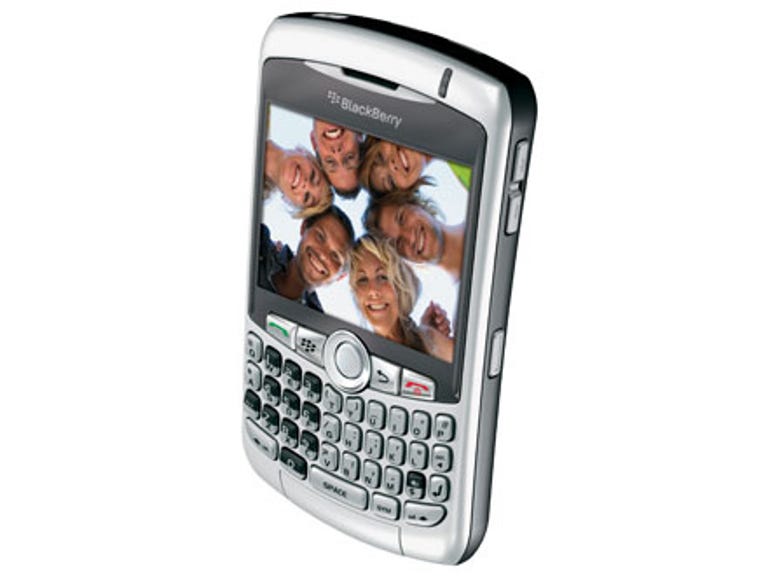
RIM BlackBerry Curve 8300
The Good
The Bad
The Bottom Line
It's available now at around £299 SIM-free or from free with a monthly contract.
Design
The BlackBerry Pearl was the first RIM device that you might actually want to use as a phone, and if anything the Curve's rounded design is even more attractive. It hits a sweet spot where it's slim enough to slide snugly into one hand, and yet wide enough to support a full Qwerty thumb-board where each letter gets its own key.
Text entry still requires some concentration -- you'll find yourself wishing for dedicated '@' and '.' keys at least -- but your thumbs soon find a rhythm that has you blasting through emails much faster than is possible with any number pad or touchscreen.
The whole process is helped immeasurably by a stunning trackball navigator that makes the whole concept of a four-way pad feel lethargic and outdated. It's perfectly responsive and utterly intuitive, although we can't help worrying about its longevity.
Above the thumb-board is another nice surprise: a colourful 320x240-pixel display with a smart sensor that automatically adjusts its brightness depending on the light. The 64mm screen has a nice, wide viewing angle but is prone to glare -- a problem that isn't helped by a chrome surround whose sole function appears to be gathering any spare reflections and firing them at your eyes.
Features
Although RIM no longer monopolises push email services, messaging remains at the heart of this BlackBerry. We tested the Curve with the BlackBerry Internet Service, which was painless to set up and worked perfectly throughout our test. If instant email isn't addictive enough for you, you've also got SMS, MMS and BlackBerry Messenger on board. Note that the 8300 still can't show full HTML emails, displaying a disappointing text-only version instead.
RIM is also behind the curve (sorry!) when it comes to working on the move. The Curve will open attached Microsoft Office documents, media files and PDFs, but can't edit or create files beyond basic text memos. The browser uses EDGE and GPRS, but not Wi-Fi or 3G.
There's a 2-megapixel camera with flash LED around the back, although it baulks at shooting videos. A media player handles a fair range of music and video formats, which you can listen to via a built-in speaker or through a handy, standard headphone socket.
While there is a microSD card slot (card not supplied) to boost the meagre 64MB of flash memory, it's inconveniently located beneath the battery, preventing any hot-swapping of files. Don't get too excited by the Maps application in the menu, either, as the Curve we're getting in the UK lacks the GPS sat-nav functionality that's popping up in other smart phones.
Performance
Typing speed on the small keyboard is as good as you can hope for from such a small device. But delays soon surface once you venture online. The lack of 3G connectivity is noticeable when downloading large attachments or using BlackBerry's idiosyncratic browser. Pages take an age to load and formatting is often annoyingly vague given the wide screen it has to work with.
The Curve is much better at plain old voice calls, with a clear, crisp loudspeaker and -- impressively -- voice dialling that actually works. You can just speak a phone number out loud, at a normal speed and with background noise, and the 8300 will usually recognise it. It's slightly less reliable on contact names from the phone book.
The 2-megapixel camera shows how new RIM is to the whole multimedia thing. It has only basic features and images are miserable, suffering nasty colour tints, blurry detail and dull exposure. The media player is better, with tunes sounding acceptable, especially through decent headphones.
Even without a GPS connection, the Maps application is useful. There are no extraneous points of interest or city guides to clutter up the clear 2D maps, which download quickly and for free. It can pull down cross-country journeys in moments, delivering turn-by-turn directions or a zoomable route map. It's not full GPS with location finding, but then you don't have to wait minutes for lock on, or worry about the battery draining away before you reach your destination.
Battery performance overall was good, lasting two full days of fairly intensive use.
Conclusion
The BlackBerry Curve certainly deserves a wider, consumer market. It's sleek, small and simply effortless to use -- even if the trackball did have us itching for a Missile Command game to play with. But the Curve's push email remains defiantly text-only, the browser is quirky and 2.5G data access just doesn't hack it in today's multi-megabit HSDPA world.
Compare the Curve to Motorola's Q 9, which has blistering data speeds, HTML push email and can edit Office documents on the move, and the BlackBerry starts to look less like a potential CEO and more like a failed Apprentice.
Edited by Jason Jenkins
Additional editing by Kate Macefield