


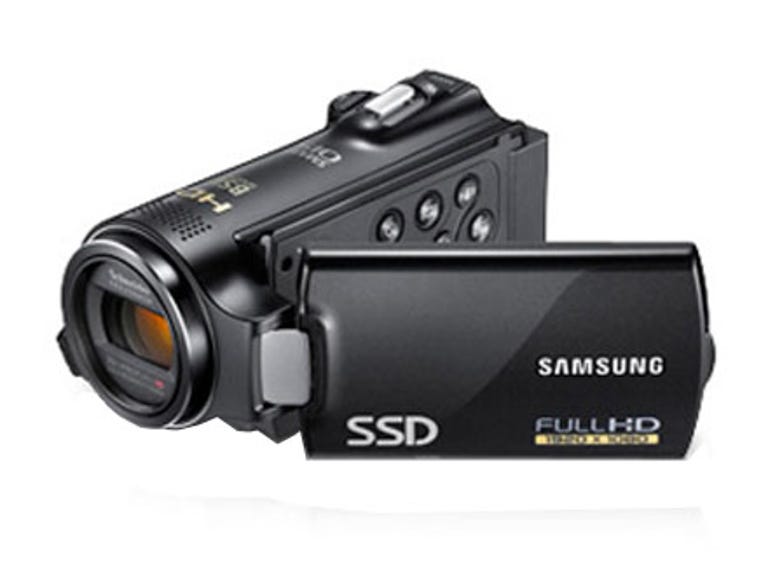
At first glance, the Samsung HMX-H200 doesn't seem massivelydissimilar to many other camcorders on the market. Much like the vast majorityof models we've seen of late, the HMX-H200 is a small, chunky barrel shape witha fold-out LCD screen, offering 1080p-resolution, high-definition video,mid-range (4.7-megapixel) photo quality and a number of useful functions,including a 20x optical zoom, HDMI output and an image stabiliser.
The Good
The Bad
The Bottom Line
There is one major difference, though. The HMX-H200 can bepurchased for less than £300.
Positions,please
Far from looking cheap and nasty, the HMX-H200's buildquality gives the impression of a much more expensive product. The matte blackmetallic body and compact style is both attractive and practical. When youstart using the device, however, you'll begin to see where Samsung has cut afew corners.
For example, there's a built-in lens cover, but it needsto be opened and shut manually, rather than automatically retracting wheneverthe unit is switched on. Also, the HMX-H200's microphone placement isn't ideal.It's located on the top of the device and, during testing, we found our fingersfrequently rubbed or partially covered the mic housing, resulting in unwantednoise in our recordings.
Similarly, some of the buttons on the HMX-H200 are ateeny bit too sensitive for a device this small. It's all too easy toaccidentally brush the 'mode' button on the rear of the camcorder whilefilming, for example, and the slightest touch will halt recording altogether.
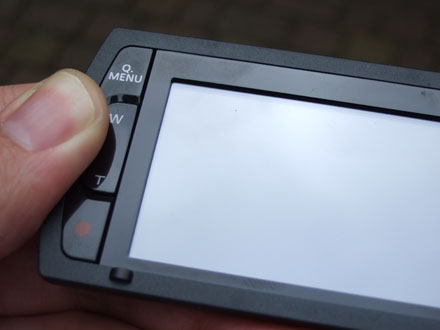
Worse are the buttons on the fold-out LCD. They're positioned along the outsideedge of the screen at just the point where your thumb rests. This means thatany adjustment you make to the angle of the screen while filming couldpotentially activate the zoom or terminate the recording. It sounds daft, butwe were caught out by this several times in our tests.
Apart from that, controlling the device isstraightforward. Point-and-shoot operation will be instantly familiar to anyonewho's used a camcorder before. The HMX-H200 uses a touchscreen interface formany of its settings, and this is quite easy to get the hang of thanks tosimple navigation and a sharp 69mm (2.7-inch) LCD display. It's also veryuseful to have dedicated buttons for the image stabiliser, quick menu, 'smart auto'mode and so on.
Big softy
You won't find any internal memory included with the HMX-H200.Like many low-budget camcorders, you're expected to supply your own storage viaan SD card. Breaking with tradition somewhat, Samsung's entry-level HDcamcorder doesn't use the AVCHD recording standard currently favoured by manyof its competitors. Instead, it uses an H.264/MPEG-4 variant. In technicalterms, this means very little, but in practice we definitely noticed a certainsoftness to the HMX-H200's image that we haven't seen from other camcorders inits price bracket.
Apart from that, we found picture quality quite acceptablein our outdoor tests. Colours felt a tad muted and there was a little moregrain than we would hope for but, otherwise, detail was pretty good and thecamcorder handled motion relatively well. Automatic functions aren't particularly quick at adapting to your shooting conditions, however. In ourtest shots, auto white balance was way off the mark most of the time and thecamcorder had a tendency to slip in and out of focus randomly, even when wewere pointing the device at a well-lit, non-moving subject.
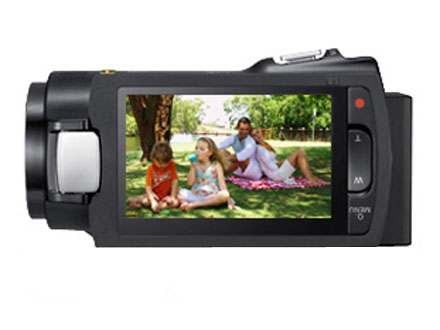
Indoors, you'll find the HMX-H200 quickly compensates forany shortness of natural light by automatically cranking up gain and exposure settings,to the point where your picture can quickly become a grainy, stuttering mess.
On the photo side of things, the HMX-H200 offersa level of quality that's roughly on par with other video devices of its typeand cost. Its still-photo skills are unlikely to amaze and astound, but they'renot going to offend anyone, either. Detail isn't bad for 4.7-megapixel images.
Conclusion
With 1080p video, touchscreen controls and a 20xoptical zoom, the HMX-H200 is an uncomplicated, well-equipped camcorder thatrepresents fairly good value. When you consider that shelling out less than £50more will bag you a much better entry-level model, such as the brilliantPanasonic HDC-SD60, it starts to feel a little more like a compromise. Ifyou have a strict budget, you could do a lot worse. As an alternative, you couldconsider opting for a pocket camcorder, such as the Kodak PlaySport, whichdoesn't have an optical zoom and offers fewer features at a fraction of theprice.
Edited by Emma Bayly