


Earlier in the year, Sony Ericsson announced its intention to produce a line of environmentally-friendly mobile phones. The Naite is one of the first fruits of the manufacturer's labours. It'll cost you about £100 on a pay-as-you-go deal, and be available from free on a £20-per-month, 18-month contract.
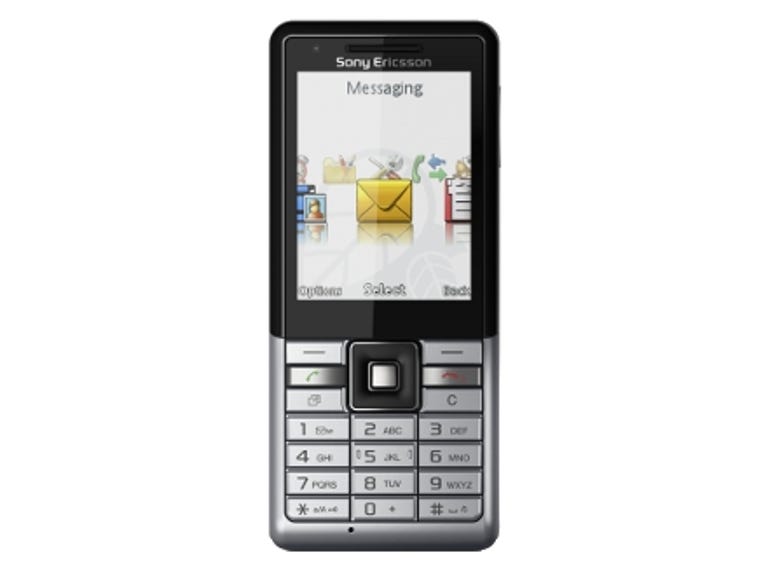
Sony Ericsson Naite
The Good
The Bad
The Bottom Line
Green credentials
From the outside, the Naite looks like little more than a subtle rehash of the manufacturer's 2003 favourite, the T610, with a distinctive, two-tone body made from aluminium and black plastic. The main difference is that the plastic used on the Naite comes largely from recycled sources.
As part of Sony Ericsson's GreenHeart programme, the Naite (along with its sister handset, the C901) offers a number of green benefits, including eco-friendly packaging and a more power-efficient charger. According to the manufacturer, these measures combined should help to shrink the device's carbon footprint by something in the region of 15 per cent. That makes the Naite an interesting option for anyone concerned by the impact that the disposable nature of mobile phones and related technologies is having on the environment.

Reducing your CO2 footprint doesn't necessarily mean reducing the usefulness of your mobile, though. The Naite comes equipped to deal with 3G and HSDPA network speeds, and most modern handset features are present, including a camera, video-call capability, Bluetooth, email, MMS, Java gaming, and MP3 and AAC music playback. There are a few useful extras too, such as an FM radio, access to PlayNow arena (Sony Ericsson's music, game, and ringtone download service), and the TrackID feature, which can recognise virtually any music it hears and tell you the name of the song and the artist.
Straight-cut
It's slim, light and attractive, but the Naite isn't a flashy phone by any means. Its sober appearance is matched by a straightforward interface and a streamlined selection of features. Those who find an abundance of apps and added extras confusing and unnecessary will appreciate the pared-back approach. In the absence of a paper manual (all documentation is provided online), it also helps that the Naite is extremely easy to use. The UI is very intuitive and simple, using a familiar combination of a central four-way rocker, right/left menu buttons and central 'select' key. It's customisable too. The main menu, for instance, can be displayed as a grid, as well as a rotating wheel of icons or a straightforward list of icons.
The Naite's relatively low-key approach is perhaps less welcome when it comes to the camera. It only has a 2-megapixel image sensor, which is fine for taking photos destined for Facebook or a blog, but not much else. Perhaps it's just as well, though, since there's only 100MB of internal memory for storing images, music, video and so on. A microSD card can be used to expand storage, although there isn't one included in the package, and there's no handy slot on the side of the phone. Insertion or extraction of a card necessitates cracking off the slightly flimsy-feeling back cover to access the battery bay.
The extra mile
The Naite's 56mm (2.2-inch) display is of an average size these days, but it's pleasantly sharp and colourful. Sound quality is fairly good for both voice calls and music playback, although the provided stereo headset isn't great. Unfortunately, you won't be able to plug in your own favourite headphones without an adaptor, due to the phone's proprietary socket.
One area where the Naite really excels is battery life. The manufacturer claims the phone offers up to 10 days of standby time and up to almost 14 hours of talk time on GSM and Edge networks. Our review unit indicated the battery was half full after almost 4 days of use, which is pretty good going.
Conclusion
Cynics might suggest the Sony Ericsson Naite is more of an exercise in PR than planetary salvation. But, while the handset is relatively frill-free, it's by no means a dud. The Naite is easy to use and provides most of the features you'll need, while its lengthy battery life and energy-efficient charger are significant attractions.
Edited by Charles Kloet