
X
CNET logo Why You Can Trust CNET

Our expert, award-winning staff selects the products we cover and rigorously researches and tests our top picks. If you buy through our links, we may get a commission. Reviews ethics statement

Toshiba F755-3D150 review: Toshiba F755-3D150

Toshiba F755-3D150

Headshot of Dan Ackerman
Dan Ackerman Editorial Director / Computers and Gaming
Dan Ackerman leads CNET's coverage of computers and gaming hardware. A New York native and former radio DJ, he's also a regular TV talking head and the author of "The Tetris Effect" (Hachette/PublicAffairs), a non-fiction gaming and business history book that has earned rave reviews from the New York Times, Fortune, LA Review of Books, and many other publications. "Upends the standard Silicon Valley, Steve Jobs/Mark Zuckerberg technology-creation myth... the story shines." -- The New York Times
Expertise I've been testing and reviewing computer and gaming hardware for over 20 years, covering every console launch since the Dreamcast and every MacBook...ever. Credentials
  • Author of the award-winning, NY Times-reviewed nonfiction book The Tetris Effect; Longtime consumer technology expert for CBS Mornings
Dan Ackerman
8 min read

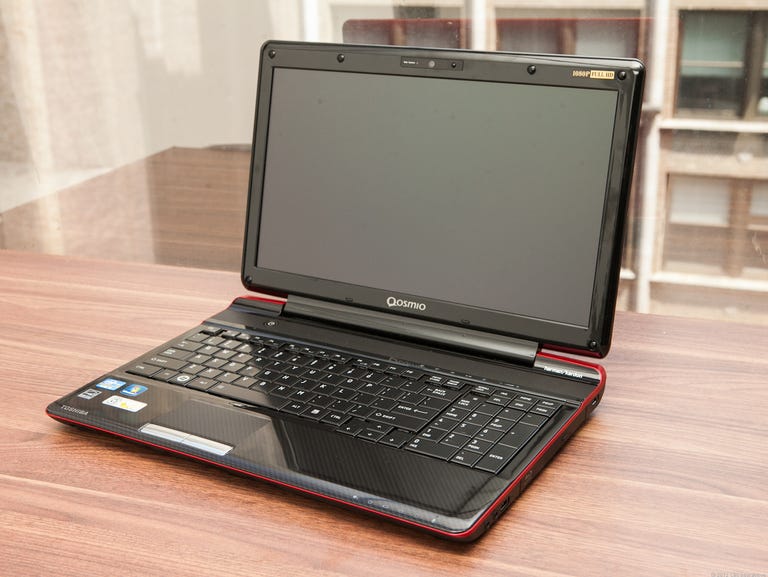
In the half-year since we reviewed the first version of the Toshiba Qosmio F755, I have seen a grand total of zero new autostereoscopic laptops (3D displays that can be viewed without special glasses). Toshiba has not given up, however, and an updated version for 2012 shows some notable improvement over the original, which was a cool prototype, but not quite ready for prime time.
7.2

Toshiba F755-3D150

The Good

The updated <b>Toshiba Qosmio F755</b> improves the original's glasses-free autostereoscopic 3D.

The Bad

The 3D effect still works best for a single viewer, and can be finicky at times. While 3D games are supported, the underpowered GPU makes most unplayable.

The Bottom Line

The glasses-free 15-inch 3D display on the Toshiba Qosmio F755 falls just short of being really impressive. The software support and stability are better than for previous models, but low-end hardware needlessly hobbles this laptop.

The Qosmio F755-3D150 is $1,299, about $400 less than the 2011 version I reviewed, but still uses the same special eye-tracking software to track the viewer's head movement and adjust the stereoscopic image accordingly, via the built-in Webcam.

Like the Nintendo 3DS, it's a bit of a novelty, but Blu-ray playback felt smoother and the 3D seemed more stable on this new model, even though the viewing angles are very narrow -- watching over someone's shoulder is tricky. Discs of 3D movies such as "Avatar" and "Tron: Legacy" present themselves well, although you have to use Toshiba's proprietary media player to view them in 3D.

The biggest knock against the original was that the 3D support only extended to Blu-ray movies and some types of video files, leaving out video games and streaming video. Thanks to new Nvidia drivers, games now work in 3D, to a point.

While nearly every PC game we tried worked in 3D (at least as well as it would using Nvidia's 3D Vision platform with active shutter glasses), the low-end Nvidia GeForce 540 GPU prevented every current game I tried from being playable in 3D, although many played fine with the 3D effect turned off.

That's a real shame, as an autostereoscopic 3D gaming laptop could be a fun splurge for gamers, and the F755 is a perfectly fine midrange-to-high-end Qosmio otherwise. As it is, unless you have a burning need for glasses-free 3D Blu-ray, we'd wait for better graphics hardware.

7.2

Toshiba F755-3D150

Score Breakdown

Design 7Features 8Performance 7Battery 4Support 7