


What makes one laptop worth $700 and another worth $2,000? That's a tricky question, and one that has bedeviled PC makers looking to join a handful of companies such as Apple in charging a premium price for products that, at the end of the day, use many of the same components as less expensive items.
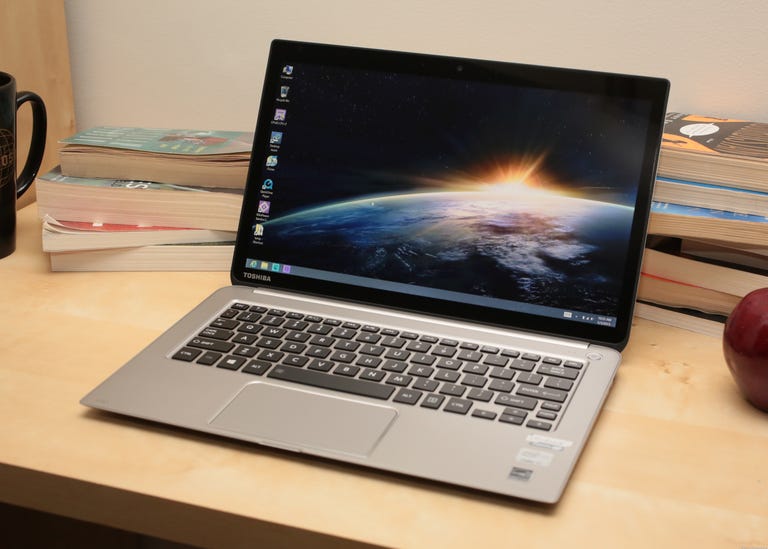
Toshiba Kirabook
The Good
The Bad
The Bottom Line
The new Kirabook from Toshiba attacks this question head on. This 13-inch laptop starts at a bold $1,599, and goes up from there. The unit reviewed here is $1,999 because it adds a touch screen and a faster Intel Core i7 processor (that's right, the $1,599 starting price does not include a touch screen -- that's a $200 add-on).
Toshiba is pitching the Kirabook as the first product in a new high-end line, also called Kira, which will complement the existing Satellite, Portege, and Qosmio lines. As the company already makes some very nice ultrabooks for very reasonable prices, the challenge with the Kirabook is to pull out all the stops to justify its high price and the heavy hype Toshiba is putting behind the new line.
And the Kirabook is clearly a premium product. Its thin, light body is made of a magnesium alloy, which is both lighter and stronger than aluminum; the keyboard and touch pad are better than those found on standard Toshiba Satellite laptops; and most notably, the 13.3-inch display has an incredibly high 2,560x1,440-pixel resolution. Toshiba calls this PixelPure, and it's not dissimilar to the Retina Display Apple uses in its highest-end MacBook Pro laptops. Standard laptop screens top out at 1,920x1,080 pixels.
Of course, just as we said of the Retina MacBooks, there's little consumer content right now that takes advantage of higher-than-1080p screen resolutions, which is the same problem first-generation 4K televisions are facing. High-res gaming is also out of the question, as the Kirabook relies on Intel's default HD 4000 graphics. Where the higher resolution really wows is in reading plain text (which is more exciting than it sounds), and working in apps such as Photoshop, where the higher resolution lets you fit more on the screen at once.
Other than the excellent construction and standout screen, this is in many ways a standard Intel Core i5/i7 laptop, with 8GB of RAM and a 256GB solid-state drive (to its credit, Toshiba adds two years of "Platinum" support). In fact, when it and Toshiba's excellent Satellite U845T 14-inch ultrabook are placed side by side, the two look remarkably similar. And therein lies the issue I'm having with the Kirabook. It looks more upscale than the $799 Satellite, and feels better in the hand, but only incrementally. If you placed both laptops in front of consumers and asked them to guess the price difference between them, there's absolutely zero chance anyone would say $800 to $1,200.

The 13-inch MacBook Pro with Retina Display starts at $100 less, albeit with less SSD storage and an aluminum body that's larger and weighs more -- but we've also knocked that Apple laptop for not offering the right combination of features and price. But the MacBook Pro also has more-distinct industrial design, as do other laptops that have played in this price range, such as the Acer Aspire S7 and the Samsung Series 9.
The lesson here is that to play in the rarified air of the $1,600-plus laptop market, you need to bring a distinct, high-design look and feel, not just top-end components. The Kirabook is an excellent laptop that's highly portable and easy to use, with a great-looking screen that only a few other systems can even come close to touching. That said, it just doesn't look like a $2,000 laptop, and for that kind of money, I want to be wowed, and I suspect you do, as well.