


Toshiba has gone for something unique in the U840W. Whether it was an opportunity to grab panel offcuts or a genuine want to bring something different, the U840W features a 14.4-inch, 21:9 screen, with a resolution of 1792x768.
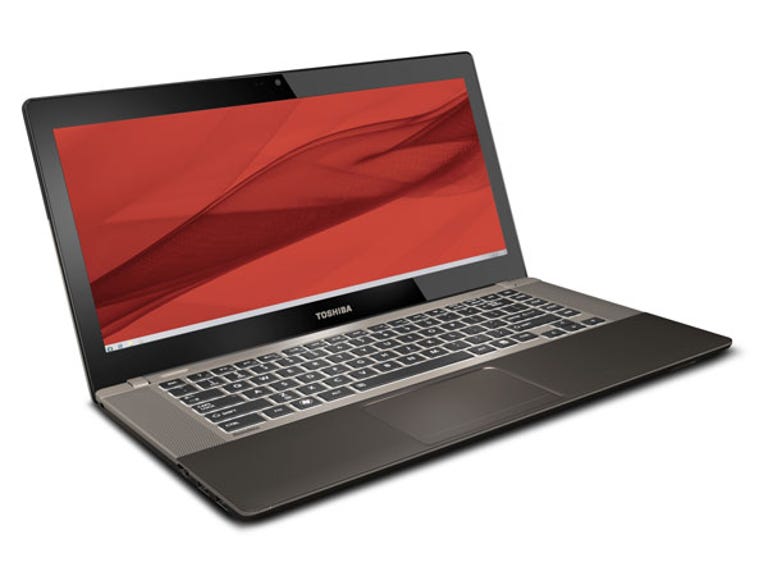
Toshiba Satellite U840W
The Good
The Bad
The Bottom Line
Connectivity
- USB 3.0: 3
- USB 2.0: 0
- Optical: None
- Video: HDMI
- Ethernet: 100Mbps
- Wireless: Single-channel 802.11n, Bluetooth 3.0
Toshiba's argument is that it's perfect for 21:9 movies — if you've picked up a DVD or Blu-ray that's kept the original aspect ratio (albeit within a 16:9 container), you can use Toshiba's DVD player and hit the cinema button, effectively scaling and cropping the black bars so that it mimics the theatre experience.
If you've got a 16:9 movie, Toshiba's added an extra button to Microsoft Windows' title bars as well — move the window mostly to the left hand side and click it, and it'll snap the window to aspect scaled 16:9. Move the window mostly to the left and click, and it'll snap to take up the remaining space. Apparently, this is for tweeting or taking notes while watching a movie. You can adjust exactly how the apps scale through Toshiba's Split Screen utility, allowing you to select from four default templates, or to create your own.
An extra-wide screen might also appeal to those who have to work between two windows a lot, like multiple documents or file management tools. Windows 7's Aero-snap tool definitely comes in handy here.
Despite the interesting aspect ratio, Toshiba's used a TN panel, meaning viewing angles aren't the best — an odd choice for something that's ostensibly pitched as a movie watching device. The Harmon/Kardon speakers definitely do the hard yards though, providing significantly better sound than is found on most laptops, even if the highs sparkle a bit too much.
The U840W apparently qualifies for the ultrabook label, although the height and extra length makes it appear deceptively heavy. The unit itself is of high build quality, though with an attractive premium finish, a backlit keyboard that's lovely to type on and a large touchpad. Toshiba chooses to invert its F1-F12 keys to its sub functions by default, such as volume and screen brightness, however. this comes with a cost: unlike other manufacturers, this makes it impossible to ALT+F4 out of programs (by default ALT+Fn+F4 here), and may affect other keyboard shortcuts as well. You'll want to use Toshiba's HWSetup tool to revert things to normal.
Three USB 3.0 ports are a nice surprise, although this is dampened somewhat by the inclusion of a 100Mbps Ethernet port, instead of gigabit. HDMI is included, as are headphone and microphone jacks, as well as the ever-present SD card reader. The whole thing runs off a Core i5 3317U, 6GB RAM and a 500GB, 5400RPM hybrid hard drive, paired up with a 32GB SSD, although, the latter reports itself as being 12GB in size and is clearly being used as a cache — the space isn't available to the end user.
Application performance
Choose a benchmark: Handbrake | iTunes | Photoshop | Multimedia
Handbrake encoding (in seconds)
- 369Asus ZenBook Prime UX31A (Core i7 3517U, 4GB RAM, 256GB SSD)
- 395Dell XPS 14 (Core i7 3517U, 8GB RAM, 500GB HDD, GeForce GT 630M)
- 398Fujitsu Lifebook U772 (Core i5 3427U, 4GB RAM, 500GB HD + 32GB SSD cache)
- 415Toshiba Satellite U840W (Core i5 3317U, 6GB RAM, 500GB HDD)
- 458Sony Vaio T 11.6 (Core i5 3317U, 8GB RAM, 128GB SSD)
- 491Asus ZenBook UX31 (Core i7 2667M, 4GB RAM, 256GB SSD)
- 535Toshiba Satellite Z830 (Core i5 2467M, 4GB RAM, 128GB SSD)
- 537HP Envy 14 Spectre (Core i5 2467M, 4GB RAM, 128GB SSD)
- 541HP Envy 6 1010TU (Core i5 2467M, 4GB RAM, 500GB HDD)
- 544Acer Aspire S3 (Core i5 2467M, 4GB RAM, 320GB HDD)
- 549Samsung Series 5 Ultra 14-inch (Core i5 2467M, 4GB RAM, 500GB HDD, Radeon HD 7550M)
- 559Asus ZenBook UX21 (Core i7 2667M, 4GB RAM, 128GB SSD)
- 656Samsung Series 5 Ultra 13.3-inch (Core i5 2467, 4GB RAM, 128GB SSD)
(Shorter bars indicate better performance)
iTunes encoding (in seconds)
- 43Asus ZenBook Prime UX31A (Core i7 3517U, 4GB RAM, 256GB SSD)
- 44Dell XPS 14 (Core i7 3517U, 8GB RAM, 500GB HDD, GeForce GT 630M)
- 46Asus ZenBook UX21 (Core i7 2667M, 4GB RAM, 128GB SSD)
- 47Fujitsu Lifebook U772 (Core i5 3427U, 4GB RAM, 500GB HD + 32GB SSD cache)
- 47Asus ZenBook UX31 (Core i7 2667M, 4GB RAM, 256GB SSD)
- 48Sony Vaio T 11.6 (Core i5 3317U, 8GB RAM, 128GB SSD)
- 51Toshiba Satellite U840W (Core i5 3317U, 6GB RAM, 500GB HDD)
- 59HP Folio 13 (Core i5 2467M, 4GB RAM, 128GB SSD)
- 59HP Envy 14 Spectre (Core i5 2467M, 4GB RAM, 128GB SSD)
- 59Toshiba Satellite Z830 (Core i5 2467M, 4GB RAM, 128GB SSD)
- 59Samsung Series 5 Ultra 13.3-inch (Core i5 2467, 4GB RAM, 128GB SSD)
- 61Samsung Series 5 Ultra 14-inch (Core i5 2467M, 4GB RAM, 500GB HDD, Radeon HD 7550M)
- 61HP Envy 6 1010TU (Core i5 2467M, 4GB RAM, 500GB HDD)
- 63Acer Aspire S3 (Core i5 2467M, 4GB RAM, 320GB HDD)
(Shorter bars indicate better performance)
Photoshop CS5 benchmark (in seconds)
- 287Asus ZenBook UX21 (Core i7 2667M, 4GB RAM, 128GB SSD)
- 288Asus ZenBook Prime UX31A (Core i7 3517U, 4GB RAM, 256GB SSD)
- 293Dell XPS 14 (Core i7 3517U, 8GB RAM, 500GB HDD, GeForce GT 630M)
- 293Asus ZenBook UX31 (Core i7 2667M, 4GB RAM, 256GB SSD)
- 303Fujitsu Lifebook U772 (Core i5 3427U, 4GB RAM, 500GB HD + 32GB SSD cache)
- 309Toshiba Satellite U840W (Core i5 3317U, 6GB RAM, 500GB HDD)
- 320Sony Vaio T 11.6 (Core i5 3317U, 8GB RAM, 128GB SSD)
- 330Toshiba Satellite Z830 (Core i5 2467M, 4GB RAM, 128GB SSD)
- 332HP Folio 13 (Core i5 2467M, 4GB RAM, 128GB SSD)
- 341Acer Aspire S3 (Core i5 2467M, 4GB RAM, 320GB HDD)
- 341Samsung Series 5 Ultra 13.3-inch (Core i5 2467, 4GB RAM, 128GB SSD)
- 345HP Envy 14 Spectre (Core i5 2467M, 4GB RAM, 128GB SSD)
- 349HP Envy 6 1010TU (Core i5 2467M, 4GB RAM, 500GB HDD)
- 362Samsung Series 5 Ultra 14-inch (Core i5 2467M, 4GB RAM, 500GB HDD, Radeon HD 7550M)
(Shorter bars indicate better performance)
Multimedia multitasking test (in seconds)
- 459Dell XPS 14 (Core i7 3517U, 8GB RAM, 500GB HDD, GeForce GT 630M)
- 473Asus ZenBook Prime UX31A (Core i7 3517U, 4GB RAM, 256GB SSD)
- 518Fujitsu Lifebook U772 (Core i5 3427U, 4GB RAM, 500GB HD + 32GB SSD cache)
- 518Toshiba Satellite U840W (Core i5 3317U, 6GB RAM, 500GB HDD)
- 538Sony Vaio T 11.6 (Core i5 3317U, 8GB RAM, 128GB SSD)
- 577Asus ZenBook UX31 (Core i7 2667M, 4GB RAM, 256GB SSD)
- 615Asus ZenBook UX21 (Core i7 2667M, 4GB RAM, 128GB SSD)
- 682Toshiba Satellite Z830 (Core i5 2467M, 4GB RAM, 128GB SSD)
- 686HP Envy 14 Spectre (Core i5 2467M, 4GB RAM, 128GB SSD)
- 693HP Envy 6 1010TU (Core i5 2467M, 4GB RAM, 500GB HDD)
- 719Samsung Series 5 Ultra 14-inch (Core i5 2467M, 4GB RAM, 500GB HDD, Radeon HD 7550M)
- 723Acer Aspire S3 (Core i5 2467M, 4GB RAM, 320GB HDD)
- 837HP Folio 13 (Core i5 2467M, 4GB RAM, 128GB SSD)
- 857Samsung Series 5 Ultra 13.3-inch (Core i5 2467, 4GB RAM, 128GB SSD)
(Shorter bars indicate better performance)
Battery life
Battery life (time)
- Heavy battery test
- Light battery test
- 4h 15m6h 58m
- Dell XPS 14 (Core i7 3517U, 8GB RAM, 500GB HDD, GeForce GT 630M)
- 4h 48m6h 27m
- HP Folio 13 (Core i5 2467M, 4GB RAM, 128GB SSD)
- 3h 34m6h 7m
- HP Envy 14 Spectre (Core i5 2467M, 4GB RAM, 128GB SSD)
- 3h 28m5h 42m
- Fujitsu Lifebook U772 (Core i5 3427U, 4GB RAM, 500GB HD + 32GB SSD cache)
- 3h 7m5h 23m
- Asus ZenBook UX31 (Core i7 2667M, 4GB RAM, 256GB SSD)
- 3h 22m5h 21m
- Toshiba Satellite U840W (Core i5 3317U, 6GB RAM, 500GB HDD)
- 3h 34m5h 10m
- HP Envy 6 1010TU (Core i5 2467M, 4GB RAM, 500GB HDD)
- 4h 6m5h 8m
- Toshiba Satellite Z830 (Core i5 2467M, 4GB RAM, 128GB SSD)
- 3h 35m4h 52m
- Samsung Series 5 Ultra 13.3-inch (Core i5 2467, 4GB RAM, 128GB SSD)
- 3h 11m4h 41m
- Samsung Series 5 Ultra 14-inch (Core i5 2467M, 4GB RAM, 500GB HDD, Radeon HD 7550M)
- 2h 24m4h 25m
- Sony Vaio T 11.6 (Core i5 3317U, 8GB RAM, 128GB SSD)
- 2h 52m4h 21m
- Asus ZenBook Prime UX31A (Core i7 3517U, 4GB RAM, 256GB SSD)
- 2h 15m3h 21m
- Asus ZenBook UX21 (Core i7 2667M, 4GB RAM, 128GB SSD)
- 2h 42m2h 54m
- Acer Aspire S3 (Core i5 2467M, 4GB RAM, 320GB HDD)
(Longer bars indicate better performance)
Toshiba's battery life is good, although an hour out from the heavy-hitting HP and Dell laptops that dominate the top of the chart.
Conclusion
It's a little bit different, and we'd hazard a guess that only a few people will be sold by Toshiba's extra-wide display. For those who do get the appeal, they'll also find a well-built, well-featured laptop, with better than usual audio.