

Our Picks



Whether you're a commuter headed to work, a student running to class or anyone else who wants to have fun while zipping from point A to B, an electric scooter is a great way to go. They're convenient, speedy and eco-friendly. I can tell you from first-hand experience that they're much cheaper to repair than a car. And if you're shopping on a budget, be sure to check out our roundup of the best e-bike and scooter deals for major savings this holiday shopping season.
What is the best electric scooter overall?
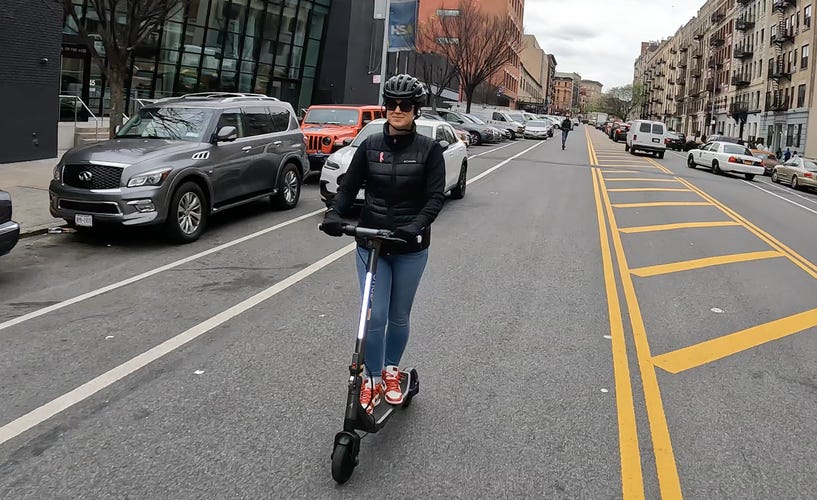
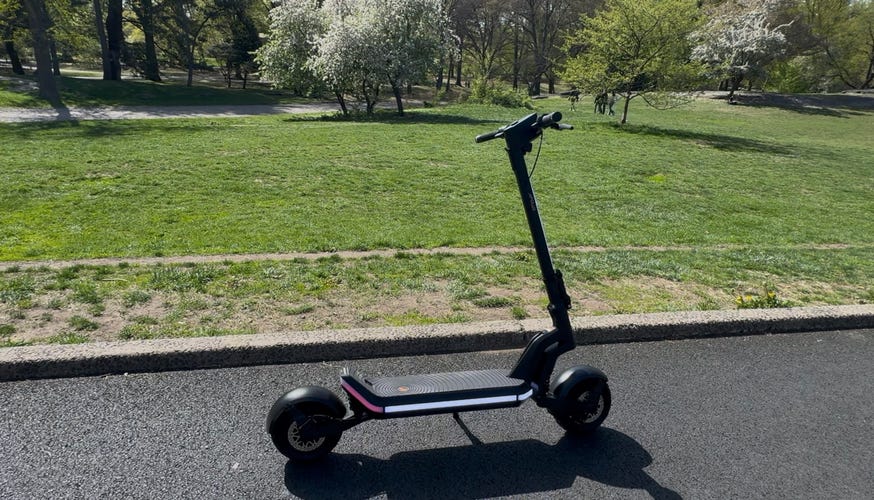
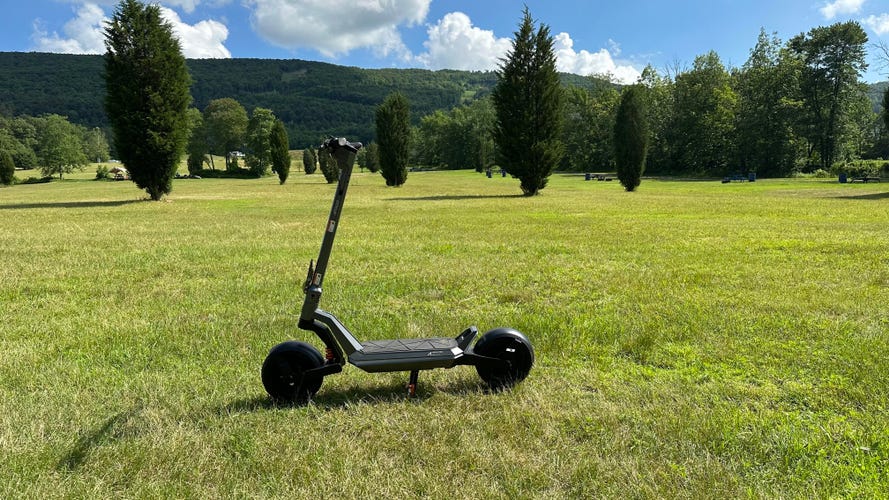
The Apollo Go is the best electric scooter overall for most people. It has a slight edge over the competition for its features, including a suspension system and dual motors, a stylish design and a compact size, all at a reasonable price. Borrowing from boxing terms, I've also included light, middle and heavyweight options for those whose needs aren't met by the Apollo Go.
All of the electric scooters were tested on commutes through sections of New York City, on bike paths around Central Park or the West Side Highway bike path in Manhattan. Others were tested for suburban commutes and off-road when applicable. All scooters were tested by riders who met the weight requirements specified by the manufacturer.
What we updated: December 2025
Added the Apollo Phantom 2.0, Backou Timberwolf, Emove RoadRunner V3, Segway Max G3 and Turban R9. Removed the Inmotion V13, Solar P1 Pro, Turboant M10 Pro and Unagi Model One Voyager.
Best electric scooters for 2024

The Go's quality feel and features, inspired by earlier Apollo models, are evident -- from the handlebar signal lights and sleek deck to the LED display and Quad Lock mount for attaching a phone as a display.
The Apollo iOS/Android app can lock the Go, estimate remaining battery life and allow firmware updates. Notably, it shares the Pro's front and rear regenerative brakes, rear drum brake and thicker kickstand for stability. Powered by dual 350-watt motors with a top speed of 28 mph, the Go pushes what a last-mile scooter should be. Weighing 46 pounds and able to support 265 pounds, the Go can travel an estimated 20-30 miles on a full charge.
We recommend the Go for its features, price and usability, but the Apollo Air is worth considering if you don’t mind a performance drop to get a lower price. There’s also the top-tier Apollo Pro, which made this list and the Apollo City, which squeezes in between the Go and the Pro, so there is a good option for any rider.

At about $1,200, the Segway G3 Max offers a blend of everyday practicality, commuter-friendly performance and enough perks to make it feel premium without being overkill.
If you’re like me -- someone who values scooters and e-bikes that can keep up with city traffic -- the G3 Max hits a sweet spot. It tops out around 28 mph, so it doesn’t just meet typical urban speed limits; it beats them by a few miles. That extra margin can make a real difference when dealing with traffic lights, merging cars or just keeping pace on busy streets.
Despite its power, the scooter weighs a manageable 54 pounds, so it's not too heavy for most riders to lift. There’s even the option to add a second battery for longer commutes or full-day city errands.
Segway didn’t skimp on safety or convenience either. Integrated signal lights built into the handlebars increase visibility in traffic. There’s also a smart, semi-circular lock loop on the head tube, allowing you to lock it securely when you just want to run into a store or grab a quick coffee.
Other nice features include the mobile app that makes it easy to change settings, such as riding modes and speed limits, and compatibility with “find-my” tracking tools.
For short- to midrange city commutes, the G3 Max is a strong bet. It comes from a big-name brand with a great track record, and you get a thoughtful balance of speed, safety, comfort and convenience.

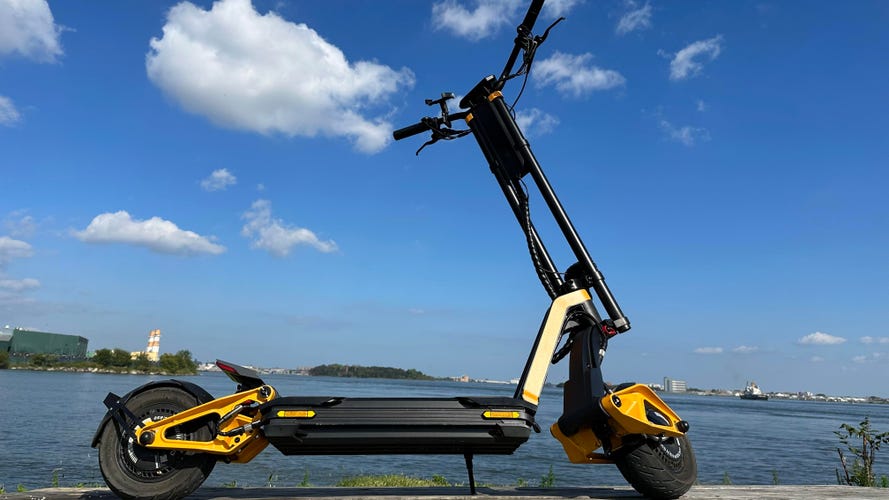
For anyone chasing speed, range or serious power, the stylish Phantom 2.0 delivers. While there are two versions, neither is cheap. The 52-volt model (about $2,200) can reach a top speed of 44 mph and has a 50-mile range. The higher-end 60-volt “Stellar” model (around $3,500) takes everything up a notch with even stronger torque, quicker launches and a higher top speed of 53 mph.
Both models have an aerospace-grade aluminum build and ride on wide 11-by-4-inch PunctureGuard tubeless hybrid tires. They give the Phantom a solid grip and stability regardless of terrain. There is a dual-spring suspension and high ground clearance, so riding is smoother whether you're on uneven pavement or dirt paths.
You also get Apollo’s new V9 thumb throttle, which I found gives it more controlled acceleration, and a triple-layer braking system with dual mechanical or hydraulic disc brakes (depending on configuration) paired with regenerative braking.
The display is bright and easier to read than the first-gen model, plus there's a built-in phone mount so you can use that as your main screen or for navigation. Other extras include IP66 water resistance, front and rear turn signals, 360-degree lighting, NFC unlocking and Apple Find My tracking.
However, along with a hefty price comes a hefty weight. At just over 100 pounds, carrying this thing up stairs is not a highlight of ownership. Still, if you want real performance, solid range and Apollo’s signature premium build quality, the Phantom 2.0 is absolutely made for riders who expect more.

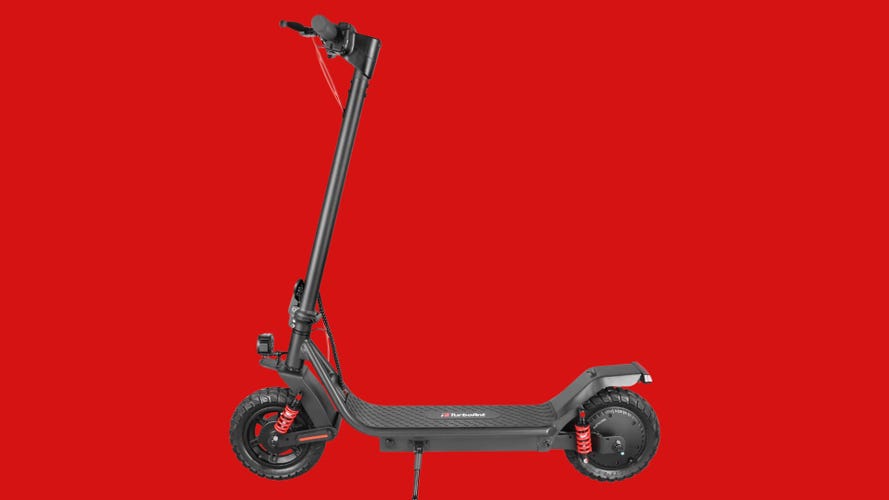
At about $549, the TurboAnt R9 delivers way more than you’d expect from a budget scooter. It’s powered by a 500-watt motor with a 28 mph top speed and an estimated 35-mile range, which already puts it ahead of most scooters in this price bracket.
The dual suspension setup and 10-inch pneumatic tires keep the ride planted, comfortably handling uneven backroads or rough city streets. It also climbs 20% grades without much fuss, thanks to its torque-friendly build.
Acceleration is smooth, and the mix of electronic and mechanical braking gives you controlled, predictable stops without feeling too sharp. It can handle riders up to 275 pounds, and at about 55 pounds, it’s still light enough to lift when you have to. And with its IP54 rating, you don’t have to stress about getting caught in the rain. Built-in lighting and turn signals make the R9 feel genuinely ready for everyday commuting as well as light off-road rides.
Overall, it’s a rare blend of performance, durability and value -- a versatile all-terrain scooter that gives budget-minded riders a whole lot of capability for the price.

If you’ve ever wondered whether a scooter could handle the kind of terrain you’d usually reserve for a mountain bike, the $3,299 AWD Bakcou Timberwolf might be the one that convinces you. Its design is part scooter, part mini fat-tire bike, and once you see it in person, you’ll understand why most people double-take.
The Timberwolf is powered by dual 750-watt Bafang hub motors, giving you all-wheel-drive capability when you need it, or you can cruise on just the front or rear motor only. That flexibility alone makes it stand out, especially for riders who deal with mixed terrain or steep climbs.
Up front, you’ll find a bicycle-sized fat tire with full suspension, which is why it feels more like riding a rugged trail bike than a typical stand-up scooter. Paired with the wide handlebars, the ride feels stable and predictable. The rear uses a smaller fat tire, giving it that unique “bike up front, scooter out back” look -- but functionally, it works.
A 48-volt, 21-amp-hour lithium-ion battery offers up to 25 miles of real-world range, depending on speed, terrain and rider weight. It has a top speed of 20-plus mph, which honestly feels plenty fast on something this size and weight. And speaking of weight: the Timberwolf comes in at around 90 pounds (or about 79 pounds without the battery), and it supports riders up to 320 pounds. This thing is built like a tank in all the right ways.
In short: if you want a scooter that behaves like a rugged, all-terrain bike and doesn’t shy away from bumps, hills or loose ground, the Timberwolf is absolutely that machine.

If you’re the kind of rider who likes to sit, kick back and cruise instead of pedaling, the Roadrunner V3 (about $1,495) deserves serious consideration. This isn’t your standard stand-up scooter -- it’s a seated hybrid that blends convenience, power and comfort in a way most scooters don’t.
This "scooter" packs dual 500-watt motors capable of pushing it to around 34 mph. That's enough speed to handle urban commuting or quick joyrides through the park. The padded seat is surprisingly comfortable for the kind of rides you’d want to take seated -- from errands to quick late-night rides. Because of its low-profile frame and folding handlebars, the Roadrunner V3 is also easy to store in a closet, tuck into a trunk or bring along if you’re traveling.
Powering all this is a 48-volt battery rated for up to 50 miles of range, although your real-world range will vary depending on speed, terrain and rider weight. On the practicality side, the scooter features rear signal lights and an integrated horn, which makes it feel more street-ready and safe, especially in city traffic or on crowded streets.
It rolls on 14-inch tires with front and rear disc brakes and suspension, and the control layout is clean and intuitive, with a simple display, a thumb throttle and a toggle switch that allows you to run in either single- or dual-motor mode. The whole thing weighs around 55 pounds and supports riders up to 330 pounds.
The Roadrunner V3 strikes a balance between portability and solid build quality that feels more like a mini-motorbike than a clunky city ride.

The RS can hit a top speed of 68 mph with smooth yet aggressive acceleration. Its four-speed modes provide versatility for balancing performance and battery life. For example, the scooter's D mode (The RS has 4 modes: Eco, D, S and X) can hit 40 mph, quickly accelerating to 30 mph in just over 3 seconds, which is great for riding in city traffic. If not ridden too aggressively, which is hard not to do, riders can squeeze out close to 100 miles on a full charge.
It features an adjustable suspension that can be height-adjusted for off-road terrain and lowered for smoother pavement rides. Additionally, the scooter's handlebars can be height-adjusted to accommodate riders of all sizes, and it features a built-in steering dampener for stability at high speeds. Thanks to its hefty build, this heavyweight scooter weighs 128 pounds but can support a payload of up to 330 pounds.

The Apollo Pro is a big, fast scooter that’s a good pick for multi-user homes. Even my partner, who prefers bikes, loves the Pro. I can tell by how much she rides it. It features large 12-inch tires and color-customizable integrated lights illuminating red when the brakes are applied. Additionally, it has built-in self-canceling signal lights in the handlebars. It even has a 5-watt speaker that can play music and blast the horn when you need it. Like the smaller Apollo Go, it features a quad-lock mount that securely holds your phone, can inductively charge it and acts as the scooter's display. It has an official top speed of 44 mph and one of the smoothest accelerations you'll ever experience on a scooter.

The VMax VX2 Pro is impressive for its excellent range of approximately 37 miles and a top speed of 24 mph. The display is simple and bright. The scooter feels solid and durable, weighing 45 pounds and can support a rider weight of 267 pounds. It has integrated signal lights in the rear and handlebars. Its 500-watt motor offers impressive low-end torque to get you moving. The front and rear brake levers activate drum brakes and motor regeneration for smooth stops.
There are three versions of the VX2 Pro, each with a similar appearance but different battery sizes, offering various ranges and price points: the LT (22 miles, $699), the ST (28 miles, $799) and the GT (37 miles, $899).

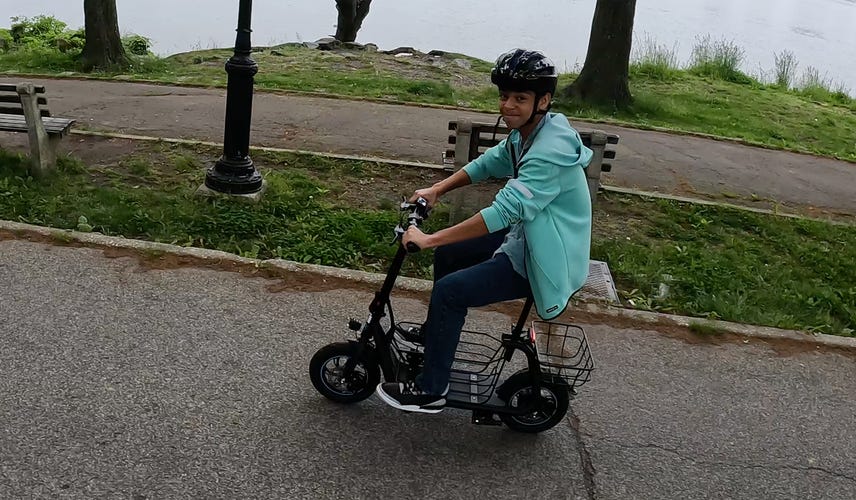
I’m large, so I generally prefer larger scooters, but the Gyroor C1S is surprisingly enjoyable. My entire household loved zipping around on it. The scooter comes with an exceptionally comfortable seat and can support up to 265 pounds, including whatever you load into its two removable baskets; perfect for shopping trips without needing a backpack.
Powered by a 550-watt hub motor, it can achieve a maximum speed of 18.6 mph on its 12-inch wheels, contingent upon the weight load and speed, riders should get a range of around 20-25 miles distance. The scooter weighs just over 48 pounds and can be fully charged in approximately 5 hours. The handlebars on the C1S can fold down, and the baskets can be removed making it easy to store.
Things to consider
Size vs. power
Shopping for a scooter may require some compromise. For example, while larger scooters may be ideal for long-distance travel, managing a 90-plus-pound scooter in a walk-up apartment is no fun. Conversely, while last-mile scooters are lighter and more portable, they typically lack the range and speed of larger models. They often slow down on steep inclines and typically lack any shock absorbers, making them less suitable for rough terrain.

Top speed
Considering a scooter with a low top speed to save on battery? While you might not need to hit 50 mph, faster scooters typically have larger batteries. Riding a 50 mph scooter at around 25 mph will likely only need to be charged once a week. In contrast, a scooter with a top speed of 25 mph that you continuously run at full speed may require daily charging.
Range
The travel range provided by manufacturers is an estimate based on a rider of a certain weight (typically 180 pounds), traveling at a set speed (usually 15 mph) on a level, smooth surface. Terrain, wind and heavy loads all play a role in how far you'll go on a single charge. Also, like a car, the faster you go, the quicker an electric scooter's battery will drain.
Protect yourself
Whether you choose a scooter or a bike, always remember to wear a helmet. Growing up as a teen in New York, I only wore a helmet on the track. A friend's advice changed my perspective: people weren't texting and driving back then. We all need to look out for ourselves. Happy riding, and stay safe out there.
Electric scooter FAQs
We update this list regularly, and below are answers to some of the most common electric scooter questions.