

I've been testing all kinds of headphones for over 15 years -- from over-ear headphones to noise-canceling earbuds to workout-friendly headphones to earbuds with open designs. But this best list represents the best of the best from all our best headphones and earbuds lists at CNET. I’ve personally tested or reviewed every pick on this list. Recent standouts include the over-ear Sennheiser HDB 630, as well as two wireless in-ear headphones (earbuds), the Sony WF-1000XM6 and Samsung Galaxy Buds 4 Pro. If you're looking for more value-priced models, check out our list of the best budget noise-canceling headphones.
Our Picks

Over the last several years, Sony has made some of the best noise-canceling headphones on the market, so it's a big deal when the company comes out with a new flagship model, like the WH-1000XM6, which arrives three years after the release of the WH-1000XM5. Though the XM5 was -- and still is -- one of the top over-ear Bluetooth headphones, there's always room for improvement. With the XM6, Sony has fixed the small design flaws of its predecessor while bumping up the overall performance. The result is a headphone that's arguably edged just ahead of the competition and is now at the top of its class. Read my WH-1000XM6 review.
Pros
- Upgraded design with more comfortable fit
- Improved noise canceling and sound quality
- New QN3 chip is seven times as powerful as QN1 chip in XM5
- Excellent voice-calling performance with more mics
- Improved transparency mode
- Spatial audio with head tracking
Cons
- $50 more than previous model
- No USB-C audio
- It's not so clear how you access spatial audio
Pros
- Lightweight, comfortable design with dual-hinges that fold both up and flat
- Superb noise canceling that rivals Sony's for ANC on the market
- Slightly improved sound quality with new immersive-audio Cinema Mode
- USB-C audio
- Excellent voice-calling performance with minimal background noise
- Intuitive mix of physical buttons and touch controls
Cons
- Unclear what hardware changes Bose has made and this model looks almost identical to the previous model
- Pricey
- Immersive audio mode hurts battery life (30 to 24 hours)
Why I like them
Pros
- Slimmer design than predecessor with slightly more comfortable fit
- High-end look and feel and sturdy build quality
- Redesigned 40mm dynamic full-range carbon drivers with dedicated amplifier/DAC
- Reference quality sound (for Bluetooth headphones) with superior detail and accuracy and a wide soundstage
- Improved noise canceling and voice-calling performance
- USB-C audio
- Ear cushions and the headband are replaceable, but must be replaced by a "trained service engineer"
Cons
- Very expensive
- Noise-canceling is quite respectable but not up to the level of Sony's and Bose's ANC
- Not as feature rich as Sony's WH-1000XM6
Why I like them
While I didn't get the new H3 chip I had hoped for, or a charging case that doubles as a Bluetooth transceiver for in-flight entertainment, I did get most of what I wanted from the AirPods Pro 3. The changes may seem incremental to some folks, but key elements -- fit, sound quality, noise cancellation and a single-charge battery life -- have all seen noticeable upgrades.
Pros
- Design upgrades to the buds and ear tips improve their fit
- Noise cancellation has been upgraded and is now top-notch
- They sound better with improved bass response and more clarity
- Built-in heart-rate monitoring with new sensors
- Excellent voice-calling performance (upgraded microphones)
- Battery life rated for up to 8 hours (up from 6 for AirPods Pro 2)
Cons
- They still use the H2 chip found in the AirPods Pro 2
- Heart-rate monitoring is buried in fitness apps
- While they work with Android, many of their features are exclusive to Apple devices
- Some new colors would be nice

Why I like them
Pros
- Comfortable fit with an attractive, sturdy design
- Affordable price
- Very good sound for the price
- Decent noise-canceling and voice-calling performance
- Strong battery life
- Hard case included
Cons
- Dolby Atmos Spatial Audio mode doesn't really improve the sound
- Noise canceling could be a little better
- No USB-C audio or ear-detection sensors that automatically pause your music when you take the headphones off

Pros
- Completely redesigned with upgraded components and slightly better fit than XM5
- Top-notch sound that's accurate, well-balanced and natural
- Excellent noise-canceling and voice-calling performance with 8 microphones (4 in each bud)
- Improved transparency mode and enhanced antennas for more stable wireless connection
- Decent battery life
Cons
- Pretty pricey
- Included eartips may not be a good match for all ears
- Android-only spatial audio features
Why I like them
Pros
- Sleeker design with slightly more comfortable, secure fit
- Excellent sound with upgraded drivers
- Top-tier voice-calling and transparency mode
- Built-in voice and touch controls work well
- Robust feature set
- Slightly improved adaptive noise canceling
Cons
- Noise canceling and battery life have room to improve
- Eartips have a proprietary design so you can't swap in third-party tips unless they're designed for the buds
- Some features are exclusive to Samsung Galaxy devices or Android-only

Pros
- Surprisingly comfortable for their weight (0.85 pounds) thanks to mesh canopy headband design a good weight distribution
- Impressive sound quality with tight bass, natural mids, crisp highs and a wide soundstage
- Excellent noise-canceling and a top-notch transparency mode that sounds very natural
- They now offer USB-C audio for wired listening
- Very good voice-calling performance
- Spatial audio virtual surround for iPhones and iPads is a nice bonus feature
- Automatic switching between iOS devices on your iCloud account (multipoint Bluetooth)
- Well-implemented digital crown for volume and playback control
Cons
- Quite expensive and fairly heavy
- Purse-like case is weird looking and doesn't offer as much protection as it should
- No 3.5mm cable included for wired use on planes (optional cable costs $39)
- Android users lose several key features
- Equipped with Apple's H1 chip, not the newer H2

Why I like them
Pros
- Relatively lightweight and comfortable
- Not only fold flat but fold up into a nicely designed crossbody travel bag
- Very good sound after tweaking EQ settings
- Well-designed physical controls
- Good noise-canceling and voice-calling performance
- THX spatial audio with head tracking
- Strong battery life (up to 50 hours with ANC on)
Cons
- No USB-C audio
- Fairly pricey
- No support for LDAC and AptX audio codecs (AAC and SBC only)

Why I like them
Pros
- Comfortable fit and good build quality
- Strong sound for open earbuds, with large 11×20 mm dual-diaphragm drivers
- Good battery life (up to 12 hours)
- Noise reduction technology takes the edge off ambient sound
- Good voice-calling performance
- Wireless charging
Cons
- Fairly pricey
- Noise reduction feature doesn't muffle sound as well as AirPods 4 with Noise Cancellation
Pros
- Sleek, sturdy design and comfortable fit
- Excellent sound quality with rich, well-balanced audio
- Very good noise canceling and strong voice-calling performance with effective background noise reduction
- Spatial audio with head-tracking for both iOS and Android
- USB-C audio for digital lossless wired connection
- TV Audio Swap feature for Sonos users
Cons
- Premium price point
- Not true Wi-Fi headphones, despite having Wi-Fi chip
- TV Audio Swap can be a little glitchy

The Nothing Headphone (1) ended up being more impressive than I thought it would be. Nothing has always been a good marketing company that usually does a bang-up job hyping its products. Its first earbuds were a little more style over substance (the performance has improved with more recent models), but this headphone's sturdy, eye-catching design is backed by strong performance. While I have some quibbles with the headphone being a little heavy, and I slightly prefer the sound quality of some competing models, this is one of the best new headphones in recent memory. It will be interesting to see if its price can come down a bit to make it an even more compelling premium noise-canceling headphone option. Read Nothing Headphone (1) review.
Pros
- Sturdy, eye-catching design with translucent elements
- Clean, clear sound with well-defined bass that's enjoyable to listen to
- Strong noise-canceling and voice-calling performance
- Excellent controls that are intuitive to use
- USB-C audio
- Nice carrying case (although some find the zipper problematic)
Cons
- Headphones are a ltitle heavy and not quite as comfortable as some competing models
- They fold flat but don't fold up
- Sound quality is good but not a wow
- The ear pads are not easily removable and it's unclear whether they're replaceable

Why I like them
Pros
- Excellent sound and improved noise-canceling that's truly impressive
- Fit Kit ear tips and stabilizer system gets you a secure, comfortable fit
- New Immersive Audio Cinema mode for video content that also improves speech clarity for spoken-word content
- Slightly improved voice-calling
- Wireless charging has finally been added
Cons
- Hardware changes don't really amount to a true 2.0 product
- Immersive Audio mode hurts battery life
Pros
- Improved design: buds are 20% lighter, case is 33% smaller, and ear hook is slimmer, incorporating nickel-titanium alloy
- Equipped with Apple's more powerful H2 chip
- Improved noise canceling and natural-sounding transparency mode
- Very good sound quality
- Excellent voice-calling performance with new microphones and voice accelerometers to help pinpoint your voice
- Built-in heart-rate sensors
- Physical control buttons work well during athletic activities
- Improved design and sound quality with smaller case
- Strong battery life and wireless charging
Cons
- Premium price point (they list for same price as AirPods Pro 2)
- Some users may not get a tight seal with included ear tips
- A few features missing from AirPods Pro 2 (no Precision Finding, Conversation Awareness or Adaptive Audio)
- Some Apple-exclusive features unavailable to Android users
- Built-in heart-rate monitor may not seem like a needed feature to some people

Pros
- Significantly improved sound quality with better clarity, definition and tighter bass
- Durable, seamless faux-leather earpads for excellent comfort and acoustic seal
- Improved noise canceling and more natural sounding transparency mode
- Very good voice-calling performance
- Spatial audio with head tracking for Apple users
- USB-C audio for lossless wired listening
Cons
- Uses custom Beats chip rather than Apple's H2 chip (limits future feature upgrades)
- No ear-detection sensors to automatically pause/resume audio
- USB-C listening mode disables noise cancellation and transparency features
Pros
- Lightweight and comfortable
- Good sound with very good noise canceling and ambient sound mode
- Good voice-calling performance
- Multipoint Bluetooth
- 35 hours of battery life
- Robust EQ settings
Cons
- No carrying case or pouch included
- Missing more advanced features like ear-detection sensors, LDAC audio codec support and Sony's Quick Attention and Speak-To-Chat

Pros
- Excellent sound with punchy bass, wide soundstage and clear treble with equipped 42mm drivers
- Improved noise canceling and voice-calling performance with two beam-forming microphones on each ear cup
- Good sound personalization features in user-friendly companion app
- Comfortable design with plush memory foam earbads that fold flat for better portability
Cons
- Ho-hum design that only folds flat, not up
- Noise cancellation may not quite match Sony and Bose competitors
- Heavier (293 grams) than competitors despite less premium feel
- Early connectivity issues with some iPhone models

Why I Like Them
Pros
- Audiophile sound quality with excellent clarity, detail, accuracy and powerful, well-defined bass
- Distinct design with premium build quality and LED lighting element in ear cups
- USB-C wired listening option with high-quality DAC (digital-to-analog converter)
- Solid voice-calling performance with good noise-reduction
Cons
- Quite expensive
- Noise canceling is comparatively light and behind that of Sony, Bose andApple
- Included cables don't match the premium build of the headphones themselves
- Can't be used in passive mode when battery is depleted

Why I Like Them
Pros
- Exceptional sound quality with excellent clarity, accuracy and tight bass
- Distortion-free performance even at higher volume levels
- Easy to drive at 50 ohms without requiring dedicated amplification
- Lightweight and comfortable with cushy ear pads that provide good passive noise isolation
- One short (1.2 meter) and one longer (2.5 meter) cable included, as well as a 3.5mm to 6.3mm adapter for professional audio equipment
Cons
- Not a foldable model, so no carrying case or pouch included
- Ear pad depth may be too shallow for all ear sizes
- No active noise cancellation, inline controls or microphone on included cables
- Purely wired design with no wireless connectivity options (requires adapter for use with newer smartphones lacking headphone jacks)
HEADPHONE DEALS OF THE WEEK
- $200 (save $49)
- $248 (save $152)
- $170 (save $181)
- $398 (save $62)
What are the best headphones overall?
With so many different great headphones, it's hard to declare one model better than all the others. That said, the new Sony WH-1000XM6 received a CNET Editors' Choice award in May and sit at the top of this list, making them our current pick for best overall wireless noise-canceling headphones. While we have a few wired headphones on this list, if sound quality is your biggest priority and you're OK with a strictly corded headphone, check out more standout wired options our list of best wired headphones for audiophiles. Our top wired picks include the Sony MDR-M1 and the Sennheiser HD 505.
Best headphones of 2026


The Sony WH-1000XM6's sound has a little bit more of a studio vibe that's more in line with Sony's wired headphones.
Pros
- Upgraded design with more comfortable fit
- Improved noise canceling and sound quality
- New QN3 chip is seven times as powerful as QN1 chip in XM5
- Excellent voice-calling performance with more mics
- Improved transparency mode
- Spatial audio with head tracking
Cons
- $50 more than previous model
- No USB-C audio
- It's not so clear how you access spatial audio
Over the last several years, Sony has made some of the best noise-canceling headphones on the market, so it's a big deal when the company comes out with a new flagship model, like the WH-1000XM6, which arrives three years after the release of the WH-1000XM5. Though the XM5 was -- and still is -- one of the top over-ear Bluetooth headphones, there's always room for improvement. With the XM6, Sony has fixed the small design flaws of its predecessor while bumping up the overall performance. The result is a headphone that's arguably edged just ahead of the competition and is now at the top of its class. Read my WH-1000XM6 review.
Reasons to buy
The WH-1000XM6 are excellent for frequent travelers, remote workers and commuters who demand top-tier sound quality, noise canceling and call quality in a comfortable headphone. If you can afford the high price, you'll appreciate what Sony has achieved here.
Reasons to skip/keep looking
If you're budget-conscious or already own Sony's WH-1000XM5 headphones, you should hold off until they go on sale. They offer some significant improvements over the XM5s, but not enough to justify rushing to upgrade at full price.

The headphones now feature USB-C audio.
Pros
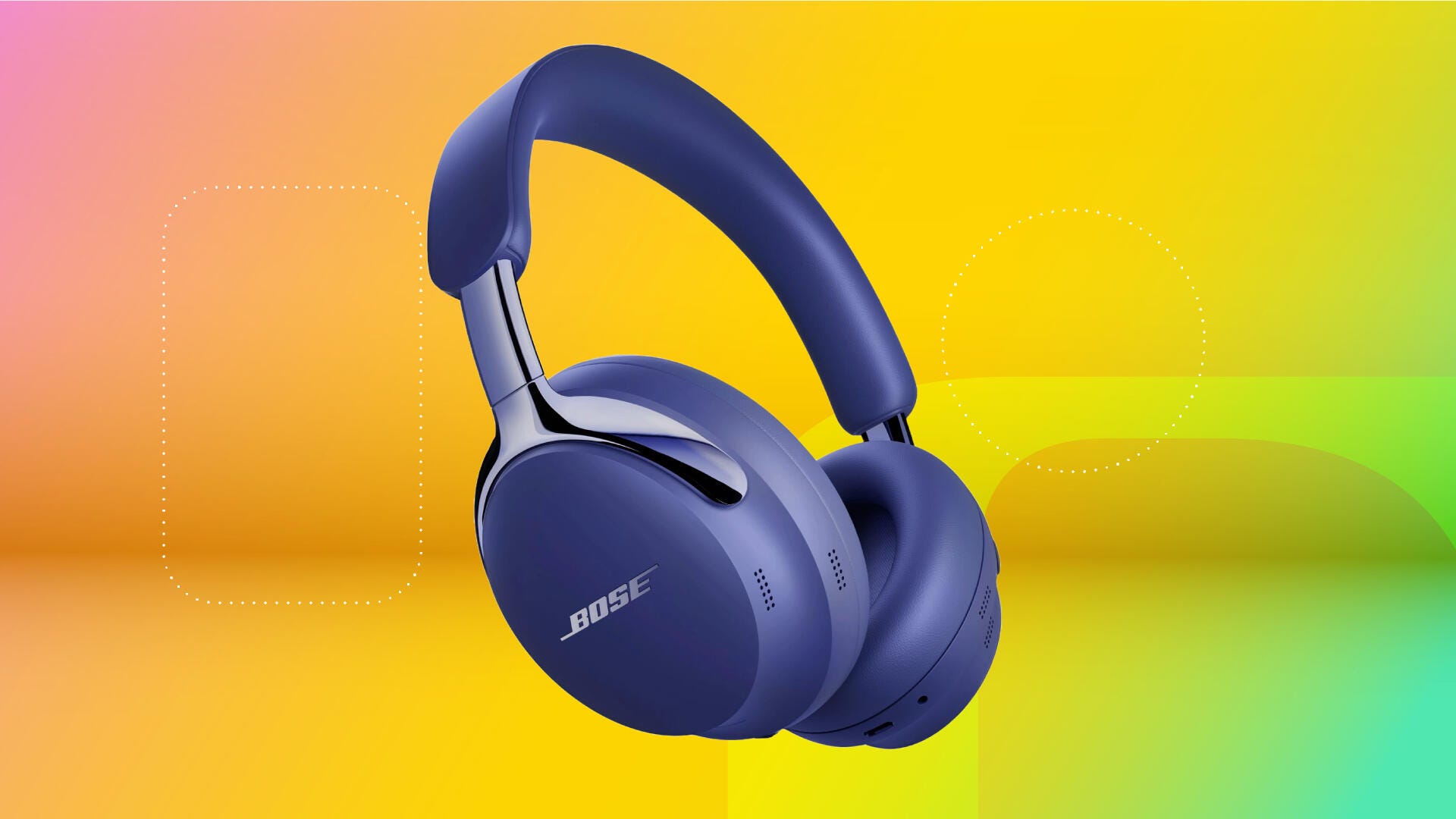
- Lightweight, comfortable design with dual-hinges that fold both up and flat
- Superb noise canceling that rivals Sony's for ANC on the market
- Slightly improved sound quality with new immersive-audio Cinema Mode
- USB-C audio
- Excellent voice-calling performance with minimal background noise
- Intuitive mix of physical buttons and touch controls
Cons
- Unclear what hardware changes Bose has made and this model looks almost identical to the previous model
- Pricey
- Immersive audio mode hurts battery life (30 to 24 hours)
Why I like them
While the new-for-2025 Ultras look almost exactly the same as the original QuietComfort Ultra Headphones that were released in 2023 -- and it's unclear exactly what's changed from a hardware standpoint -- this second-gen model features several enhancements, including slightly better sound, improved noise cancellation, USB-C audio, a new immersive-audio Cinema Mode and improved battery life (it's now rated for up to 30 hours instead of 24 hours and the headphones can now be charged during use via the USB-C port).
For noise canceling, these are neck-and-neck with Sony's new WH-1000XM6 headphones as the two companies battle it out for ANC supremacy. Before this 2nd-gen model arrived, I had the Sony XM6s slightly ahead, but with the small but noticeably improvements Bose has made, it's hard to say which headphone is better. It may come down to how they feel on your head -- both are quite comfortable, though.
Reasons to buy
They're a good choice for frequent travelers, commuters and professionals who want comfortable, well-designed headphones with impressive overall performance, including superb noise-muffling capabilities.
Reasons to skip/keep looking
Those who are on a tighter budget should obviously look toward more midrange and budget headphones options.


The ear cups and headband are replaceable but you can't replace them yourself.
Pros
- Slimmer design than predecessor with slightly more comfortable fit
- High-end look and feel and sturdy build quality
- Redesigned 40mm dynamic full-range carbon drivers with dedicated amplifier/DAC
- Reference quality sound (for Bluetooth headphones) with superior detail and accuracy and a wide soundstage
- Improved noise canceling and voice-calling performance
- USB-C audio
- Ear cushions and the headband are replaceable, but must be replaced by a "trained service engineer"
Cons
- Very expensive
- Noise-canceling is quite respectable but not up to the level of Sony's and Bose's ANC
- Not as feature rich as Sony's WH-1000XM6
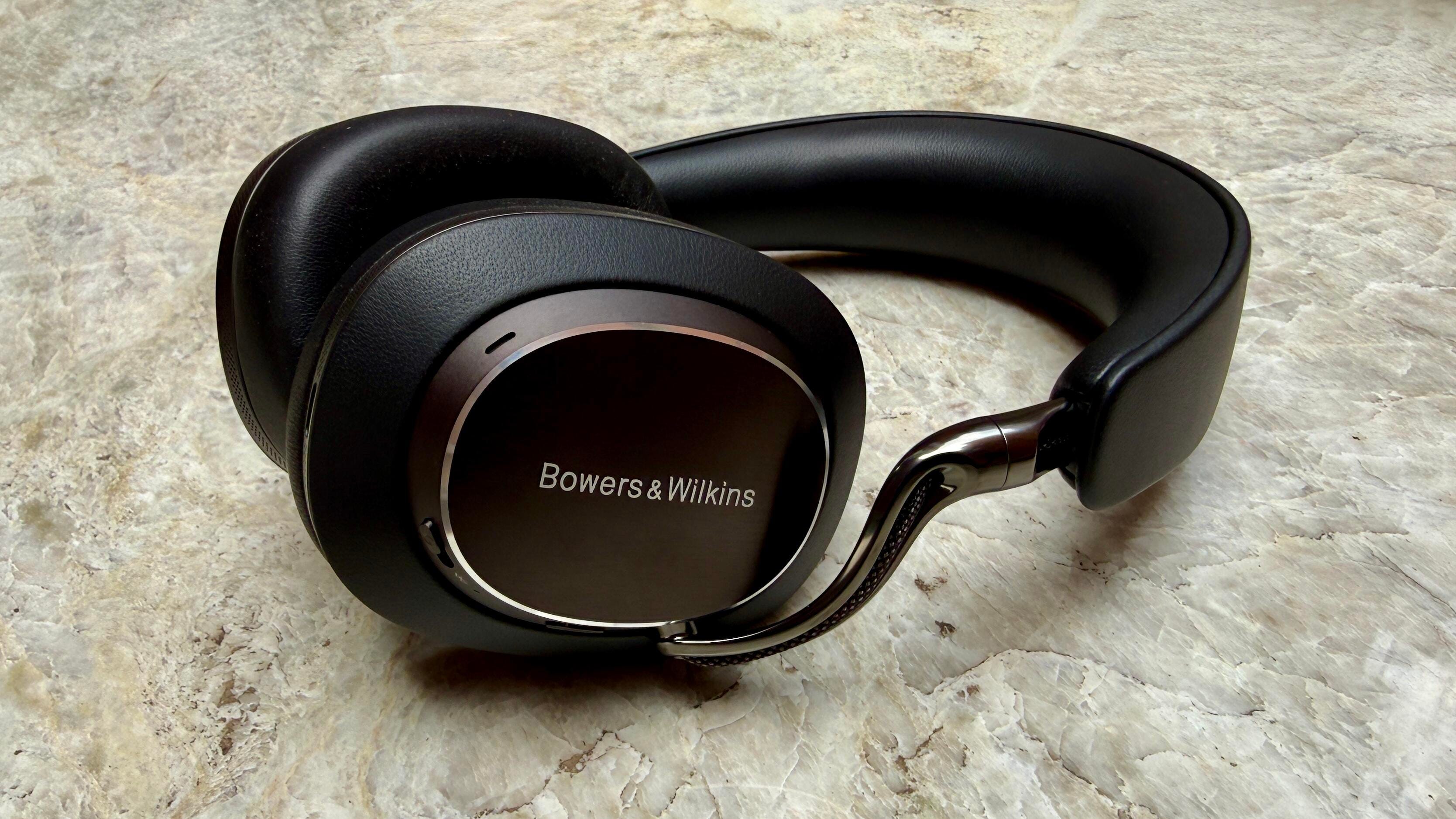
Why I like them
If you're looking for evidence that the Trump administration's tariffs are hitting consumer electronics prices, look no further than Bowers & Wilkins' new flagship PX8 S2 noise-canceling headphones. The original version carried a list price of $699 when they launched, but this second-gen model comes out of the gate at $799 (£629). Read review.
Is that too much to pay? For most folks, yes, but the PX8 S2 over-ear headphones are easily among my favorites. Not only do they sound better than the original PX8, but both the headphones and carrying case have been slimmed down and the noise-canceling and voice-calling performance has been upgraded, making them a top premium wireless headphone pick for those with deep enough pockets to afford them (I also like the more affordable PX7 S3, though it isn't as special as Bowers & Wilkins' flagship headphone).
Reasons to buy
While other premium noise-canceling headphones like the Sony WH-1000XM6 and Bose QuietComfort Ultra Headphones (2nd Gen) arguably offer a few more bells and whistles from a features standpoint and superior noise-canceling, the PX8 S2 have a more upscale design and best-in-class sound quality for Bluetooth headphones.
Reasons to skip/keep looking
The PX8 S2 offer a little more refined sound than the Sony WH-1000XM6s and also a more premium design, but the XM6s also sound excellent, have great noise-canceling and voice-calling performance and are just as comfortable, if not slightly more so (they are lighter) for around $350 less. Bowers & Wilkins step-down PX7 S3 also cost $350 less, and while they don't have as luxurious a finish and are equipped with different drivers (they don't sound as good as the PX8 S2), they share a lot in common with the PX8 S2.


Pros
- Design upgrades to the buds and ear tips improve their fit
- Noise cancellation has been upgraded and is now top-notch
- They sound better with improved bass response and more clarity
- Built-in heart-rate monitoring with new sensors
- Excellent voice-calling performance (upgraded microphones)
- Battery life rated for up to 8 hours (up from 6 for AirPods Pro 2)
Cons
- They still use the H2 chip found in the AirPods Pro 2
- Heart-rate monitoring is buried in fitness apps
- While they work with Android, many of their features are exclusive to Apple devices
- Some new colors would be nice
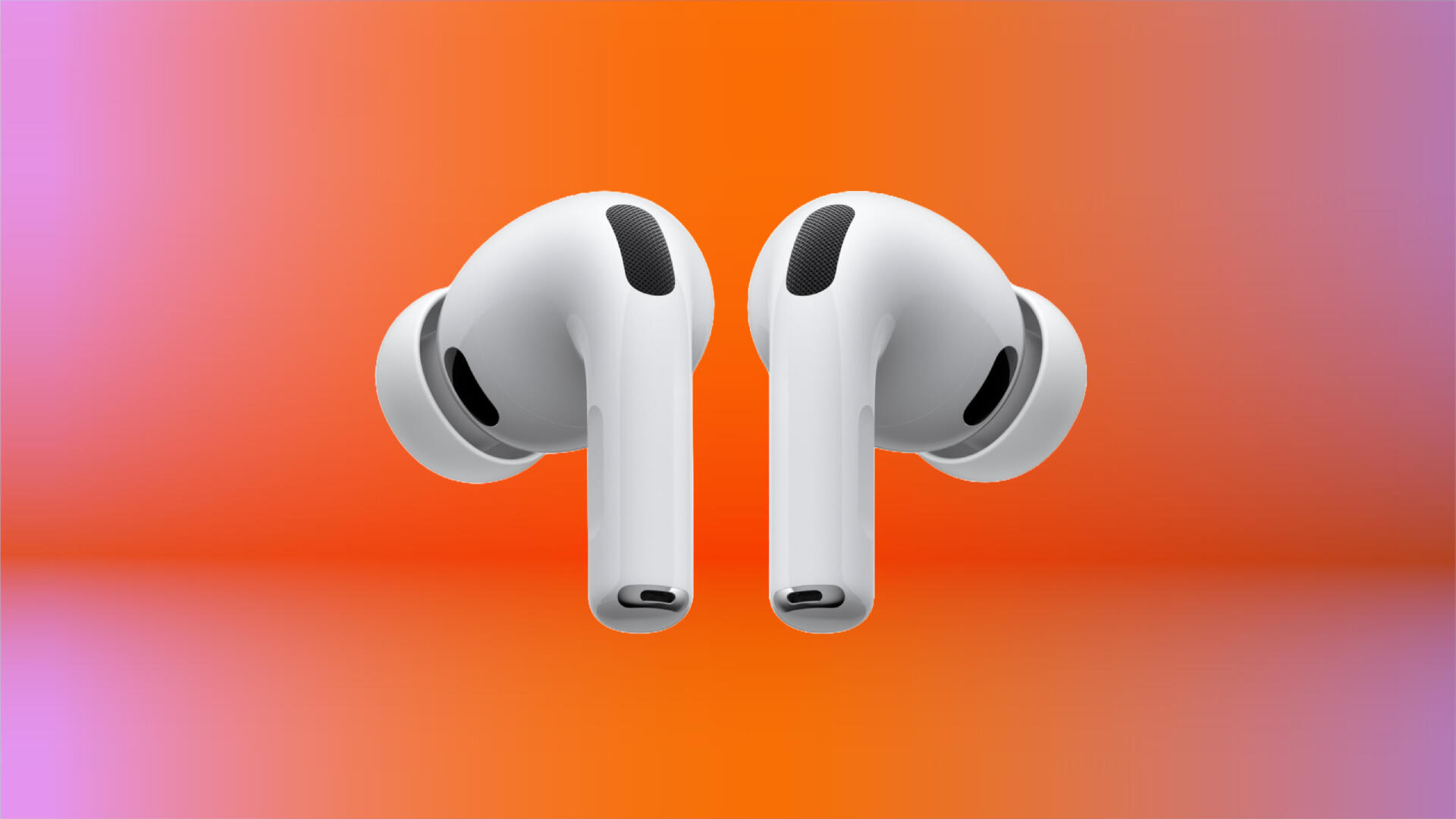
Why I like them
While I didn't get the new H3 chip I had hoped for, or a charging case that doubles as a Bluetooth transceiver for in-flight entertainment, I did get most of what I wanted from the AirPods Pro 3. The changes may seem incremental to some folks, but key elements -- fit, sound quality, noise cancellation and a single-charge battery life -- have all seen noticeable upgrades.
They're about as close as earbuds get to being complete: excellent noise cancellation, strong voice-calling performance and sound quality that rivals the very best. Few buds excel in all three areas -- and the Pro 3s manage to do so while packing in plenty of extra features, including a new heart-rate monitoring feature. Read my full review.
Reasons to buy
As I said, these buds are significantly improved in the four most important areas: fit, sound quality, noise cancellation and battery life. The result is that you don't feel like you're making any compromises when buying the AirPods Pro 3 if you're an Apple user.
Reasons to skip/keep looking
While they do work with Android devices, you'll lose many of the AirPods 3's extra features, especially those designed for Apple's ecosystem of iPhones and iPads. They may also just be a little too expensive for many people.


Pros
- Comfortable fit with an attractive, sturdy design
- Affordable price
- Very good sound for the price
- Decent noise-canceling and voice-calling performance
- Strong battery life
- Hard case included
Cons
- Dolby Atmos Spatial Audio mode doesn't really improve the sound
- Noise canceling could be a little better
- No USB-C audio or ear-detection sensors that automatically pause your music when you take the headphones off
Why I like them
Baseus has two new-for-2025 earbuds -- the Inspire XP1 and Inspire XC1 -- and one set of full-size headphones (the Inspire XH1) that feature Sound by Bose, and they're all good values. They have impressive sound for their price, a more premium design than most "value" headphones and good performance overall. The XH1 are not only fairly lightweight (275 grams) and comfortable to wear, but they have decent build quality, respectable noise canceling and voice-calling performance, as well as very good battery life. I also liked how they not only fold up but fold flat and come with a carrying case and a 3.5mm cable for wired listening. Their controls for playback are also good, though I had to dig into the instructions to figure out that you hold down the volume buttons to advance tracks forward and back. Read review.
Reasons to buy
You're looking for a comfortable, well-designed set of noise-canceling headphones that sound good and cost a lot less than premium models from Sony, Bose and others.
Reasons to skip/keep looking
Premium flagship models from Bose and Sony offer better sound and noise-canceling performance. In other words, you can only expect so much from headphones at this price.


Pros
- Completely redesigned with upgraded components and slightly better fit than XM5
- Top-notch sound that's accurate, well-balanced and natural
- Excellent noise-canceling and voice-calling performance with 8 microphones (4 in each bud)
- Improved transparency mode and enhanced antennas for more stable wireless connection
- Decent battery life
Cons
- Pretty pricey
- Included eartips may not be a good match for all ears
- Android-only spatial audio features
Why I like them
While expensive, Sony's flagship WF-1000XM6 earbuds not only feature great sound and excellent noise canceling, but their voice-calling performance is also top-notch. Aside from an external makeover, the XM6s are upgraded on the inside with new drivers, a 3x more powerful QN3e chip with improved analog conversion technology, eight microphones -- up from six -- and an improved bone-conduction sensor that helps with voice-calling performance. The "HD Noise Canceling" QN3e processor is paired with Sony's Integrated Processor V2, which now supports 32-bit processing, up from 24-bit. Read my Sony WF-1000M6 review.
Reasons to buy
The WF-1000XM6 are pretty hard to beat from a performance standpoint across all the key areas.
Reasons to skip/keep looking
Not everybody will get a tight seal from the included eartips. (I swapped in some tips from another set of earbuds I was testing to get a tight seal.) If you get a good seal and fit, these are special earbuds. But if you don't, you could find them underwhelming for the price. Ideally, with earbuds this expensive, Sony would have included a wider assortment of tips.


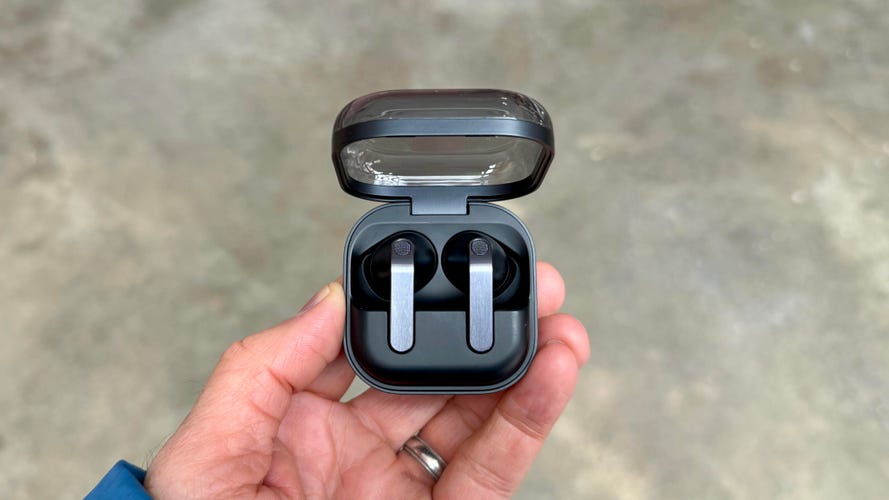
The Galaxy Buds 4 Pro in black.
Pros
- Sleeker design with slightly more comfortable, secure fit
- Excellent sound with upgraded drivers
- Top-tier voice-calling and transparency mode
- Built-in voice and touch controls work well
- Robust feature set
- Slightly improved adaptive noise canceling
Cons
- Noise canceling and battery life have room to improve
- Eartips have a proprietary design so you can't swap in third-party tips unless they're designed for the buds
- Some features are exclusive to Samsung Galaxy devices or Android-only
Why I like them
When Samsung released the Galaxy Buds 3 Pro in 2024, it got some grief for moving to an AirPods-like stem design. The new look was hard to stomach for some Galaxy Buds fans, who felt Samsung had caved to Apple's design ethos. If you were hoping Samsung would return to its stemless ways with future Galaxy buds, sorry, that's not in the cards. Its new flagship Galaxy Buds 4 Pro have a stick design. But if it's any consolation, they look snazzier, fit a bit better, and they have upgraded sound and slightly improved performance all-around. That's why I awarded them a CNET Editors' Choice. Read my full review.
Reasons to buy
The Galaxy Buds 4 Pro are essentially AirPods Pro 3 for Samsung and Android users, with top-notch sound, voice-calling performance and a strong feature set. They should also fit most ears comfortably and securely. Their noise-canceling is also quite good, though not quite at the same level as Apple, Sony and Bose.
Reasons to skip/keep looking
The performance upgrades are significant but not huge, and if you own the Buds 3 Pro, it's probably not worth upgrading to the Buds 4 Pro unless you're really smitten with their new look.


Pros
- Surprisingly comfortable for their weight (0.85 pounds) thanks to mesh canopy headband design a good weight distribution
- Impressive sound quality with tight bass, natural mids, crisp highs and a wide soundstage
- Excellent noise-canceling and a top-notch transparency mode that sounds very natural
- They now offer USB-C audio for wired listening
- Very good voice-calling performance
- Spatial audio virtual surround for iPhones and iPads is a nice bonus feature
- Automatic switching between iOS devices on your iCloud account (multipoint Bluetooth)
- Well-implemented digital crown for volume and playback control
Cons
- Quite expensive and fairly heavy
- Purse-like case is weird looking and doesn't offer as much protection as it should
- No 3.5mm cable included for wired use on planes (optional cable costs $39)
- Android users lose several key features
- Equipped with Apple's H1 chip, not the newer H2
Why I like them
In late 2024, Apple updated the AirPods Max with USB-C charging -- instead of Lightning -- and added new color options, but didn't upgrade the headphones in any other ways that we're aware of. Yes, they're expensive, but the AirPods Max deliver impressive sound quality, excellent noise canceling, very good voice-calling performance, as well as high-end build quality (aluminum earcups and stainless steel telescoping arms) and Apple's virtual surround spatial audio feature with head tracking. While they're heavy, they manage to be surprisingly comfortable, though I did have to adjust the mesh canopy headband to sit a little more forward on my head to get a comfortable, secure fit when I was out walking with them. It's also worth noting that Apple enabled USB-C audio for the AirPods Max in March of 2024. Read my review of the original Lightning-enabled AirPods Max.
What that means is that you can use the included USB-C charging cable to connect the headphones to your USB-C-equipped PC, phone or tablet to get lossless audio (the sound quality is slightly improved with wired listening, especially if you're listening to lossless audio files). While Apple doesn't include a USB-C-to-3.5mm cable -- yes, such a cable should be included with headphones that cost this much -- it will sell you one for $39.
Reasons to buy
Yes, they're pricey, but the AirPods Max remain top-notch noise-canceling headphones that are right there with Sony's and Bose's flagship models. Like other AirPods, they have some Apple-only features, including spatial audio with head-tracking and automatic switching between Apple devices, that Apple users will appreciate.
Reasons to skip/keep looking
While the AirPods Max were updated with USB-C connectivity, which has some advantages, they haven't been substantially upgraded since their release in 2020. I'd like to see them at least updated with Apple's more powerful H2 chip (they're equipped with the H1 chip) that delivers some additional features and is available in the AirPods Pro 2, AirPods Pro 3, as well as the AirPods 4 and AirPods 4 with ANC. Could we get an AirPods Max 2 in 2026? Maybe.


Why I like them
Built on the same chassis as Sennheiser's Momentum Wireless 4 headphones, these HDB 630 cans are essentially a souped-up version of that headphone with upgraded drivers and a few extra features, including Sennheiser's BTD 700 USB-C Bluetooth transmitter. That dongle supports the AptX Adaptive audio codec, and you can plug it into a PC, smartphone (yes, even iPhones) or a tablet for a reliable, high-quality Bluetooth streaming option.
Well-balanced and tuned for audiophiles (the driver design and sound tuning are inspired by the company's highly regarded HD600 series), the HDB 630 are articulate headphones that deliver clean, detailed sound with powerful, controlled bass.
While their noise canceling isn't up to the level of what you get from Sony, Bose and Apple flagship headphones and earbuds, it's still decent, and so is the voice-calling performance. While the HDB 630 is pricier than the Momentum Wireless 4, the upgrade in sound quality is noticeable and that USB-C wireless dongle is a nice addition.
Reasons to buy
They sound really good, and the included USB-C dongle helps set them apart from some competitors.
Reasons to skip/keep looking
Headphones like the Sony WH-1000XM6 may not sound quite as good and are missing a USB-C Bluetooth transmitter, but they're slightly more comfortable and feature superior noise-canceling and voice calling performance.


Pros
- Relatively lightweight and comfortable
- Not only fold flat but fold up into a nicely designed crossbody travel bag
- Very good sound after tweaking EQ settings
- Well-designed physical controls
- Good noise-canceling and voice-calling performance
- THX spatial audio with head tracking
- Strong battery life (up to 50 hours with ANC on)
Cons
- No USB-C audio
- Fairly pricey
- No support for LDAC and AptX audio codecs (AAC and SBC only)
Why I like them
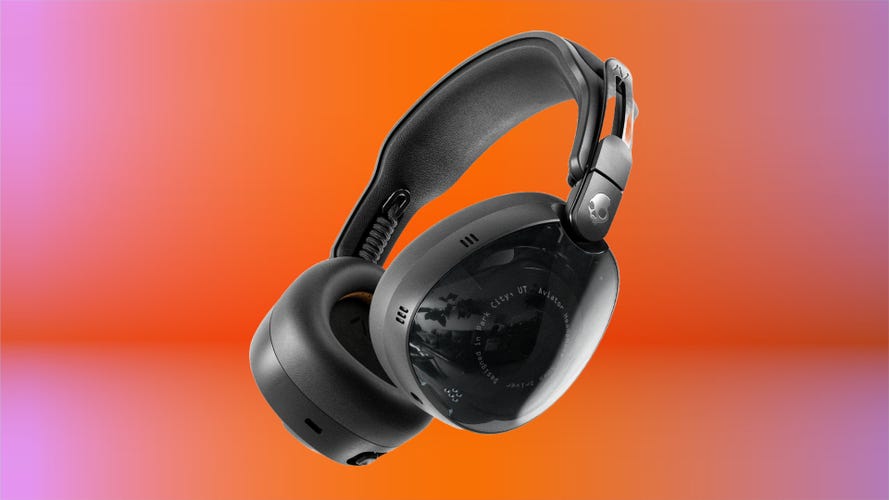
We reviewed Skullcandy's wired Aviator Roc Nation headphones all the way back in 2011. Now Skullcandy's brought the Aviator design back in a wireless noise-canceling model called the Aviator 900 ANC headphones. They kind of surprised me because Skullcandy is better known for its Crusher headphones, which deliver bone-rattling bass but not so-called premium-sounding headphones. However, the Aviator 900, developed in partnership with THX, deliver surprisingly impressive sound. They're not so great out of the box, but after you make some tweaks to the EQ in the app and turn on the THX spatial audio, the sound improves dramatically and is arguably more exciting than the new Nothing Headphone (1)'s sound and more fun to listen to.
Like the Nothing Headphones (1), the Aviator 900 ANC also list for $300 and have a translucent theme. However, the Aviator 900 is lighter (289 grams) and more comfortable to wear. Plus, it not only folds flat but folds up into a well-designed crossbody travel bag (you can remove the strap) and has some nifty physical control buttons (I also liked the integrated mini LED display, though its value is dubious because you can't see it while you have the headphones on). It, too, features good noise-canceling and voice-calling performance, though the Nothing Headphone (1) may have a slight edge in those departments. Even so, I slightly preferred Skullcandy headphones for their fit and sound, especially after a firmware upgrade fixed an early issue that some people experienced with the sound distorting at higher volumes.
Reasons to buy
The Aviator 900 ANC headphones offer a comfortable fit and strong overall performance in a unique, eye-catching design. They also seem to regularly go on sale for $200, which makes them significantly more affordable than the Sony WH-1000XM6 and other premium noise-canceling headphones.
Reasons to skip/keep looking
The headphones are fairly pricey, so you may want to wait for them to go on sale. They've dipped to as low as $200 during Amazon Prime Day, and I suspect we'll see them sporadically discounted to near $200 as we head into the holiday buying season.


The Shokz OpenFit Pro come in white or black for $250.
Pros
- Comfortable fit and good build quality
- Strong sound for open earbuds, with large 11×20 mm dual-diaphragm drivers
- Good battery life (up to 12 hours)
- Noise reduction technology takes the edge off ambient sound
- Good voice-calling performance
- Wireless charging
Cons
- Fairly pricey
- Noise reduction feature doesn't muffle sound as well as AirPods 4 with Noise Cancellation
Why I like them
Shokz wanted to equip its new flagship OpenFit Pro open earbuds with active noise cancellation, but that's not easy with open earbuds. Instead, it ended up dialing back expectations and calling the tech inside these new ear-hook style buds, "OpenEar Noise Reduction." It's a good thing it did because, during time testing the OpenFit Pro, they didn't reduce ambient sound nearly as well as the Apple AirPods 4 with Active Noise Cancellation. But they sound impressive for open earbuds, are comfortable to wear and have the premium build quality you'd expect from a set of earbuds that cost $250. Read my Shokz OpenFit Pro review.
Reasons to buy
The OpenFit Pro are well-designed and among the best-sounding open earbuds.
Reasons to skip/keep looking
There are more affordable open buds with ear-hook designs that may not sound quite as good but do cost $50 to $100 less.


Pros
- Sleek, sturdy design and comfortable fit
- Excellent sound quality with rich, well-balanced audio
- Very good noise canceling and strong voice-calling performance with effective background noise reduction
- Spatial audio with head-tracking for both iOS and Android
- USB-C audio for digital lossless wired connection
- TV Audio Swap feature for Sonos users
Cons
- Premium price point
- Not true Wi-Fi headphones, despite having Wi-Fi chip
- TV Audio Swap can be a little glitchy
Why I like them
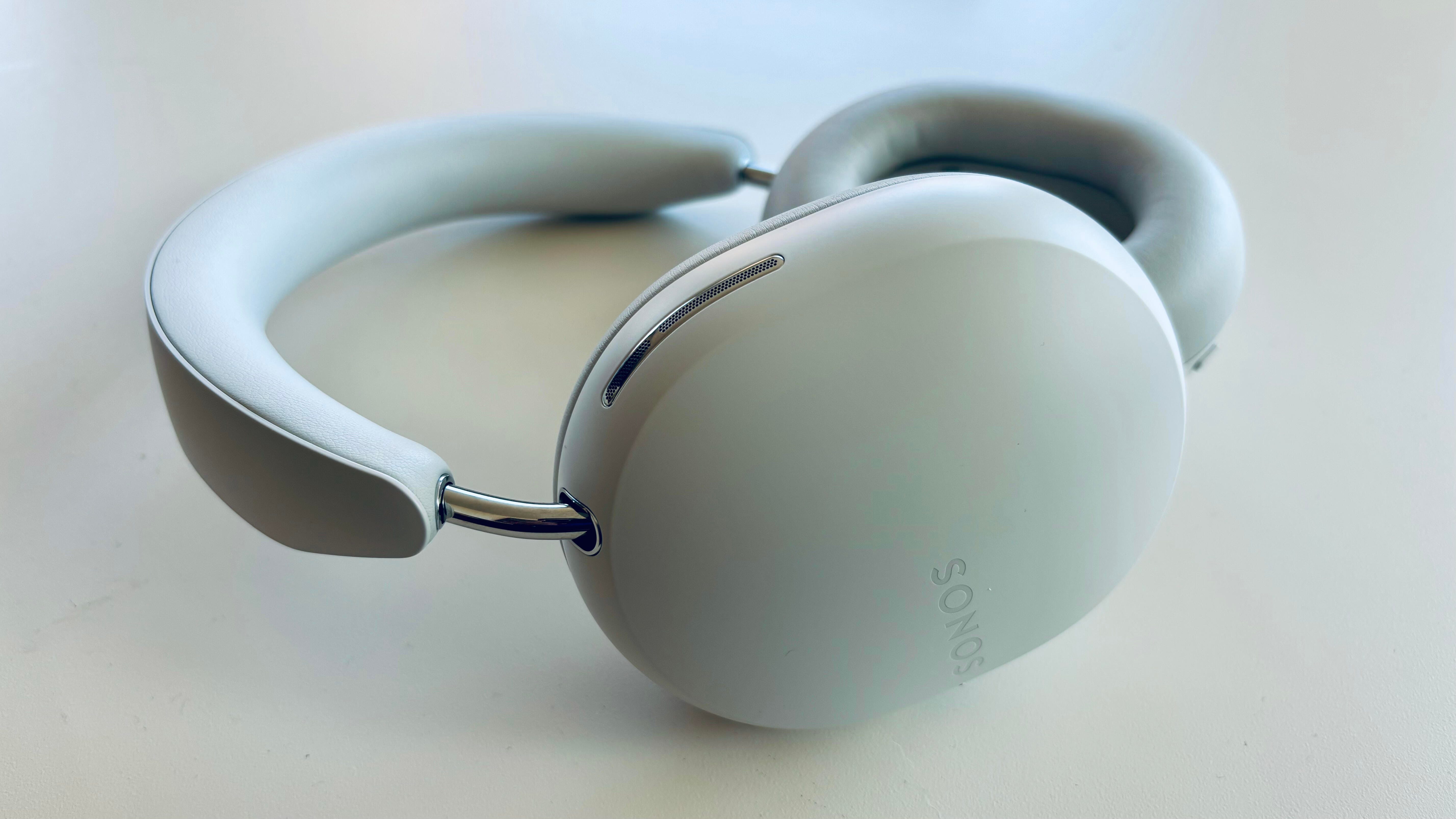
A lot of people expected Sonos' first headphones to be able to stream lossless audio over Wi-Fi in your home and then use Bluetooth outside your Sonos home network. However, Sonos reps told me that listening to music over Wi-Fi would greatly reduce the headphone's battery life and the company opted to leave that feature off. So even though they're equipped with a Wi-Fi chip so you can tap into a Sonos sound bar at home for private late-night viewing (Sonos refers to this as the TV Audio Swap feature), they're not really Wi-Fi headphones and are first and foremost noise-canceling Bluetooth headphones -- and I was mostly quite impressed by them. Read my Sonos Ace review.
Sleekly designed, at 312 grams, they're not as light as the 254-gram Sony WH-1000XM6s or the 253-gram Bose QuietComfort Ultras, but they're considerably lighter than the 385-gram AirPods Max and I found them quite comfortable to wear, with a relatively small gap between the headband and my head (they hugged my head nicely with just the right amount of clamping). I also appreciated tat their chrome metal yoke allows the headphones to swivel in multiple directions -- the hinge is hidden - and the ear cups adhere magnetically like they do on the AirPods Max and are replaceable, which is good.
All in all, the Sonos Ace headphones perform very well across the board with strong noise canceling, excellent sound quality and very good voice-calling performance. Well balanced, they're clean sounding with nice detail and sparkle in the treble along with punchy, powerful bass that doesn't get boomy. Vocals sounded natural and the headphones have a relatively wide soundstage. It's also good to see that the headphones have USB-C audio support (wired listening with a USB-C cable) and spatial audio with head-tracking.
Reasons to buy
The Sonos Ace are one of the top noise-canceling headphones on the market, rivaling flagship models from Sony, Apple and Bose. Now that they've been out for more than a year, we're seeing some good discounts on them, which makes them a better value, and a potential alternative to Sony's new WH-1000XM6 headphones. While you don't have to be an owner of Sonos speakers to buy them, Sonos soundbar owners can leverage the TV Audio Swap feature for private late-night viewing (the Ace delivers virtual surround sound in this mode).
Reasons to skip/keep looking
You can make the argument that Sony's new WH-1000XM6 are slightly better overall for around the same price (I'm talking list price -- and yes, they're too pricey for some folks). But with the Ace selling for as low as $330, they're an easier sell.


Pros
- Sturdy, eye-catching design with translucent elements
- Clean, clear sound with well-defined bass that's enjoyable to listen to
- Strong noise-canceling and voice-calling performance
- Excellent controls that are intuitive to use
- USB-C audio
- Nice carrying case (although some find the zipper problematic)
Cons
- Headphones are a ltitle heavy and not quite as comfortable as some competing models
- They fold flat but don't fold up
- Sound quality is good but not a wow
- The ear pads are not easily removable and it's unclear whether they're replaceable
The Nothing Headphone (1) ended up being more impressive than I thought it would be. Nothing has always been a good marketing company that usually does a bang-up job hyping its products. Its first earbuds were a little more style over substance (the performance has improved with more recent models), but this headphone's sturdy, eye-catching design is backed by strong performance. While I have some quibbles with the headphone being a little heavy, and I slightly prefer the sound quality of some competing models, this is one of the best new headphones in recent memory. It will be interesting to see if its price can come down a bit to make it an even more compelling premium noise-canceling headphone option. Read Nothing Headphone (1) review.
Reasons to buy
If you can't afford the AirPods Max or Sony WH-1000XM6 and want a pair of unique-looking, sturdy headphones that also offer strong performance, the Nothing Headphone (1) is an intriguing alternative.
Reasons to skip/keep looking
The design isn't for everyone and they fall a little short compared with top premium models like the Sony WH-1000XM6.


Pros
- Excellent sound and improved noise-canceling that's truly impressive
- Fit Kit ear tips and stabilizer system gets you a secure, comfortable fit
- New Immersive Audio Cinema mode for video content that also improves speech clarity for spoken-word content
- Slightly improved voice-calling
- Wireless charging has finally been added
Cons
- Hardware changes don't really amount to a true 2.0 product
- Immersive Audio mode hurts battery life
Why I like them
As far as the hardware goes, the QC Ultra Earbuds (2nd Gen) look exactly the same as the original QC Ultra Earbuds, although Bose has added a new plum color to the line. There are two small changes. The 2nd Gen Ultra Earbuds now support wireless charging, a feature that should have been available with the originals. The included ear tips now have wax guards, a fancy way of saying there's a silicone mesh that now covers the holes in the tips.
The reality is, they don't seem like a true 2.0 product. But they do feature improved adaptive noise canceling that's truly impressive (it's neck-and-neck with the Apple AirPods Pro 3's noise canceling for the best ANC in a set of earbuds), along with some sound quality enhancements, including a new spatialized immersive audio Cinema mode that widens the soundstage and makes "video content more lifelike" with clearer dialog. The mode also helps with spoken-word audio content like podcasts and audiobooks.
New features available in both the original QC Ultra Earbuds and Gen 2 model include:
- Bose SpeechClarity
- Spotify Tap
- Turn capacitive controls on/off
- General connectivity and stability improvements
Feature upgrades available exclusively to the Gen 2 model include:
- Enhanced adaptive noise cancellation
- Reduced noise floor (the faint hiss in noise-canceling mode)
- Case battery reporting
- Cinema Mode
Reasons to buy
The Bose QuietComfort Ultra offer a comfortable, secure fit and feature superb noise canceling and excellent sound quality. While the improvements to this model are incremental, it's good that Bose has made some upgrades to an already great set of noise-canceling earbuds. They also work well with both iOS and Android smartphones.
Reasons to skip/keep looking
They're pretty pricey and a little bigger than some earbuds like the AirPods Pro 3 and Samsung Galaxy Buds 3 Pro.


Pros
- Improved design: buds are 20% lighter, case is 33% smaller, and ear hook is slimmer, incorporating nickel-titanium alloy
- Equipped with Apple's more powerful H2 chip
- Improved noise canceling and natural-sounding transparency mode
- Very good sound quality
- Excellent voice-calling performance with new microphones and voice accelerometers to help pinpoint your voice
- Built-in heart-rate sensors
- Physical control buttons work well during athletic activities
- Improved design and sound quality with smaller case
- Strong battery life and wireless charging
Cons
- Premium price point (they list for same price as AirPods Pro 2)
- Some users may not get a tight seal with included ear tips
- A few features missing from AirPods Pro 2 (no Precision Finding, Conversation Awareness or Adaptive Audio)
- Some Apple-exclusive features unavailable to Android users
- Built-in heart-rate monitor may not seem like a needed feature to some people
Why I like them
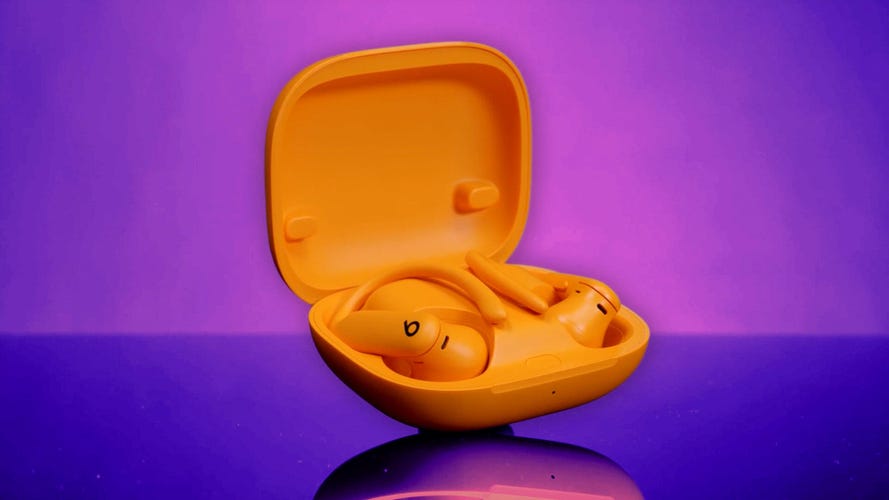
The original Powerbeats Pro were released in May 2019, so Beats has had a lot of time to plot how to improve the second generation of its popular ear-hook style true-wireless sport earbuds. And improve they have -- by quite a bit. Not only do they have a new, more refined design with better ergonomics, but new drivers, a more powerful Apple H2 chip, a new built-in heart-rate sensor and, yes, active noise canceling for the first time in a pair of Powerbeats. And that noise canceling is quite good, as is the sound quality and voice-calling performance -- so long as you get a tight seal from one of the five different included ear tips. Read my Beats Powerbeats Pro 2 review.
These new Powerbeats Pro 2 fit my ears better thanks to Beats improving the overall ergonomic shape of the earbud and completely redesigned the ear hook -- it's 50% smaller and incorporates nickel-titanium alloy, so it's both flexible and durable. The buds themselves are 20% lighter.
Reasons to buy
Fitness enthusiasts like earbuds with ear hooks so their buds won't fall out of their ears during intense workouts. Typically, such earbuds don't offer the greatest performance, but the Powerbeats Pro 2 have many of the same qualities and features as the AirPods Pro 2 with very good sound along with strong noise canceling and voice-calling performance. In short, they're versatile, also performing well as everyday earbuds. It's also worth noting that while the Powerbeats Pro 2 have some Apple-exclusive features, Beats does have an app for Android users that makes these more Android-friendly than AirPods.
Reasons to skip/keep looking
While Beats has improved the Powerbeats Pro 2's design and ergonomics, they still may not be a comfortable fit for everybody's ears and some people may not get a truly tight seal from any of Beats' ear tips (I had an issue and had to use another set of ear tips from my collection). If you don't get a tight seal, you'll likely be unimpressed with the sound quality and noise-cancelling and may want to return them to the store you bought them from (try to find some alternative ear tips before you do that).


Pros
- Significantly improved sound quality with better clarity, definition and tighter bass
- Durable, seamless faux-leather earpads for excellent comfort and acoustic seal
- Improved noise canceling and more natural sounding transparency mode
- Very good voice-calling performance
- Spatial audio with head tracking for Apple users
- USB-C audio for lossless wired listening
Cons
- Uses custom Beats chip rather than Apple's H2 chip (limits future feature upgrades)
- No ear-detection sensors to automatically pause/resume audio
- USB-C listening mode disables noise cancellation and transparency features
Why I like them
Love 'em or hate 'em, Beats Studio headphones are among the most popular headphones of all time, launching as a wired headphone back in 2008. This is the fourth generation of them, and they carry the same list price as their predecessor and look very similar on the outside but have some big changes on the inside that make them significantly better headphones. I'm tempted to describe them as more affordable plastic versions of the AirPods Max. However, that's not quite accurate due to a choice in chipsets and one notable missing feature. But read my full review to find out what makes this a very good headphone with some small caveats.
Reason to buy
The Studio Pros are the best Beats over-ear headphones, geared toward both Apple and Android users. Android users get multipoint Bluetooth pairing with automatic switching between devices linked to your Google account, while Apple users link to their iCloud account but have to manually switch between devices. For Apple users, there's spatial audio with head tracking when watching videos and hands-free Siri access. IThose who prefer a more exciting, forward sound signature over more laid back options will find these appealing, and they should work well with a variety of music genres.
Reason to skip/keep looking
The one big miss here is the lack of ear-detection sensors -- most $350 over-ear headphones have this feature, meaning your music doesn't automatically pause when you take the headphones off. I also think it was a mistake for Beats not to power these with Apple's H2 chip, as going forward you won't get feature upgrades designed for that chip. Android users don't get spatial audio with head tracking or hands-free Siri.


The Sony CH-720N is also available in black.
Pros
- Lightweight and comfortable
- Good sound with very good noise canceling and ambient sound mode
- Good voice-calling performance
- Multipoint Bluetooth
- 35 hours of battery life
- Robust EQ settings
Cons
- No carrying case or pouch included
- Missing more advanced features like ear-detection sensors, LDAC audio codec support and Sony's Quick Attention and Speak-To-Chat
Why I like them
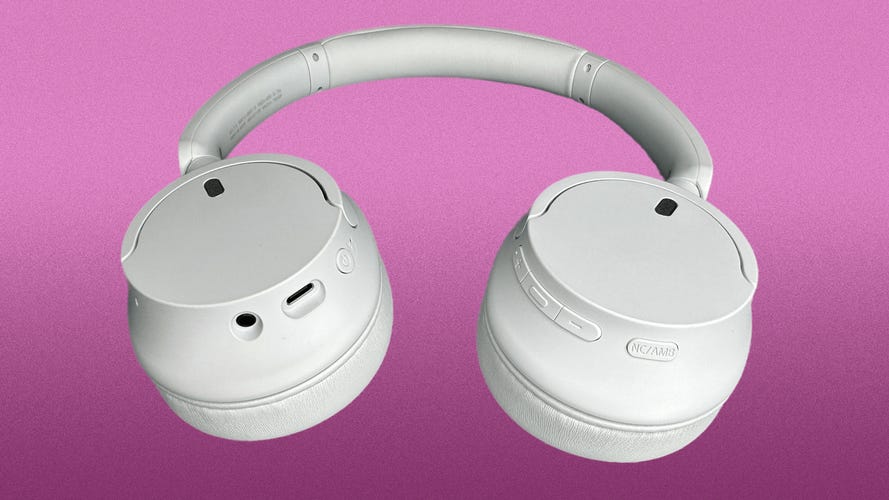
Sony's improved entry-level noise canceling headphones, the CH-720Ns, have a bit of a plasticky budget vibe, but they're lightweight (only 192 grams) and very comfortable. Part of me was expecting them to sound pretty mediocre, but I was pleasantly surprised, as these headphones offer good overall tonal balance with punchy bass, decent clarity and a fairly wide soundstage (the headphones are suitable for a variety of music genres. They also offers decent noise canceling and good voice-calling performance.
No, they don't sound as good or perform as well as Sony's WH-1000XM5 or new WH-1000XM6 headphones. But they sound more premium than they look -- and feel -- and their overall performance is a step up from their predecessor, the CH-710Ns. Are they worth $150? Maybe -- or maybe not. But the good news is that, like the CH-710N and WH-XB910 before them, these frequently are discounted to closer to $100, which makes them a good value.
Reasons to buy
Budget-conscious buyers seeking Sony quality at an accessible price point will find these offer a significant step up from truly entry-level headphone options.
Reasons to skip/keep looking
The main reason not get these is that you simply want a more premium noise-canceling headphone that not only offers better build quality but better overall performance along with more advanced features like ear-detection sensors, LDAC audio codec support and Sony's Quick Attention and Speak-To-Chat features. Sony also leaves out any sort of carrying case or pouch with these headphones, which is slightly disappointing.


Pros
- Excellent sound with punchy bass, wide soundstage and clear treble with equipped 42mm drivers
- Improved noise canceling and voice-calling performance with two beam-forming microphones on each ear cup
- Good sound personalization features in user-friendly companion app
- Comfortable design with plush memory foam earbads that fold flat for better portability
Cons
- Ho-hum design that only folds flat, not up
- Noise cancellation may not quite match Sony and Bose competitors
- Heavier (293 grams) than competitors despite less premium feel
- Early connectivity issues with some iPhone models
Why I like them
Sennheiser's previous-generation Momentum Wireless headphones have always had a pretty distinct look that was part retro, part modern and stood out for the exposed metal on their headband. For better or worse, that's all gone now, and the new Momentum 4 Wireless, Sennheiser's flagship noise-canceling headphones, look a bit more subdued and also a bit more like some of their competitors.
The Momentum 4 Wireless offers superior performance over the Momentum 3 Wireless in every regard, although the biggest gains are with noise canceling and voice-calling performance as well as battery life, which is outstanding -- up to 60 hours at moderate volume levels. There's also a transparency mode that allows ambient sound in, and they have the ability to create a custom sound profile in the Smart Control app for iOS and Android using the built-in EQ, sound modes and a new Sound Personalization feature that "assesses the user's listening preferences and adjusts the listening experience according to their taste."
Equipped with 42mm drivers, Sennheiser says the Momentum 4 Wireless offers "best-in-class" sound, which is debatable. I'd say the Momentum 4's sound quality is right there with other models in this price range -- they sound excellent, with the requisite well-defined, punchy bass, relatively wide soundstage (they sound pretty open) and smooth treble that brings out some of the finer details in well-recorded tracks. They're a pleasure to listen to.
Reasons to buy
The Momentum 4 Wireless costs less than flagship models from Sony, Bose and Apple and offer excellent sound and good build quality.
Reasons to skip/keep looking
While I'm fan of the Momentum 4 Wireless and like their sound a lot, their noise canceling and comfort level isn't as good as what you get from the Bose QuietComfort Ultra (original and 2nd Gen) or Sony WH-1000XM5 or WH-1000XM6. It's also worth noting that the Momentum 5 Wireless could be on the horizon, as the Momentum 4 Wireless was released in Aug. 2022.


They Focal Bathys share the same design aesthetic as the company's more expensive wired headphones.
Pros
- Audiophile sound quality with excellent clarity, detail, accuracy and powerful, well-defined bass
- Distinct design with premium build quality and LED lighting element in ear cups
- USB-C wired listening option with high-quality DAC (digital-to-analog converter)
- Solid voice-calling performance with good noise-reduction
Cons
- Quite expensive
- Noise canceling is comparatively light and behind that of Sony, Bose andApple
- Included cables don't match the premium build of the headphones themselves
- Can't be used in passive mode when battery is depleted
Why I Like Them
French audio company Focal is known for its high-end speakers and headphones. You might call it the Bowers & Wilkins of France. And now it's finally done what a lot of high-end audio companies have had to do in this age of on-the-go wireless music listening: make active noise-canceling Bluetooth headphones. Easily one of the best-sounding wireless headphones, the pricey Bathys cost feature not only wireless connectivity but also a built-in digital-to-analog converter for USB wired listening with any computer, smartphone or tablet with USB-C.
Going wired gives you a slight bump up in sound quality (it does help to stream high-resolution audio files for optimal sound). In wired mode, the headphones deliver up to 24-bit/192kHz resolution. But the headphones also sound quite impressive in wireless mode with excellent clarity, detail, accuracy and powerful, well-defined bass. They have a spacious soundstage (for a closed-back headphone) and allow you to hear each instrument distinctly in complicated tracks where several instruments are playing at the same time. They're what I call "revealing" headphones that will make bad recordings sound worse and good recordings sound even better.
Reasons to buy
Wireless headphones like the Sony WH-1000XM6 sound excellent. But if you're looking for wireless headphones that take it to the next level -- we're talking best of the best for sound quality from a wireless headphone -- the Bathys should be on your shortlist.
Reasons to skip/keep looking
Aside from the fact that they're quite pricey, these may be a little too much headphone for some people in more ways than one. While they're more compact than Focal's wired headphones, the Bathys are still large headphones (they weigh 350 grams) and will look that way on your head. Also, while their noise-canceling is decent enough, with a low and high mode ("silent" and "soft") as well a transparency mode, it's not nearly as good as what you get with Sony and Bose flagship ANC models (ANC has a tendency to degrade the sound so there's always a delicate balance adding ANC when sound quality is the priority).

Pros
- Exceptional sound quality with excellent clarity, accuracy and tight bass
- Distortion-free performance even at higher volume levels
- Easy to drive at 50 ohms without requiring dedicated amplification
- Lightweight and comfortable with cushy ear pads that provide good passive noise isolation
- One short (1.2 meter) and one longer (2.5 meter) cable included, as well as a 3.5mm to 6.3mm adapter for professional audio equipment
Cons
- Not a foldable model, so no carrying case or pouch included
- Ear pad depth may be too shallow for all ear sizes
- No active noise cancellation, inline controls or microphone on included cables
- Purely wired design with no wireless connectivity options (requires adapter for use with newer smartphones lacking headphone jacks)
Why I Like Them
We've always been fans of Sony's MDR-7506 wired studio monitor headphones, which have long been favorite headphones of recording engineers and other sound professionals. The 2024 MDR-M1 are essentially a premium version of the 7506, delivering sound that's hard to match for the price. These are the wired headphones that will make you realize what you're missing after listening to wireless headphones for so long. They have big, open sound with excellent clarity, accuracy and tight bass. Not only is their sound a noticeable step up from the 7506s, but these get high marks for their comfort level (they weigh a svelte 216 grams). No, there isn't any noise canceling, but the soft, cushy ear pads offer good passive noise isolation.
Though they play louder with a headphone amp, they're easy to drive (50 ohms), so you can plug them directly into a computer's headphone port or a smartphone (likely with a USB-C to 3.5mm adapter). They come with 1.2m and 2.5m straight detachable cables and a 3.5mm to 6.3mm screw-in plug adapter, but no carrying pouch or case is included. The only downside I see is that the ear pads aren't all that deep, so it's possible those with large ears that stick out a bit might have some issue with the M1's fit -- your ears might press up against the drivers, which are notable for serving up distortion-free audio, even at higher volume levels. That said, they look and feel like an upgraded version of the 7506, so if those worked for you, these should too.
Reasons to buy
You can get more expensive audiophile wired headphones, but the MDR-M1 deliver very good bang for your buck thanks to their relatively affordable price point. They both sound great are a comfortable to wear.
Reasons to skip/keep looking
Those seeking the convenience of wireless connectivity should obviously look elsewhere, as these are purely wired headphones. Also, while these are clearly an upgrade over the MDR-7506, some people may find that the price bump from that model doesn't quite meet the bump in performance the MDR-M1 offers. In other words, you may be just fine with the MDR-7506, which costs less than half the price.
Factors to consider when choosing headphones
Budget and performance
Before anything else, you'll want to figure out how much you're willing to spend on new headphones. A quick tip -- consider the price-to-performance ratio rather than just the lowest price. Entry level models ($30-$80) typically offer decent sound but fewer premium features. Mid-range options ($80-$150) balance sound quality with features like basic ANC, a better build and water- and dust- resistance (IP ratings) for portable models. Premium headphones ($150-$300+) deliver superior sound engineering, advanced noise cancellation, extended battery life for wireless models and other specialized features like planar magnetic drivers or high-resolution audio support. Determine which features matter most for your specific use cases -- commuting, exercise, professional calls, audiophile listening or gaming -- and invest accordingly rather than paying for features you may not use.
Noise cancellation
Active noise cancellation technology uses microphones and special processors to generate anti-noise that neutralizes any ambient sound. Adaptive ANC automatically adjusts to your environment, while adjustable systems let you control noise cancellation levels manually. Some premium models offer specialized noise cancellation for different environments (airplanes, traffic noise, ambient chatter). Over-ear headphones typically provide the best ANC performance due to larger drivers and sealed ear cups, while on-ear models offer less isolation than their on- and in-ear counterparts. If you know you'll be listening in busier environments, look for headphones with ANC. Do keep in mind that active noise cancellation can limit both battery life and sound quality, so if you're hoping to salvage those, look for headphones that advertise a natural-sounding transparency mode that allows ambient sound in without digital artifacts.
Battery life
If you’re eyeing some wireless headphones and expect to be using them for long stretches of time, be sure to consider the battery life. True wireless earbuds typically offer 5-12 hours on a single change, while over-ear wireless headphones can provide 20-60+ hours. Both models’ battery life depends largely on feature usage, with ANC reducing battery life by about 20-30%. If you're crunched for time, look for fast-charging capabilities that offer at least 1 hour of playback from 5-10 minutes of charging. Also consider battery degradation -- like any battery-powered device, expect maximum battery capacity to drop up to 80% from its original specifications after several charge cycles. Make sure the typical length of your listening sessions is in line with the battery life of the model you choose.
General features
Today's headphones are often jam-packed with features that can make a huge difference in your listening habits. If you want the best sound possible, advanced codec support impacts audio quality substantially. Look for AAC compatibility for Apple devices, or aptX Adaptive or LDAC for Android. Many headphones offer on-model controls for those looking for easy ways to switch songs, adjust volume or answer calls. Control interfaces vary from touch-sensitive panels to physical buttons, rotary dials and voice commands. Microphone arrays with beamforming technology and AI noise suppression dramatically improve call quality, with over-ear models often featuring detachable boom mics for gaming. Companion apps offer customizable EQ settings, firmware updates and additional features like spatial audio or gaming modes to keep your headphones’ features in one spot. Consider how you plan to use your headphones and choose the features best suited to your needs.
Durability
You want headphones that hold up well over time, so look for models that I note have sturdy build quality. Construction materials can impact longevity -- premium models use reinforced plastics, aluminum or even carbon fiber components to keep them safe from scratches and dents. For portable models, consider foldable designs with reinforced hinges and quality carrying cases. Water resistance is especially relevant for earbuds and sports-oriented headphones, with ratings from IPX4 (splash-resistant) to IP68 (fully dust- and waterproof). Over-ear headphones should have durable headband padding, sturdy adjustment mechanisms and hinges and replaceable ear pads for long-term comfort. If you’re looking for a pair with wired connectivity, be sure to look for detachable cables with reinforced connectors. Also consider your portability needs: frequent travel or long commutes calls for compact, folding designs, while larger, less portable models can work for home or otherwise stationary use.
Form factor and design
The physical design of your headphones can have a major impact on your listening experience. Earbuds or in-ear models offer the best portability and are usually best for exercise and commuting and can provide excellent noise isolation when properly fitted. Still, their portability means they are most susceptible to loss and damage and the in-ear design may cause ear fatigue during long listening sessions. On-ear headphones sit on your ears and balance portability with sound quality – they’re more comfortable than earbuds for longer sessions while remaining relatively compact, though they may not seal as well and can create pressure points on your head and ears over time. Over-ear headphones surround your ears completely, typically delivering the best sound quality and comfort. They excel at noise cancellation and often house larger drivers for superior bass response and a larger sound stage, but they’re bulkier and less portable.
Connection type can make a big difference, too. Wired headphones offer consistent, superior audio quality without battery concerns, lower latency for gaming and often better value at each price point, though they limit mobility and cables can wear over time. Wireless models provide freedom of movement and convenience, with many offering both connection options for flexibility. True wireless earbuds eliminate cables entirely, however have the shortest battery life and are easiest to misplace without a cable or headband connecting the buds together. Consider your primary use cases – portable convenience, home listening or professional use – to determine the best form factor and connectivity for your needs.
Fit and comfort
Proper fit is critical for sound quality and long-term comfort. For earbuds, look for models with different ear tip sizes (typically S/M/L) in different materials (silicone for durability, memory foam for comfort and isolation) to help achieve the proper fit. If you plan on running or otherwise heavy movement in your earbuds, look for wingtips -- sometimes called sport fins -- that lock the buds in your ears. Over-ear and on-ear headphones require different considerations: adjustable headbands, adequate padding, appropriate clamping force and ear cups that accommodate different head sizes and ear shapes. Test for comfort during extended sessions – over-ear models should distribute weight evenly without creating pressure points, while on-ear designs should balance secure fit with minimal pressure. Consider heat buildup for closed-back designs and whether you prefer velour or leather ear pad materials.
Return policy
It's critical to buy your headphones at a retailer that has a good return policy, in case they break or aren't a good match for you and your listening needs. Manufacturer warranties typically range from 1-2 years, with premium brands often offering better customer service and replacement options. Research how companies handle common issues like driver failure, cable problems or charging defects for wireless models. Retailer return policies supplement manufacturer warranties -- major electronics retailers typically allow 14-30 day returns, while specialized audio retailers sometimes offer more extended evaluation periods. If you're on the quest for the perfect headphones, be sure to get a longer trial period to assess their performance.
How we test headphones
I follow CNET's unbiased evaluation process for all of my headphones testing. In the CNET sound lab, I compare similarly styled and priced models side-by-side based on six key criteria: design, sound quality, noise-canceling performance, extra features, voice-calling and value.

Testing Sony WH-1000XM6's noise canceling on the subway.
Design
I first assess how comfortable the headphones fit (their ergonomics), typically testing each model for several hours across multiple days. For wireless earbuds, I test all included ear tip sizes (typically S/M/L) and evaluate their stability during movement or other physical activity. For over-ear and on-ear headphones, I examine headband padding, ear cup comfort, clamping force, heat buildup and how well they accommodate different head sizes and shapes during extended listening sessions.
Build quality assessments include stress testing case hinges and folding mechanisms, examining material durability and verifying IPX ratings, or dust- and water-resistance through exposure to appropriate environmental conditions, though this primarily applies to earbuds and select sports-oriented over-ear models. For over-ear headphones, I also assess cable quality and detachability, headband adjustment range and retention and the durability of any active components like buttons, noise cancellation controls or touch interfaces.
Sound quality
I evaluate sound quality and music experience by listening to a set playlist of music tracks specifically selected to evaluate different frequency ranges and acoustic characteristics:
| Frequency Range | Test Track | Acoustic Characteristics |
|---|---|---|
| Sub-bass extension (20-60Hz) | Spoon's "Knock Knock Knock" | Features sustained low-frequency content that tests earbuds' ability to reproduce the deepest bass frequencies without distortion. The opening drum pattern and bass line provide excellent evaluation of sub-bass presence. |
| Mid-bass articulation (60-200Hz) | Drake's "Passionfruit" | The prominent bass line throughout this track offers a perfect test for punch, attack, and control in the mid-bass region. The rhythmic foundation reveals how well earbuds handle bass definition and separation. |
| Lower-midrange clarity (200-500Hz) | The Doors' "Touch Me - Take 3" | The foundational instruments in this track occupy the crucial lower-midrange, testing how earbuds handle the warmth and body of instruments without muddiness. Ray Manzarek's keyboard parts are especially revealing. |
| Upper-midrange presence (500Hz-2kHz) | Taylor Swift's "Vigilante Shit" | Vocals predominantly live in this frequency range, and Swift's intimate vocal delivery provides an excellent reference for midrange clarity, presence, and articulation. The track also tests earbuds' ability to maintain vocal intelligibility. |
| Lower-treble detail (2-8kHz) | Athletes of God's "Don't Wanna Be Normal" | Contains complex instrumental textures with significant content in the lower treble region, revealing how earbuds handle detail retrieval and instrumental separation without sibilance or harshness. |
| Upper-treble extension (8-20kHz) | Jvke's "Golden Hour" | The atmospheric production and layered high-frequency content test earbuds' ability to reproduce air, space, and the highest overtones. The track reveals limitations in high-frequency extension and resolution. |
| Dynamic range and transient response | Orbital's "Dirty Rat" | The electronic production features sharp transients and significant dynamic contrasts, testing earbuds' ability to handle micro-dynamics and maintain clarity during complex passages with multiple simultaneous elements. |
This includes testing how well earbuds seal in the ear canal versus how over-ear models create their acoustic environment, and assessing soundstage differences between open-back and closed-back designs where applicable.
Noise-canceling performance
I evaluate noise-canceling performance by wearing the headphones in the same spot indoors near a noisy HVAC unit to see how well they muffle lower frequencies (about 65dB of broadband noise). I then head out to the busy streets of New York City to use the headphones in a real-world environment, testing their performance in:
- Public transit environments, like buses, trains and subway platforms (85-90dB of variable noise)
- Busy street intersections for traffic and construction noise (45-70dB of line source noise)
- Areas with ambient chatter and voices (70-75dB of speech-dominated noise)
Each environment is tested several times. For over-ear headphones, I also evaluate passive noise isolation provided by the ear cup seal, while for earbuds I assess how different ear tip sizes affect noise blocking performance.
Extra features
Some great-sounding headphones aren't loaded with features, but I do take into account what extra features are on board and test them accordingly. Modern features include everything from quick-access awareness to transparency modes (your music pauses and the headphones open up to the outside world so you can have a conversation). I test special sound modes like EQ customization, bass modes and spatial audio features, as well as the efficiency of ear-detection sensors that automatically pause your music when you take the headphones off of your ears. For over-ear models, I also evaluate features like quick-charge capabilities, wired/wireless flexibility and comfort-focused elements like auto-pause when lifting an ear cup. Bluetooth connectivity is tested by subjecting the headphones to a wireless range test or repeated device-switching if Bluetooth multipoint is included. I also take a look at the companion app for the headphones (if there is one) and test its user-friendliness across both mobile and desktop platforms where available..
Voice-calling performance
When I test voice-calling performance, I make calls in the noisy streets of New York and evaluate how well the headphones reduce background noise and how clearly callers can hear your voice. I assess their reaction to traffic noise and windy conditions for microphone performance. I assess microphone performance in response to traffic noise and windy conditions, testing both built-in microphones on wireless models and detachable boom mics on gaming-focused headphones where applicable. We also move between quiet and noisy environments to test their response, then collect feedback from call recipients about voice clarity and background noise reduction.
Value
Finally, I determine value after evaluating the strength of the headphones against all these criteria and what they’re able to deliver compared to other models in their price class. Great sounding, feature-packed headphones that offer a great bang for your buck earn top marks in this category.
Other headphones we tested
Bowers & Wilkins PX7 S3: The PX7 S3 may not be the company's flagship headphones (the new PX8 S2 are), but they're arguably the better value as the PX8 S2 cost a whopping $799. While that step-up model does have a little swankier finish, as well as upgraded drivers that make the headphones sound better (the PX8 S2 do sound superb), the two headphones are quite similar looking. Like the PX8 S2, the PX7 S3 offer improved sound quality and superior noise canceling in a trimmer design (300 grams) that fit my head more comfortably. As I said, the drivers aren't the same as the PX8 S2's carbon cone drivers, but the redesigned 40mm biocellulose drive units have an improved chassis, voice coil, suspension and magnet that, according to B&W, deliver "lower coloration and distortion, improved resolution and superior dynamics." Read my review.
CMF Headphone Pro: Nothing started out with a few different wireless earbuds but has now branched into the over-ear headphones market with its eye-catching Nothing Headphone (1) and the budget-oriented CMF Headphone Pro, which also have a pretty unique look and feature interchangeable ear pads in a few different color options. I was expecting all that much from these headphones, but after using them for a week, they check a lot of boxes for a top value headphone, including a comfortable fit (they pretty lightweight at 283 grams), decent build quality and good sound quality that's highlighted by powerful bass that can be dialed up or down with a slider control on the left ear cup (you can also tweak the sound in the companion app). The Skullcandy Crusher 2 headphones have a similar slider, but the CMF's bass doesn't get to head-rattling levels (the Crusher 2's bass literally makes the headphones vibrate).
Earfun Wave Pro: Earfun has made some very solid budget earbuds, and now it's entered the full-size ANC headphone space with a few different over-ear models, including the Wave Pro (add the code EWPROCNET at checkout on Amazon to receive an additional 10% off). While they may not sound as good as premium noise-canceling headphones from Bose or Sony, they're comfortable to wear, feature decent sound with punchy bass (they're a bit lacking in clarity and bass definition compared to more expensive models), and they offer respectable noise canceling (you can toggle between two levels of ANC) and voice-calling performance. The headphones do come with a cable for wired listening -- you can plug into an inflight entertainment system -- but the noise canceling cuts off when you're in wired mode, which is unfortunate.
Edifier W830NB: The Edifier W830NB remain a good value noise-canceling headphone pick. They look slightly more premium than their predecessor, W820NB Plus, and and are fairly lightweight (265 grams) and comfortable, with cushy memory foam ear pads. They also sound very good for their price, offering decent clarity and fairly well-defined bass with an amply wide sound stage (they lack the refinement and depth of higher-end headphones, but you can't expect the world from sub-$80 headphones). You can tweak the sound profile in Edifier's companion app for iOS and Android.
QCY H3 Pro: QCY is another Chinese brand like Tribit, Earfun and plenty of others that make budget-priced headphones that sound better than you'd think they would for their relatively low price (the company says the Q stands for quality, C stands for creative and Y stands for youth). Its new-for-2024 H3 Pro headphones are similar to models in this price range from 1More, Tribit and Edifier, but they arguably sound a touch better and I found them relatively comfortable to wear, as they feature a lightweight design and memory foam ear pads
Noble Fokus Apollo: Noble is an audiophile brand known more for its in-ear monitor headphones, but it's released a wireless noise-canceling headphone called the Fokus Apollo that sounds terrific and features a special dual-driver design that combines a 40mm dynamic driver with a 14.5mm planar-magnetic driver. The result is rich, open sound, with tight bass and excellent treble detail and clarity, especially for a wireless headphone (it sounds a tad better in wired mode but it's not a huge difference). It's more dynamic than many monitor headphones that have a flatter, more neutral sound profile, but it still leans toward being an accurate, well-balanced headphone.
Google Pixel Buds Pro 2: When they're in your ears, the Pixel Buds Pro 2 look a lot like the original Pixel Buds Pro and retain the stabilizer fins that help lock the buds in your ears. But they're smaller than their predecessor and Google equipped them with its new Tensor A1 chip, which offers more processing power and boosts their performance across the board. How you ultimately feel about them will largely depend on how well they fit your ears. That's the case for most noise-canceling earbuds, but with the Pixel Buds Pro 2, if you don't get a tight seal from the included ear tips, there's a massive dip in both sound quality and noise-canceling performance. If you do get a tight seal, these buds deliver excellent sound, strong noise-muffling capabilities and a robust feature set, particularly for Android and Google Pixel phone users. Read my Google Pixel Buds Pro 2 review.
Samsung Galaxy Buds 3: The Samsung Galaxy Buds 3 Pro stand out with their excellent fit, impressive sound quality and top-notch voice-calling performance. Though Samsung has added stems (it calls them "blades" and they have integrated LEDs) to these flagship earbuds, this new design works better for more people -- I found the buds lightweight and comfortable to wear. The sound quality is noticeably improved from the previous Galaxy Buds 2 Pro, with superior treble clarity and bass definition, producing a cleaner, more accurate sound.
Bose QuietComfort Headphones: When Bose released its new flagship QuietComfort Ultra Headphones in late 2023, it also replaced the QuietComfort 45s with a slightly updated model simply called the QuietComfort Headphones. Like the QC 45s, this model carries on the comfortable tried-and-true legacy QuietComfort design that's been around for a few generations that a lot of people continue to love. The QC Ultra Headphones add Bose's new Immersive Audio feature and have a more refined design with some metal parts (they also have Bluetooth 5.3 instead of Bluetooth 5.1). But the QuietComfort Headphones still have good sound (the Ultras offer a small step up in sound quality), excellent noise canceling and strong voice-calling performance.
Sennheiser Accentum Plus: If you can't afford Sennheiser's flagship Momentum 4 Wireless and other premium models from Bose, Sony and Apple, the Sennheiser Accentum Plus is a good midrange alternative that doesn't quite offer the same performance as those higher-end models but offers better build quality and sound than most budget noise canceling headphones.
Sony WH-1000XM5: Sony has released its new-for-2025 WH-1000XM6 headphones, but its former flagship model, the XM5 is still an excellent headphone that's often on sale for closer to $300. Their noise-canceling, voice-calling and sound isn't quite as good as what the XM6 offers (the XM6 sounds a little more detailed with improved bass performance) and the XM6 has a dual-hinge design that allows them to fold up, not just fold flat. As a result, the XM6's case is a little smaller. Additionally, the XM6 is powered by a new QN3 chip that Sony says delivers 7 times the performance of the QN1 chip found in the XM5s. All that said, while the jump in performance from the XM5 to the XM6 is certainly noticeable, it isn't huge; the XM5 still offers good sound, noise-canceling and voice-calling performance that should satisfy most people. Read my Sony WH-1000XM5 review.
Bose QuietComfort Ultra Earbuds: Bose has released its improved QC Ultra Earbuds (2nd gen), which means you'll be able to find discounts on the original QC Ultra Earbuds. They feature excellent sound and previously best-in-class noise-canceling performance.
Bowers & Wilkins PX8: The swanky Bowers & Wilkins PX8 headphones feature 40mm Carbon Cone drive units that are "inspired" by the Carbon Dome drive units used in the company's iconic 700 Series loudspeaker line. They look great and feature excellent sound. However, B&W has released a next-gen "S2" version of the PX8 that offers some significant improvements, including a slimmer design and even better sound and improved noise-canceling. Alas, it does cost more, carrying a list price of $799.
Apple AirPods 4 with ANC: The AirPods 4 With Active Noise Cancellation are simply special, but I still preferred the AirPods Pro 2, which are included on this list. They're the first open buds I've tried to have active noise canceling that actually works, and they're perfect for people who want ANC without having ear tips jammed in their ears. Want to check them out? Learn more about the model in my full AirPods 4 review.
Jabra Elite 8 Active Gen 2: Once included on this list, Jabra has discontinued the 2024 Elite 8 Active Gen 2 after announcing it decided to gradually wind down the Jabra Elite product line. Still, we liked their incredible durability (they survived several drops without a scratch) and enhanced spatial sound powered by Dolby Audio. They make for great sport earbuds if you can get your hands on them. I have a full Jabra Elite 8 Active Gen 2 review if you're still interested in the discontinued buds.
Bose Ultra Open Earbuds: The Bose Ultra Open Earbuds have one of the most unusual designs of any earbuds I've tested over the last several years. They literally clip onto the side of your ears, kind of like earrings, and their open design has micro speakers that fire sound into your ears while still being able to hear what's happening around you. While great, I found they had relatively niche use cases, which kept them off this list. Learn more about the novel model in my full Bose Ultra Open Earbuds review.
Anker Soundcore Space One: The Soundcore Space One by Anker are a good value for around $100, offering a strong feature set along with good sound quality and performance; still, they can't compete sound-wise with many of the premium models on this list. They lack a bit of that natural, refined quality you look for in a great set of cans, so we kept them off.
Beats Solo 4: The $200 Beats Solo 4 are a great pair of on-ear headphones with a strong battery life, USB-C audio, and improved sound and voice-calling performance. Would I pay $200 for them? No, I wouldn't. So they're off this list for now, but keep an eye out for great deals that come around events and holidays. Read more about them in my full Beats Solo 4 review and see if they're right for you.
