


If you have an upcoming trip and are considering upgrading your phone for your travels, we're here to help. A solid travel phone should have a long battery life, water and dust protection, support for multiple SIM cards and versatile cameras. From the iPhone 16 series to the foldable Galaxy Z Flip 6, there's no shortage of smartphone options for a perfect travel companion. To simplify the decision, we've rounded up our top picks for the best travel phone of 2025 across various categories. Each phone on this list has been thoroughly reviewed and tested, and you'll find iPhone and Android options.
Our Picks
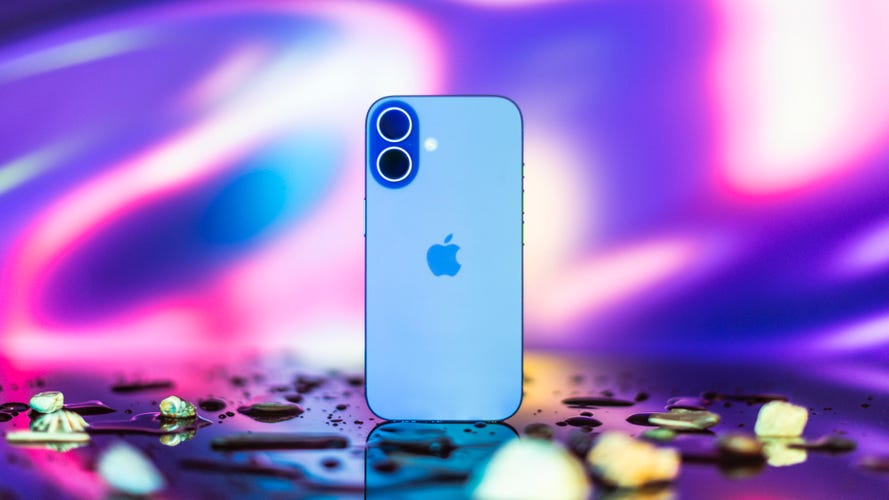
With its handy new photography features, convenient Action button and elegant build, the iPhone 16 and 16 Plus are top-notch choices for Apple fans in search of a new phone. Parts of the iPhone 16’s key feature, Apple Intelligence, are now out, and the fact that these phones will support it means they’ll likely feel future-proofed for years to come. For those who don’t need the Pro’s extra photography prowess and battery life, the iPhone 16 won’t disappoint. Aside from screen size (6.1 inches on the regular, 6.7 inches on the Plus), battery size and price, the iPhone 16 and 16 Plus are identical in every way.
Pros
- Camera Control is useful for switching camera settings
- Photographic Styles makes photos pop
- Ultrawide camera is better in low light
Cons
- Apple Intelligence isn’t out yet
- No always on display
- No changes to wired charging speeds
- No upgrades to the Action button
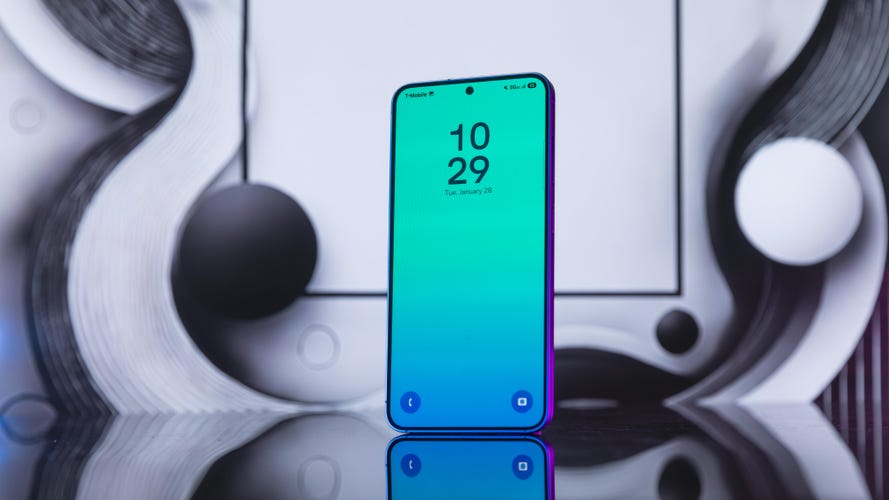
Editors’ Note: The Galaxy S25 has been superseded by the S26, but with a lack of hardware upgrades and a $100 price hike to boot (albeit with a higher 256GB base storage level), it’s difficult to recommend over last year’s model. Plus, new software and AI capabilities on the S26 lineup are sure to eventually make their way to the S25 via One UI 8.5.
Pros
- Camera consistently delivers good images
- Impressive battery life
- More AI features feel practical
Cons
- Several gimmicky AI features
- Not many changes over the S24

The Pixel 8A is so good and shares so much in common with its pricier siblings. From its selection of AI-powered features like Circle to Search to its cool aesthetic and powerful Tensor G3 processor, that it’s hard to see why anyone would not buy a Pixel 8A.
Pros
- Great camera
- 7 years of software updates
- Many of the same features as the Pixel 8
- Good battery life
Cons
- 256GB storage not available on all models
- Zoomed and low light shots aren't as clear as the Pixel 8's

There’s a lot to like about the Pixel 9, from its respectable camera to its classy new design and lengthy 7-year timeline for software updates. But Google’s phones have always shined for their clean, slick software, and that once again applies to the Pixel 9 series. Pixels are also among the first to get new software updates, making them an ideal choice for those who want to get their hands on the latest version of Android first. Aside from Android updates, Google also brings new features to Pixel phones throughout the year through updates it calls Feature Drops.
Pros
- Beautiful design
- Fun and somewhat useful AI features
- Better ultrawide camera
- 7 years of software updates
Cons
- More expensive
- Doesn't feel that different from Pixel 8

When I consider the Motorola Razr Plus on its own terms, it is outstanding. And, perhaps more importantly, it's a delight to use. The 4-inch cover screen makes the Razr feel like two phones in one. You can use pretty much any app on the outer display as well as respond to messages, watch videos, make video calls and even play games – all without opening the Razr Plus up.
Pros
- Cover screen updates
- Good battery life
- Fun, fashionable design
- Camera upgrades a step forward, but could go farther
Cons
- New cameras are a mixed bag
- Camera cover screen position not great for right handed-people
- Gets warm gaming or charging
MOBILE DEALS OF THE WEEK
- $749 (save $250)
- $298 (save $102)
- $241 (save $310)
- $499 (save $300)

What's the best travel phone for most people?
Apple'siPhone 16 is our pick for the best travel smartphone for most people. For $799 (or less depending on your deals), you get a good camera, dust- and water resistance, a decent battery life, a USB-C port for convenient charging and eSIM support. The iPhone 16 supports multiple eSIM cards making it convenient for travelers who need to use a temporary local eSIM in addition to their regular one.
On the Android side, we recommend the Samsung Galaxy S25, a fundamentally excellent phone. It has a long battery life, water- and dust resistance and four cameras. One of the cameras has a telephoto lens for zooming into faraway subjects (handy if you spot a wild animal and don't want to get up close) or simply for capturing local foods you might be enjoying.

Pros
- Camera Control is useful for switching camera settings
- Photographic Styles makes photos pop
- Ultrawide camera is better in low light
Cons
- Apple Intelligence isn’t out yet
- No always on display
- No changes to wired charging speeds
- No upgrades to the Action button
With its handy new photography features, convenient Action button and elegant build, the iPhone 16 and 16 Plus are top-notch choices for Apple fans in search of a new phone. Parts of the iPhone 16’s key feature, Apple Intelligence, are now out, and the fact that these phones will support it means they’ll likely feel future-proofed for years to come. For those who don’t need the Pro’s extra photography prowess and battery life, the iPhone 16 won’t disappoint. Aside from screen size (6.1 inches on the regular, 6.7 inches on the Plus), battery size and price, the iPhone 16 and 16 Plus are identical in every way.
The iPhone 16 isn’t perfect -- it’s missing an always-on display, and it feels like it’s been ages since Apple improved its wired charging speeds. But it checks all the important boxes and then some.

Pros
- Camera consistently delivers good images
- Impressive battery life
- More AI features feel practical
Cons
- Several gimmicky AI features
- Not many changes over the S24
Editors’ Note: The Galaxy S25 has been superseded by the S26, but with a lack of hardware upgrades and a $100 price hike to boot (albeit with a higher 256GB base storage level), it’s difficult to recommend over last year’s model. Plus, new software and AI capabilities on the S26 lineup are sure to eventually make their way to the S25 via One UI 8.5.
The Galaxy S25's biggest flex that I noticed while testing is it shares many of the same attributes as its pricier counterparts, the S25 Plus and S25 Ultra – but it does so for several hundred dollars less. You'll find features like the AI Select tool, Audio Eraser and deeper Gemini integration across all of Samsung's S25 devices, as well as a custom Snapdragon 8 Elite processor and 12GB RAM – making the smaller phone of the bunch still seem pretty mighty.
And while the Galaxy S25 might look incredibly similar to the S24 and share many of the same specs, consistency isn't so bad when it means there's a consistently good camera and great battery life. Read our full Samsung Galaxy S25 review.
Why we like it
Having a baseline phone, like the Galaxy S25, that delivers many of the same perks as more expensive models, is a huge plus in my book. And given the remarkable processing power, standout camera and seamless AI integration in the Galaxy S25 lineup, it's great that I can get all those premium features for $800.
Who's it best for
If you're someone who insists on buying a flagship device, the Galaxy S25 won't let you down. but if you have a device that's two years old or more, you might be enticed to tap into all the latest Galaxy AI and integrated Gemini features. Now, $800 isn't pocket change, and there are definitely other options for those who want to be more budget conscious, but if you're willing to spend a bit more, the baseline S25 can be a great all-around choice.
Who shouldn’t get it
You probably don't need to upgrade if you're using the S24.

Pros
- Great camera
- 7 years of software updates
- Many of the same features as the Pixel 8
- Good battery life
Cons
- 256GB storage not available on all models
- Zoomed and low light shots aren't as clear as the Pixel 8's
The Pixel 8A is so good and shares so much in common with its pricier siblings. From its selection of AI-powered features like Circle to Search to its cool aesthetic and powerful Tensor G3 processor, that it’s hard to see why anyone would not buy a Pixel 8A.
The Pixel 8 and 9 offer a marginally better camera system, a slightly larger screen and the ability to charge other phones and accessories wirelessly on the back of the device. But those features don’t feel significant enough to impact the buying decision for most people. As I wrote in my review, the Pixel 8A raises the bar for what a $500 phone should be. It also won a CNET Editor's Choice Award.

Pros
- Beautiful design
- Fun and somewhat useful AI features
- Better ultrawide camera
- 7 years of software updates
Cons
- More expensive
- Doesn't feel that different from Pixel 8
There’s a lot to like about the Pixel 9, from its respectable camera to its classy new design and lengthy 7-year timeline for software updates. But Google’s phones have always shined for their clean, slick software, and that once again applies to the Pixel 9 series. Pixels are also among the first to get new software updates, making them an ideal choice for those who want to get their hands on the latest version of Android first. Aside from Android updates, Google also brings new features to Pixel phones throughout the year through updates it calls Feature Drops.
The Pixel 9 comes with a few new AI tricks that you may find useful, like the ability to search for content in screenshots, generate images from scratch in the Pixel Studio app and add new objects in photos. These features aren’t must-haves, and they’re not without flaws. Plus, at a starting price of $799, the Pixel 9 has a higher bar to live up to. But the Pixel 9 feels like it belongs in that class of device.

Pros
- Cover screen updates
- Good battery life
- Fun, fashionable design
- Camera upgrades a step forward, but could go farther
Cons
- New cameras are a mixed bag
- Camera cover screen position not great for right handed-people
- Gets warm gaming or charging
When I consider the Motorola Razr Plus on its own terms, it is outstanding. And, perhaps more importantly, it's a delight to use. The 4-inch cover screen makes the Razr feel like two phones in one. You can use pretty much any app on the outer display as well as respond to messages, watch videos, make video calls and even play games – all without opening the Razr Plus up.
Add to that a long battery life, fast charging, improved cameras and an IPX8 rating that certifies that the Razr Plus will survive temporary dunking and you realize just how much value Motorola has poured into its flagship foldable. It's $1,000 price is steep, but you're getting one of the best clamshell style foldables you can buy.

Pros
- Matte finish
- New main camera is solid
- 7 years of OS updates
- Auto zoom for photos
Cons
- $1,100 starting price
- Cover screen a step down from the internal one
- Wonky way to add apps to cover screen
For better or worse, Samsung's Galaxy Z Flip 6 foldable is packed with AI. It can take a rough sketch and turn it into artwork or help me have a conversation in French or Korean despite me only knowing a few words of either language. The new autofocus/auto zoom feature lets you prop the phone in a half-open position, the Z Flip 6 will automatically zoom in or out (switching between the main and ultrawide cameras) to get a photo that best suits the moment. But the AI features are the least impressive aspects of the the Z Flip 6.
Samsung's latest clamshell style foldable has a new 50-megapixel main camera, a smaller hinge and crease, a larger battery and a Qualcomm Snapdragon 8 Gen 3. But all this comes at a higher starting price: $1,099 which makes it hard to appreciate the Galaxy Z Flip 6 for the absolute great phone that it is.
Other travel phones we tested
The $650 Galaxy S24 FE is an solid phone that gets you access to Samsung's higher-end features without the higher price.

The Galaxy S24 FE comes in four colors in the US. This one is Blue, and it's also available in Mint, Graphite and Gray.
Factors to consider when buying a new travel phone
Look for local SIM and eSIM cards: Some countries might not have a roaming agreement with your carrier, in which case opt for buying a local SIM card or eSIM. Check with your carrier before you travel and look into what's offered at your destination.
Consider last year's models: When a new phone gets launched, stores and carriers discount their older phones to sell off existing stock.
Buy a case and screen protector: Phones sold today are more durable than ones from even a few years ago. It's a good idea to protect your phone with a case when you travel because if you damage it, you might not have any option to get it repaired quickly.

CNET reviewer Lisa Eadicicco testing out the Galaxy Z Flip 5 in Seoul.
How we test phones
We test every phone in real-world scenarios, focusing on its features, design, performance, cameras, battery life and overall value. We document our findings in an initial review that is periodically updated when there are new software updates, or to compare it against new phones from competitors such as Apple, Samsung, Google and OnePlus.
Photography
Photography is a major focus for most phones these days, so we take pictures and videos of various subjects in a variety of settings and lighting scenarios. We try out any new camera modes, such as Action mode that debuted with the iPhone 14 line, or the Unblur photo tool that launched with the Google Pixel 7 series.
Battery life
Battery testing is conducted in a variety of ways. We assess how long a phone lasts during a typical day of use and note how it performs during more focused sessions of video calls, media streaming and gaming. We also conduct a video playback test, as a simple, replicable measure of pure battery life, which isn't always included in the initial review but sometimes added later in an update.

Emergency SOS might be one of the most important features to come out on any phone this year.
Performance measuring
We use benchmarking apps to measure each phone's performance, alongside our own anecdotal experiences using the phone for our review. Of note are how graphics and animations look. Are they smooth? Or do they lag or stutter? We also look at how quickly the phone switches between horizontal and vertical orientations, and how fast the camera app opens and is ready to take a photo.
We perform processor-heavy tasks like editing photos, exporting videos and playing games. We evaluate whether a newer version of a particular phone includes enough features to make it worth upgrading from older models.
Read more: How We Test Phones

